
Introduction
Choosing the right OEM manufacturing partner is not just a sourcing decision—it is a critical factor that directly impacts product quality, time-to-market, and long-term business success.
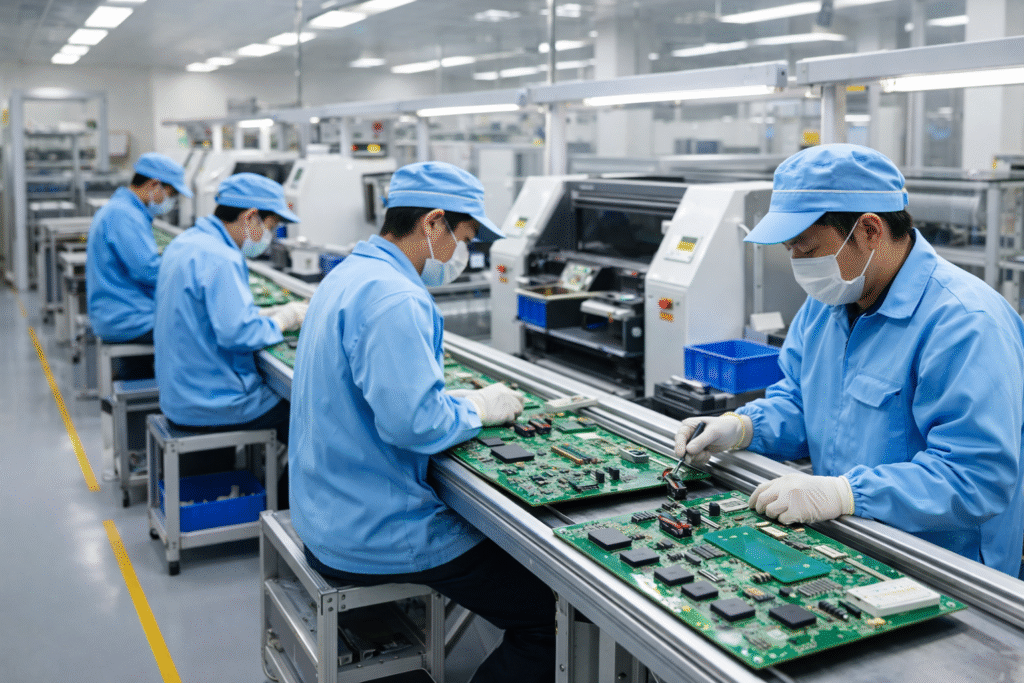
Many buyers focus primarily on pricing and lead time when evaluating OEM manufacturing services. However, real-world manufacturing outcomes are often determined by deeper factors such as engineering support, supply chain stability, and process control. For example, factors such as PCB assembly processes and quality control directly affect the final product performance and reliability.
In practice, projects rarely fail because of obvious mistakes. Instead, they fail due to overlooked details during supplier selection—details that only become visible after production has already started.
At CINDY Mould, we have supported multiple OEM manufacturing projects across industries such as consumer electronics, industrial devices, and smart hardware. Through these projects, we have found that most production risks originate not during manufacturing, but during early supplier evaluation.
This article outlines seven critical factors that most buyers overlook in OEM manufacturing, helping you make more informed, structured, and risk-controlled decisions.
OEM manufacturing services play a critical role in ensuring product quality, cost control, and scalable production. In practice, reliable OEM manufacturing services can significantly reduce production risks and improve overall efficiency.
What Are OEM Manufacturing Services?
OEM manufacturing services refer to a production model where a manufacturer produces products based on a buyer’s design, specifications, and branding requirements. According to OEM definition, OEM manufacturers typically produce products that are marketed under another company’s brand.
Unlike ODM (Original Design Manufacturer), OEM suppliers do not typically own the product design. Their role is to convert design files into stable, repeatable, and scalable manufacturing outputs.
OEM vs ODM vs EMS – Key Differences
| Model | Definition | Suitable For |
|---|---|---|
| OEM | Manufacture based on client design | Companies with completed product design |
| ODM | Design + manufacturing | Companies without in-house R&D |
| EMS | Full electronics manufacturing solution | Companies seeking end-to-end integration |
In modern manufacturing, OEM services are often combined with elements of EMS, especially for complex electronic products that require integration, testing, and final assembly.
Why Choosing the Right OEM Partner Is More Difficult Than You Think
On the surface, OEM manufacturing seems simple: provide drawings, receive a quote, and start production.
However, the real complexity lies beneath:
- A quotation does not reflect manufacturing capability
- A sample does not represent production stability
- A supplier’s promise does not guarantee execution
In many cases, problems only appear after scaling production, when the cost of correction becomes significantly higher.
OEM manufacturing services are therefore not just about selecting a supplier—they are about selecting a system that can consistently deliver under real production conditions.
7 Critical Factors Most Buyers Overlook in OEM Manufacturing
1. Engineering Support Is Not Always Included
Many OEM suppliers act as executors rather than partners. They follow instructions but do not challenge or optimize designs.
This leads to issues such as:
- Design inefficiencies
- Assembly difficulties
- Increased defect rates
At CINDY Mould, we typically participate in early-stage design reviews, providing DFM (Design for Manufacturability) feedback to identify potential risks before production begins.
Reliable OEM manufacturing services should include engineering support to ensure design feasibility and production efficiency.
Key Insight:
Engineering involvement at the early stage reduces downstream risks exponentially.
2. Prototype Capability vs Mass Production Reality
A successful prototype often gives a false sense of security.
In reality, prototypes are built under controlled conditions, while mass production introduces:
- Operator variability
- Equipment wear
- Material inconsistencies
At CINDY Mould, we validate not only the product itself but also the production process during the prototype phase. This ensures that the transition to mass production does not introduce unexpected issues.
Scalable OEM manufacturing services must bridge the gap between prototype validation and stable mass production.
Key Insight:
Mass production is a process challenge—not just a product challenge.
3. Supply Chain Control and Component Sourcing
Supply chain instability is one of the most common causes of production delays.
Risks include:
- Component shortages
- Sudden price increases
- Long lead times
- Quality inconsistency
At CINDY Mould, we maintain a structured supplier network and implement alternative sourcing strategies when necessary.
Strong OEM manufacturing services providers maintain stable and flexible supply chains to reduce sourcing risks and ensure continuity.
Key Insight:
A resilient supply chain ensures production continuity under uncertainty.
4. Quality Control Systems Beyond Basic Inspection
Quality is not something that can be “checked in” at the end of production.
It must be built into every stage of the process.
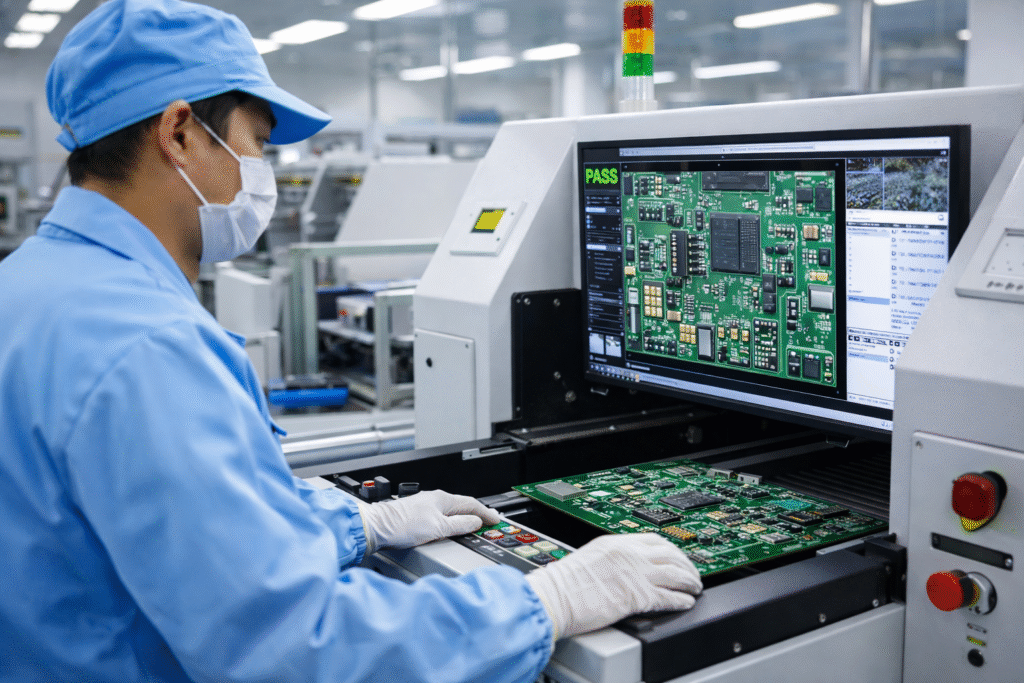
Industry standards such as ISO 9001 quality management systems provide structured frameworks to ensure consistent manufacturing quality and process control.
At CINDY Mould, we integrate quality control across:
- Incoming material inspection
- In-process quality control (IPQC)
- Automated inspection (AOI)
- Functional testing
High-quality OEM manufacturing services rely on process control rather than final inspection alone.
Key Insight:
Consistent quality is the result of controlled processes, not final inspection. This is especially important in processes such as PCB assembly and functional testing, where small defects can lead to major product failures.
5. Communication Efficiency and Project Management
Even technically capable manufacturers can fail due to poor communication.
Common issues include:
- Misinterpretation of technical requirements
- Delayed responses
- Lack of coordination
At CINDY Mould, dedicated project managers ensure that all communication is structured, traceable, and aligned with production requirements.
Professional OEM manufacturing services providers ensure fast and accurate communication throughout the project lifecycle.
Key Insight:
Clear communication reduces both time and cost in manufacturing.
6. Hidden Costs in OEM Manufacturing
The initial quotation rarely reflects the total cost.
Hidden costs often arise from:
- Engineering changes
- Tooling adjustments
- Rework due to defects
- Logistics fluctuations
| Cost Type | Visible | Hidden |
|---|---|---|
| Unit Price | ✔ | — |
| Tooling | ✔ | Partial |
| Engineering Changes | — | ✔ |
| Quality Issues | — | ✔ |
| Delays | — | ✔ |
Transparent OEM manufacturing services help customers better understand total project costs and avoid unexpected expenses.
Key Insight:
Cost control starts before production—not after problems occur.
7. Scalability and Long-Term Manufacturing Stability
Many suppliers can handle small orders but struggle with scaling.
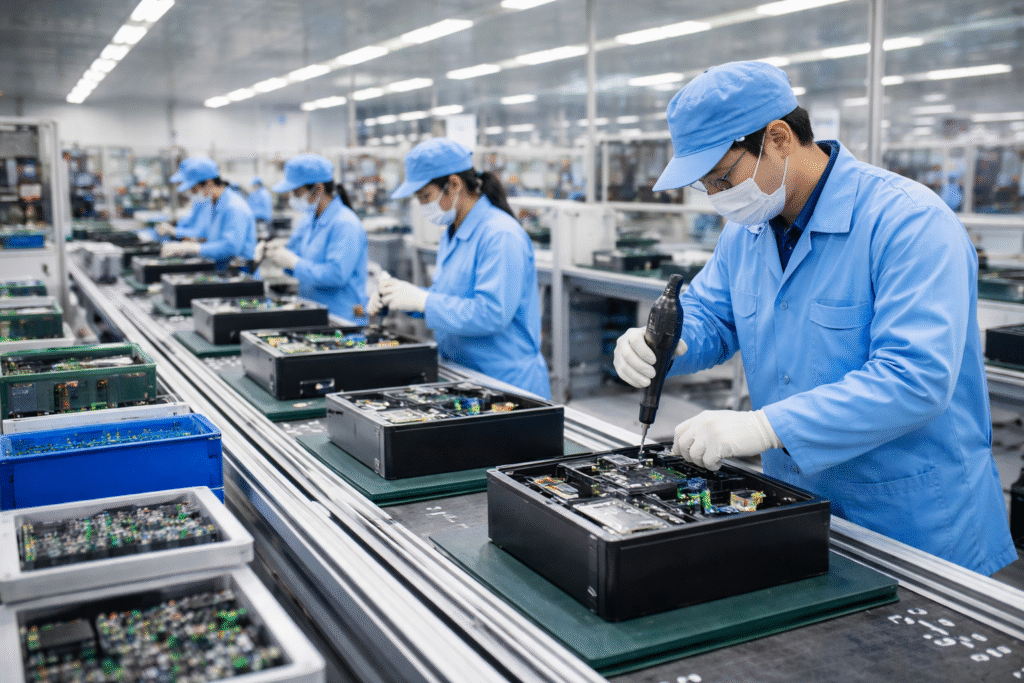
Scaling introduces challenges such as:
- Capacity limitations
- Process inconsistency
- Supply chain pressure
At CINDY Mould, our production systems are designed to support both prototyping and high-volume manufacturing.
Reliable OEM manufacturing services are essential for supporting long-term production growth and stability.
Key Insight:
A capable OEM partner supports growth—not just initial production.
Real-World Case: Preventing a High Defect Rate in Mass Production
In one project, a customer requested immediate mass production after a successful prototype phase.
However, during our engineering review, we identified a tolerance stacking issue in the mechanical assembly design.
Under prototype conditions, the issue was not visible. But in mass production, it would likely cause:
- Misalignment during assembly
- Increased defect rates
- Rework and delays
At CINDY Mould, we worked closely with the customer to adjust the design and optimize key tolerances.
As a result:
- Production yield improved from an estimated 85% to over 97%
- Assembly efficiency increased
- Delivery timelines were maintained
This case highlights how professional OEM manufacturing services can prevent costly production failures through early intervention.
Key Insight:
Early engineering intervention can prevent large-scale manufacturing risks.
Risk Assessment: A Practical Framework for OEM Selection
To further reduce risks, buyers should evaluate OEM manufacturers using a structured approach.
Key Risk Areas
| Risk Area | Impact | Evaluation Focus |
|---|---|---|
| Engineering | High | DFM capability |
| Supply Chain | High | Supplier stability |
| Quality | High | Process control |
| Communication | Medium | Response efficiency |
| Cost | Medium | Transparency |
| Scalability | High | Production capacity |
A structured evaluation framework ensures that OEM manufacturing services are selected based on long-term reliability rather than short-term cost advantages.
Common Mistakes Buyers Make When Selecting OEM Manufacturers
- Choosing based on lowest price
- Ignoring engineering capabilities
- Skipping validation stages
- Overlooking supply chain risks
- Failing to define quality standards
How to Choose the Right OEM Manufacturing Partner
OEM Supplier Evaluation Checklist
| Evaluation Area | Key Questions |
|---|---|
| Engineering | Do they provide DFM support? |
| Supply Chain | Can they ensure stable sourcing? |
| Quality | Do they control processes or just inspect? |
| Communication | Are responses fast and clear? |
| Cost Transparency | Are all costs clearly defined? |
| Scalability | Can they support mass production? |
Conclusion
OEM manufacturing is not simply about finding a supplier—it is about building a reliable production system.
While pricing and lead time are important, long-term success depends on engineering support, supply chain resilience, and process control.
Choosing the right OEM manufacturing services partner is essential for reducing risks and ensuring long-term product success.
At CINDY Mould, we believe that successful OEM manufacturing is achieved through structured processes, proactive engineering involvement, and long-term production stability—not just competitive pricing. If you are evaluating production options, understanding the differences in box build assembly vs PCB assembly can help you make more informed manufacturing decisions.
FAQ
1. What is OEM manufacturing service?
OEM manufacturing refers to producing products based on a customer’s design and specifications.
2. What is the difference between OEM and EMS?
OEM focuses on manufacturing, while EMS includes broader services such as PCB assembly and full product integration.
3. How do I evaluate an OEM manufacturer?
Evaluate engineering capability, supply chain strength, quality systems, and communication efficiency.
4. What are the biggest risks in OEM manufacturing?
Design issues, supply chain instability, inconsistent quality, and hidden costs.