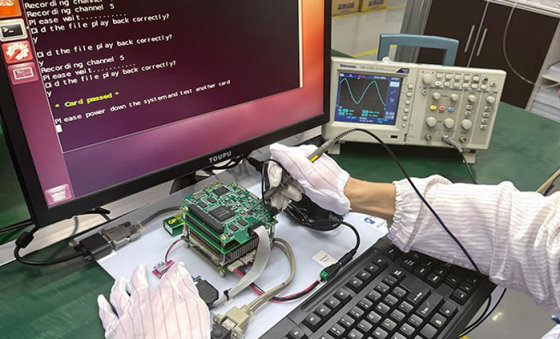
Functional Testing in Electronics Manufacturing
Functional testing in electronics manufacturing ensures products perform reliably beyond inspection. Learn testing methods, challenges, and integration strategies.

Functional testing in electronics manufacturing ensures products perform reliably beyond inspection. Learn testing methods, challenges, and integration strategies.
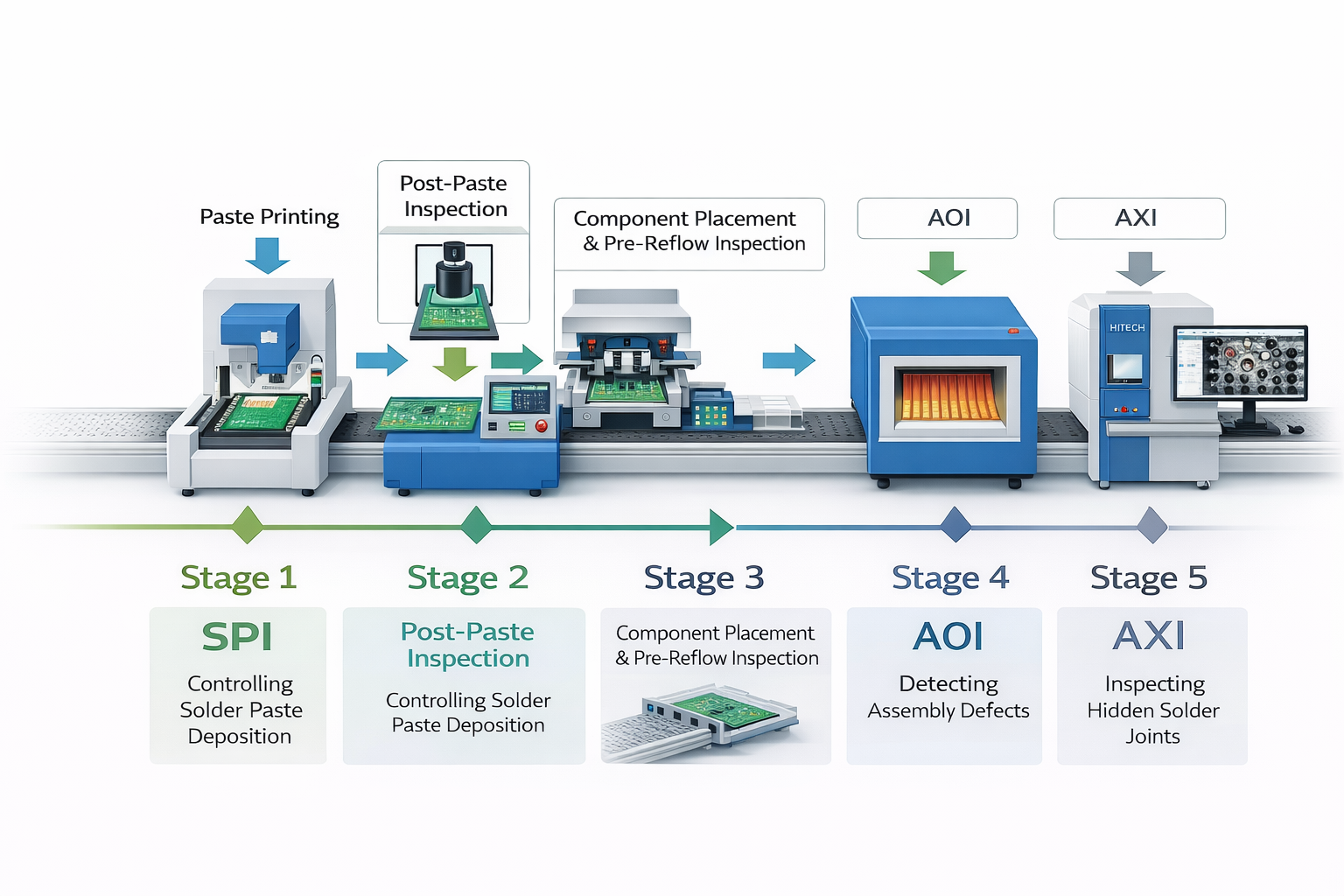
SMT inspection strategy integrates SPI, AOI, and AXI to detect defects at different stages of PCB assembly, improving production stability and product reliability in electronics manufacturing.
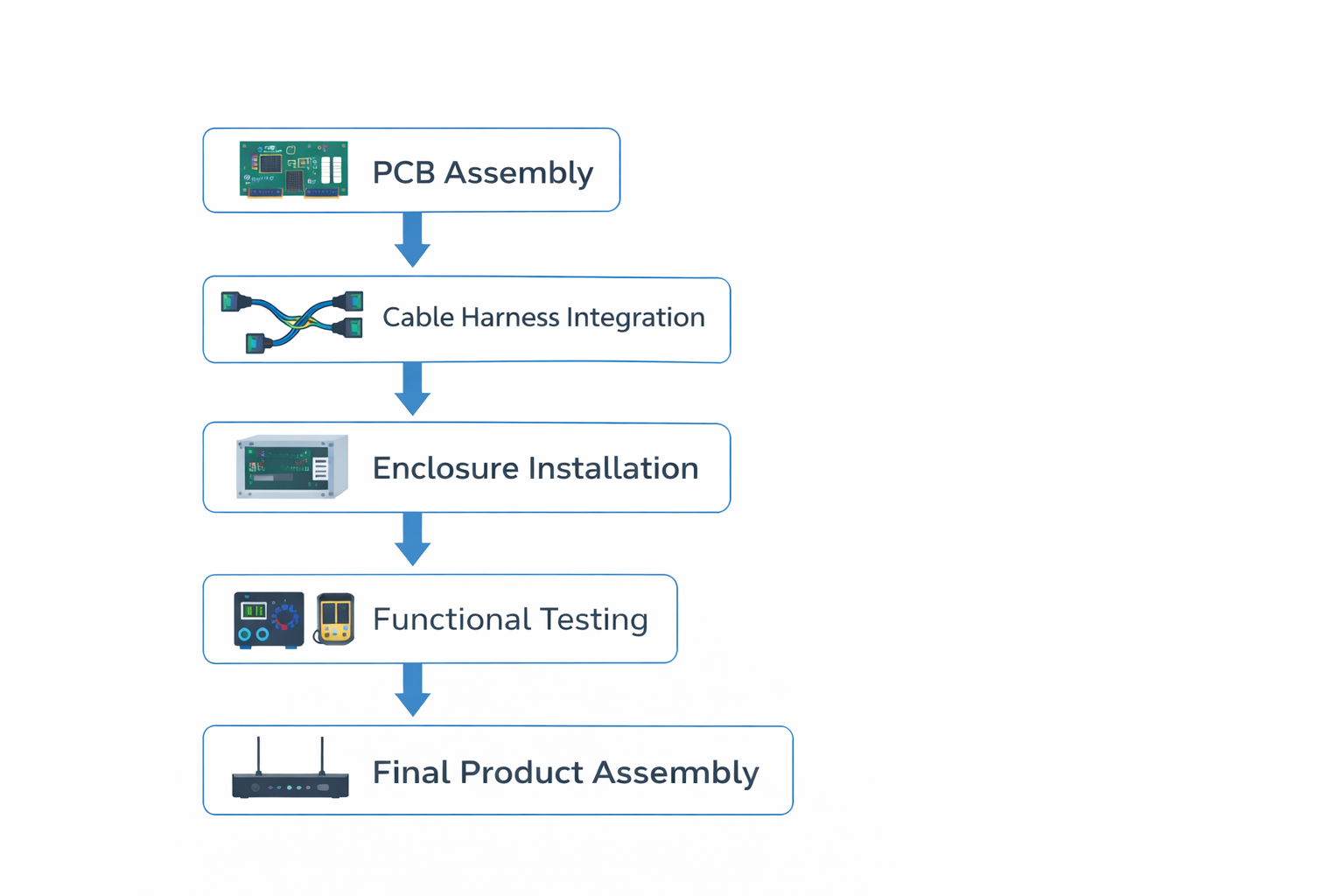
Box build assembly integrates PCB installation, cable harnesses, enclosures, and system testing into a complete electronic product. This article explains the box build assembly workflow and highlights key factors that influence manufacturing stability and product reliability.
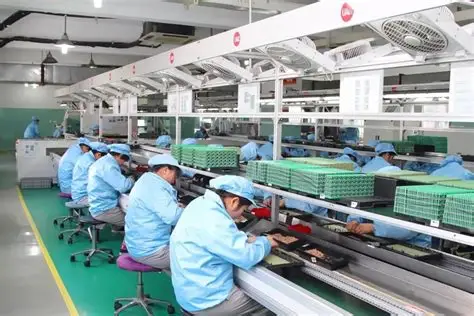
Electronic products require reliable manufacturing partners to ensure stable production and product quality. This guide explains five critical factors to consider when choosing an electronic manufacturing partner, including engineering support, manufacturing capability, quality control systems, supply chain management, and production scalability.
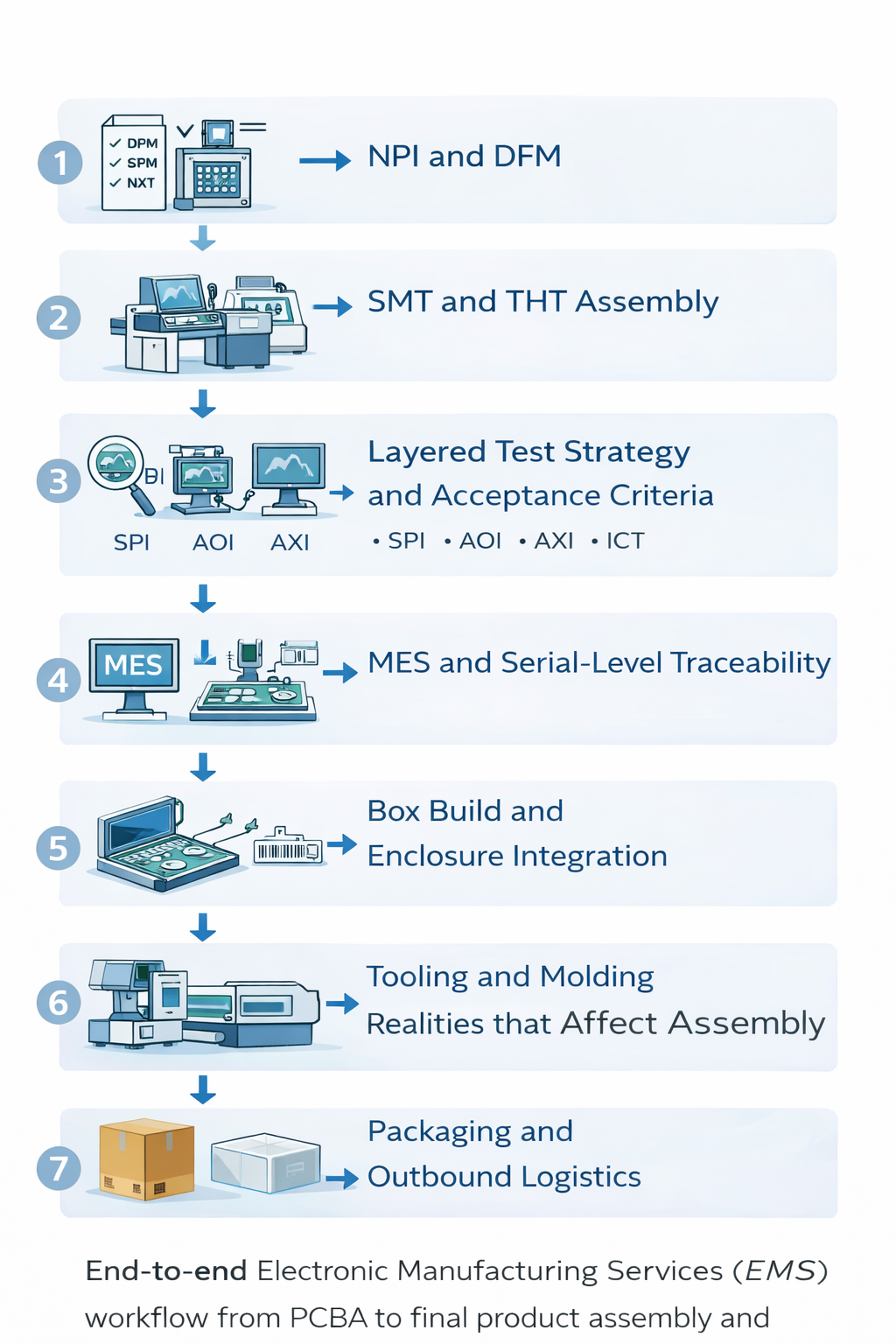
Electronic Manufacturing Services (EMS) integrate PCBA assembly, enclosure manufacturing, testing, and final product assembly into a coordinated workflow. This guide explains the complete EMS process, supplier consolidation strategies, and practical procurement KPIs to help companies streamline electronics manufacturing and accelerate product delivery.
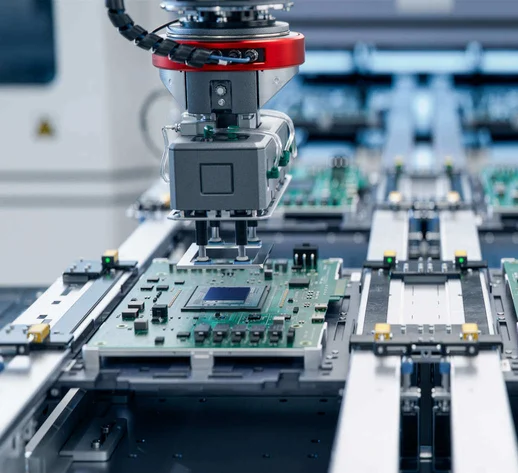
Integrated manufacturing systems improve coordination across design, tooling, molding, and assembly processes. This article explores why system-level manufacturing integration often delivers greater production stability than relying on multiple independent suppliers.
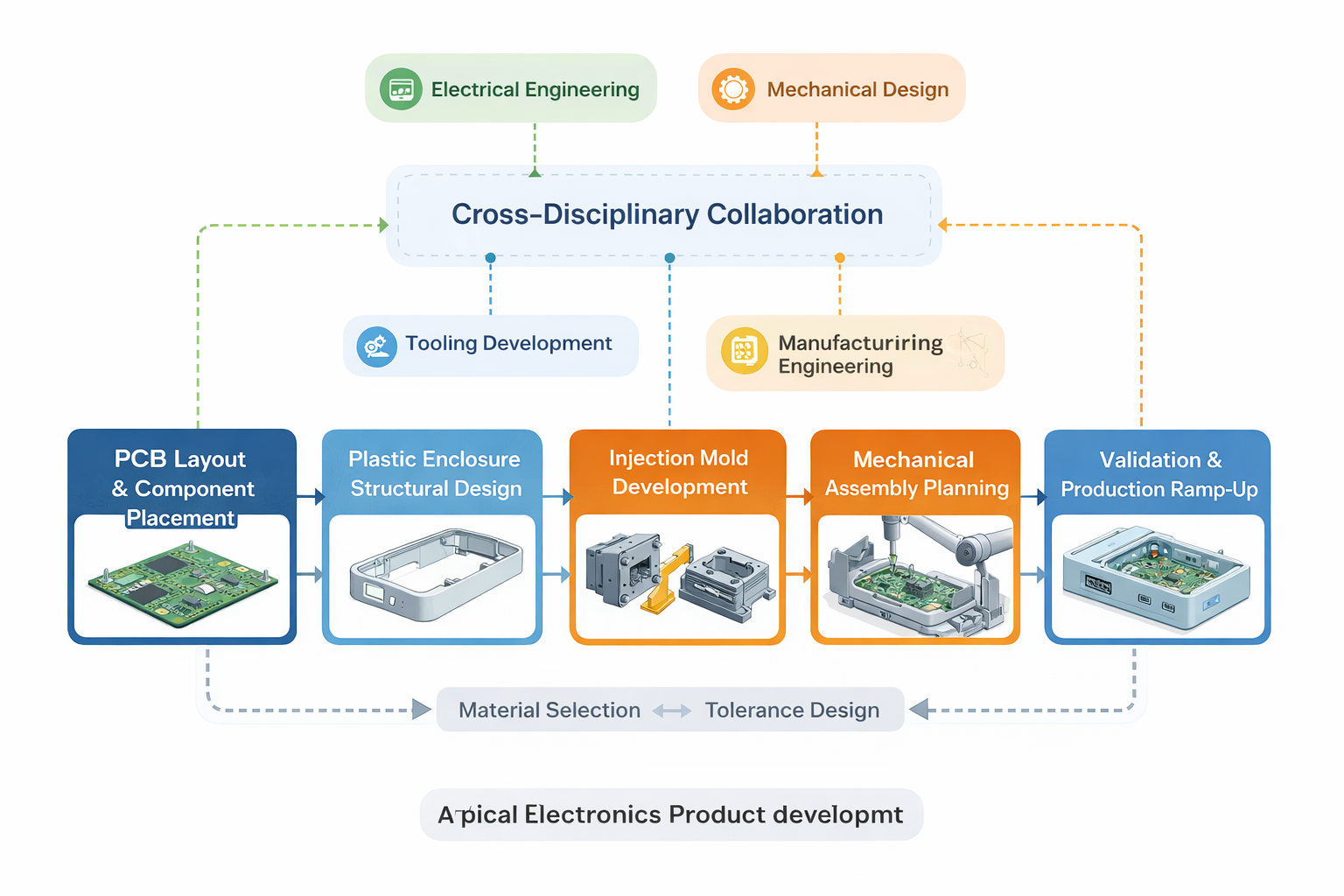
PCB enclosure integration is a critical challenge in electronics product development. This article explores key structural interfaces between PCB design and plastic enclosures that affect assembly stability and manufacturing reliability.
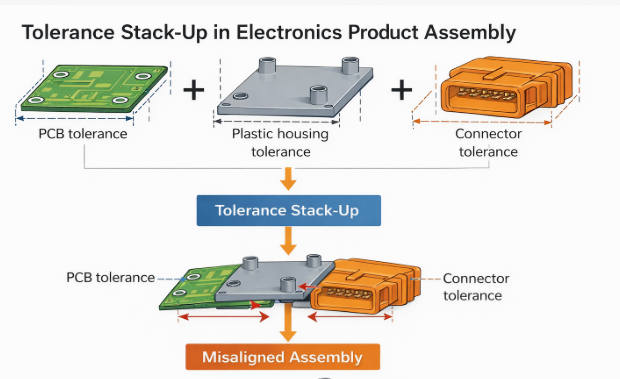
Tolerance stack-up occurs when dimensional variations from multiple components accumulate during assembly. This article explains how PCB, plastic housing, and connector tolerances interact and why early engineering coordination is essential for stable electronics manufacturing.