5 Critical Factors When Choosing Your Electronic Manufacturing Partner

Selecting the right electronic manufacturing partner is one of the most important decisions in hardware product development. The right partner affects not only unit cost, but also engineering response, product quality, production stability, supply continuity, and time-to-market.

Supplier comparisons often begin with quotations, tooling costs, and minimum order quantities. These figures are easy to compare, but they reveal only part of the manufacturing risk. A lower quoted price may cover one production step while leaving the customer responsible for coordinating PCB assembly, enclosure manufacturing, wiring, testing, final assembly, and packaging.

When these stages are managed by disconnected suppliers, responsibility can become unclear. A PCB supplier may confirm that the board passed inspection, while an enclosure supplier confirms that the housing meets its drawing. Yet the finished product may still experience connector misalignment, mechanical interference, wiring problems, or unstable functional performance.

The real question is not simply which supplier offers the lowest price.

It is which manufacturing partner can identify risks early, coordinate the complete production workflow, and take responsibility for the final result.

A capable electronic manufacturing partner should support the interfaces between:

  • PCB fabrication and PCBA
  • Component sourcing and lifecycle management
  • Plastic enclosure and mechanical-part production
  • Cable, connector, and module integration
  • Firmware programming and functional testing
  • Final product assembly, inspection, and packaging

This guide explains the five capabilities buyers should evaluate, the mistakes that commonly distort supplier comparisons, and the questions that help reveal whether a manufacturer can support both product development and stable mass production.


Why Choosing the Right Electronic Manufacturing Partner Matters

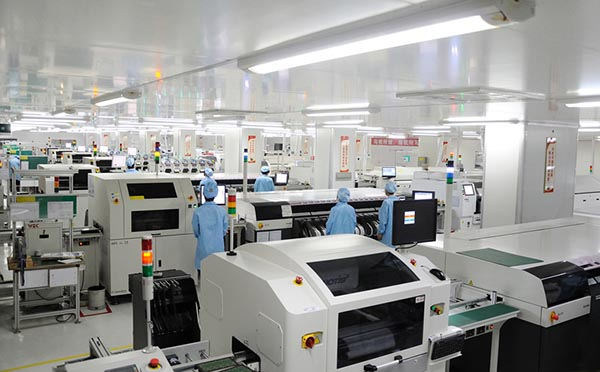
electronic manufacturing partner for PCBA assembly and electronics production

Modern electronic products combine electrical, mechanical, software, and supply-chain requirements. A weakness in one stage may not become visible until final assembly or production ramp-up.

Choosing the right partner is therefore not only a purchasing decision. It is a risk-allocation decision that determines who coordinates design changes, investigates cross-stage failures, controls documentation, and protects production continuity.

When production involves multiple suppliers, capability gaps often appear at the interfaces between processes. A PCB may pass electrical inspection, and an enclosure may meet its dimensional drawing, but the two may still fail during final assembly.

Typical interface problems include:

  • Connectors that do not align with enclosure openings
  • Cables that interfere with internal components
  • Insufficient assembly clearance
  • Incorrect fastener selection
  • PCB dimensions that create installation stress
  • Firmware and hardware revision mismatches
  • Test requirements that were not considered during design
  • Packaging that fails to protect the assembled product

The value of an integrated manufacturing partner lies in managing these interfaces before they become production problems.


What Price Alone Cannot Reveal

Quoted unit price is important, but it does not show the complete cost or risk of a manufacturing program.

A low quotation may exclude engineering support, test development, component-risk management, enclosure coordination, packaging validation, or failure analysis. These responsibilities do not disappear. They are transferred to the customer or divided among several suppliers.

Buyers should therefore compare more than the number shown on a quotation. They should evaluate:

  • Which production stages are included
  • Who is responsible for engineering coordination
  • How design changes are reviewed and documented
  • Who investigates failures involving multiple processes
  • Whether functional testing is included
  • How component shortages and substitutions are controlled
  • What support is available during production ramp-up

The lowest initial price can become the most expensive option when it creates additional management work, rework, delayed launches, or unclear responsibility.

A reliable electronic manufacturing partner should make the scope of responsibility clear before production begins.


1. Engineering Support and DFM Capability

Strong manufacturing support begins before the first production order.

Design-for-manufacturing reviews help identify risks while they can still be corrected through design changes instead of tooling rework, manual inspection, or production concessions.

A capable electronic manufacturing partner should be able to review:

  • PCB layout and manufacturability
  • Component placement and sourcing risk
  • Connector positions and mechanical clearances
  • Enclosure compatibility
  • Cable routing and assembly access
  • Fastener selection and installation
  • Test-point coverage
  • Programming and functional-test requirements
  • Packaging and transportation risks

The quality of this review matters as much as whether a DFM report is provided. A checklist that only confirms basic production rules may overlook problems involving the interaction between the PCB, enclosure, wiring, firmware, and final assembly.

Buyers should ask potential partners to explain how they manage cross-functional design reviews. They should also request examples of issues identified before tooling or production release.

A strong supplier does more than confirm that a design can be manufactured. It explains where the design may become unstable, expensive, or difficult to scale.


2. Manufacturing Capability Across Multiple Processes

Modern electronic products often require several connected manufacturing processes, including:

  • PCB fabrication
  • Component procurement
  • Surface-mount and through-hole assembly
  • Plastic injection molding
  • Metal-part manufacturing
  • Cable and wire-harness assembly
  • Firmware programming
  • Mechanical integration
  • Functional testing
  • Final inspection and packaging

A supplier does not necessarily need to perform every process inside one building. However, it should have a clear system for coordinating the processes within its responsibility.

When evaluating manufacturing capability, buyers should determine:

  • Which processes are performed internally
  • Which processes are subcontracted
  • How subcontractors are qualified and monitored
  • Who controls drawings and revision levels
  • How nonconforming parts are contained
  • Who owns problems involving more than one process
  • Whether one program manager coordinates the complete project

An integrated electronic manufacturing partner can reduce delays caused by supplier handoffs. It can also improve communication when a change to one component affects several downstream operations.

For example, moving a connector on the PCB may require changes to the enclosure opening, cable routing, assembly instructions, test fixture, and packaging. Without coordinated change control, one supplier may build the new revision while another continues using outdated information.

Integrated manufacturing is not simply about placing several services under one supplier. It is about creating one controlled workflow in which engineering information, production responsibilities, and quality records remain aligned.


3. Quality Control and Testing Systems

Quality control should be designed into the manufacturing process instead of relying only on final inspection.

Electronics manufacturing may include:

  • Incoming material inspection
  • Solder paste inspection
  • Automated optical inspection
  • X-ray inspection
  • In-circuit testing
  • Firmware programming verification
  • Functional testing
  • Cosmetic inspection
  • Final assembly inspection
  • Packaging verification

The correct inspection plan depends on the product, its risks, production volume, and end-use requirements.

When evaluating an electronic manufacturing partner, buyers should ask:

  • Which defects are detected at each production stage?
  • What test coverage is provided?
  • How are failures recorded and analyzed?
  • How are corrective actions implemented?
  • How is measurement equipment calibrated?
  • How are inspection records linked to production batches?
  • Can reports be provided for customer audits or field investigations?

Certifications such as ISO 9001 can demonstrate that a documented quality-management system exists. Industry standards such as IPC-A-610 can also provide common acceptance criteria for electronic assemblies.

However, certificates alone do not prove that a supplier can control a specific product. Buyers should review the actual inspection plan, process controls, traceability system, and failure-analysis capability.

A suitable partner should be able to explain not only how defects are found, but also how recurring defects are prevented.


4. Supply Chain and Component Management

Component availability, authenticity, lifecycle status, and lead time can affect production as much as the assembly process itself.

An experienced electronic manufacturing partner should support:

  • Approved supplier management
  • Component availability checks
  • Alternative-part evaluation
  • End-of-life monitoring
  • Lead-time forecasting
  • Purchase planning
  • Lot and date-code traceability
  • Storage and moisture control
  • Counterfeit-risk prevention

Substituting a component is not simply a purchasing decision. A replacement may affect electrical performance, firmware, certification, mechanical clearance, thermal behavior, or functional testing.

For this reason, substitutions should follow a documented approval process. Buyers should know who proposes the alternative, who checks compatibility, what testing is required, and who provides final approval.

It is also important to understand purchasing responsibility. Some manufacturers purchase all components, while others expect the customer to supply critical or long-lead items.

Either model can work, but responsibilities, forecasts, inventory ownership, and shortage risks should be agreed upon before production.

Strong supply-chain management does not eliminate every disruption. It creates earlier visibility and a controlled response when availability changes.


5. Production Scalability and Program Management

Building prototypes and managing stable mass production require different capabilities.

Prototype production often depends on flexible scheduling, manual adjustments, and close engineering attention. Mass production requires controlled processes, repeatable work instructions, reliable capacity, trained operators, and disciplined change management.

When evaluating scalability, buyers should examine whether the supplier can support:

  • Prototype builds
  • New Product Introduction
  • Pilot production
  • Process validation
  • Production ramp-up
  • Capacity planning
  • Multi-shift manufacturing
  • Long-term quality control
  • Engineering-change implementation
  • Production transfer or expansion

A strong electronic manufacturing partner should also provide clear program management.

Buyers should know:

  • Who is the primary contact?
  • Who owns technical questions?
  • How often are project updates provided?
  • How are open issues tracked?
  • How are engineering changes approved?
  • How are schedule risks escalated?
  • Who coordinates quality, purchasing, production, and logistics?

Fast communication is useful, but structured communication is more important. Verbal instructions and informal messages can create revision errors when they are not supported by controlled documents.

A capable partner should maintain clear records for drawings, bills of materials, firmware versions, inspection standards, work instructions, and customer approvals.


Common Mistakes Buyers Make When Choosing a Manufacturing Partner

Supplier-selection problems often begin before the first order is placed. Avoiding the following mistakes can prevent expensive corrections later.

Mistake 1: Comparing Unit Price Without Comparing Scope

Two quotations may appear to cover the same product while including very different responsibilities.

One supplier may include test fixtures, functional testing, packaging, and engineering support. Another may quote only assembly labor and standard inspection.

Buyers should normalize quotation scope before comparing price. Otherwise, the lowest quotation may simply contain the most exclusions.

The comparison should include:

  • Tooling and fixture costs
  • Engineering and NPI support
  • Component procurement
  • Inspection and testing
  • Final assembly
  • Packaging
  • Rework responsibility
  • Logistics and inventory requirements

A complete cost comparison is more useful than comparing assembly price alone.

Mistake 2: Assuming Strength in One Process Covers the Entire Product

A company that performs excellent PCB assembly may not have strong enclosure, mechanical integration, or box-build capability.

Likewise, an experienced injection-molding supplier may not be prepared to manage component sourcing, firmware programming, or electronics testing.

The supplier’s experience should match the complete manufacturing requirement, not only one process within it.

Buyers should examine relevant equipment, engineering resources, quality controls, and previous experience with products of similar complexity.

Mistake 3: Relying on Final Testing to Catch Every Problem

Final functional testing is important, but it cannot replace process control.

Some defects may pass a short functional test and fail later because of:

  • Weak or intermittent solder joints
  • Incorrect fastener torque
  • Cable strain
  • Connector damage
  • Contamination
  • Thermal stress
  • Incorrect component substitutions
  • Inconsistent enclosure fit

Effective quality control detects problems as close as possible to the stage where they are created.

Testing should confirm product performance, while process controls prevent avoidable variation from entering the product.

Mistake 4: Failing to Define End-to-End Responsibility

When several suppliers participate in one product, each may accept responsibility only for its individual component.

If the assembled product fails, the customer may be left coordinating the investigation between suppliers.

Before placing an order, buyers should define who is responsible for:

  • Cross-process engineering review
  • Final product functionality
  • Failure investigation
  • Corrective action
  • Revision control
  • Product traceability
  • Production-release approval

Clear responsibility reduces delays when problems occur and prevents unresolved issues from moving between suppliers.

Mistake 5: Underestimating Communication and Change Control

Many production failures are not caused by an inability to manufacture the product. They are caused by outdated drawings, unapproved substitutions, incomplete instructions, or changes that were not communicated to every production stage.

Buyers should review how the supplier controls:

  • Bills of materials
  • Drawings and specifications
  • Firmware versions
  • Work instructions
  • Approved component lists
  • Engineering change notices
  • Customer approvals

A reliable manufacturing partner should be able to show which revision was used for each production batch.

Good change control becomes especially important when the product includes PCBA, custom enclosures, cables, firmware, and final assembly.


Practical Example: Evaluating an Electronics Manufacturing Partner
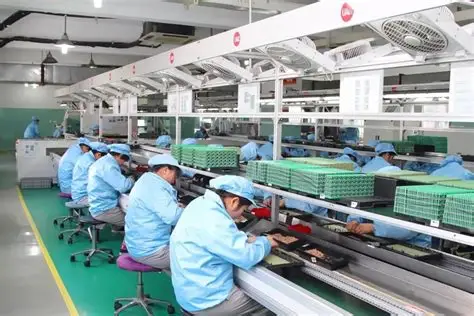
workers operating electronics assembly line in integrated manufacturing environment

Consider a company developing a smart home gateway that requires PCBA manufacturing, a custom plastic enclosure, firmware programming, final assembly, functional testing, and retail packaging.

The procurement team identifies two potential suppliers.

Supplier A offers a lower PCBA price but relies on separate vendors for enclosure manufacturing and final assembly. The customer must coordinate drawings, schedules, engineering changes, and failure investigations between the suppliers.

Supplier B provides a coordinated program covering PCB assembly, enclosure production, product integration, testing, and packaging. Its quoted assembly price is slightly higher, but one program team controls the complete manufacturing workflow.

During design review, Supplier B identifies that a PCB connector is too close to an enclosure support rib. Correcting the position before tooling release prevents an assembly interference problem that might otherwise require mold modification or manual rework.

This example shows why quotation price should not be evaluated separately from engineering support and production responsibility.

For complex electronic products, an integrated electronic manufacturing partner can reduce coordination risk and make engineering changes easier to control.


Electronic Manufacturing Partner Evaluation Checklist

Before selecting a supplier, buyers should request clear answers to the following questions.

Engineering

  • Does the supplier provide PCB and mechanical DFM reviews?
  • Can it review PCB, enclosure, cable, and assembly interfaces together?
  • How are technical risks documented and communicated?
  • What engineering support is available during NPI?

Manufacturing

  • Which production processes are performed internally?
  • Which processes are subcontracted?
  • How are external suppliers qualified?
  • Can the supplier support both prototypes and mass production?
  • How is production capacity planned?

Quality

  • Which inspection and testing processes are included?
  • How is product traceability maintained?
  • How are failures investigated?
  • What corrective-action system is used?
  • Can production and test reports be provided?

Supply Chain

  • How are component shortages monitored?
  • How are alternative parts evaluated and approved?
  • How are obsolete components managed?
  • Which components require customer supply?
  • Who owns excess or obsolete inventory?

Program Management

  • Who is responsible for the complete project?
  • How are schedules and open issues tracked?
  • How are engineering changes controlled?
  • How are urgent production problems escalated?
  • How often will the customer receive project updates?

The answers should be specific. General statements about quality, service, or experience are less useful than documented processes and clearly assigned responsibilities.


Frequently Asked Questions

How do I compare multiple electronics manufacturers?

Begin by defining the complete manufacturing scope. Compare engineering support, included processes, testing coverage, supply-chain responsibility, program management, scalability, and total production cost.

Unit price should be compared only after confirming that each quotation covers the same responsibilities.

Should I choose the lowest-priced electronic manufacturing partner?

Not automatically.

A lower price may be appropriate when the product is simple, mature, and fully documented. For complex products, differences in engineering support, testing, communication, and responsibility can have a greater effect on total cost than the initial unit-price difference.

What certifications should an electronics manufacturer have?

ISO 9001 is a common quality-management certification. Additional certifications may be required depending on the industry, product application, and customer requirements.

Certifications should be reviewed together with the supplier’s actual process controls, inspection systems, traceability, and manufacturing experience.

How important is DFM support?

DFM support is critical because many manufacturing problems originate in the product design or in the interface between components.

Identifying connector interference, insufficient assembly clearance, unsuitable component placement, or limited test access before production can prevent expensive corrections later.

Is integrated manufacturing always better than using specialized suppliers?

Not in every project.

Specialized suppliers may be suitable when the customer has a strong internal engineering and supply-chain team capable of coordinating every process.

Integrated manufacturing becomes especially valuable when the product requires close coordination between PCB assembly, enclosure manufacturing, cable installation, firmware programming, functional testing, and final product assembly.

What information should I provide when requesting a quotation?

A complete request should include, where applicable:

  • Gerber files
  • Bill of materials
  • PCB assembly drawings
  • Mechanical drawings
  • Enclosure specifications
  • Firmware and programming requirements
  • Testing requirements
  • Quality standards
  • Estimated order volume
  • Packaging requirements
  • Target production schedule

Incomplete information can create quotation differences and unexpected costs later.


Conclusion

Choosing the right electronic manufacturing partner requires more than comparing quotations.

Buyers should evaluate engineering support, manufacturing integration, quality systems, supply-chain capability, scalability, program management, and responsibility for the completed product.

The best partner is not simply the company that can manufacture one component at the lowest price. It is the company that can identify risks early, coordinate connected production stages, control changes, and support stable production as volume grows.

A structured supplier evaluation helps companies reduce production risk, prevent costly handoff problems, and build a more reliable path from prototype development to mass production.

For companies developing electronic products that require PCB assembly, custom enclosures, testing, and final product integration, working with an experienced electronic manufacturing partner can simplify coordination and improve long-term production stability.

Get a Free Quote