Blog

prototype to production hardware manufacturing process

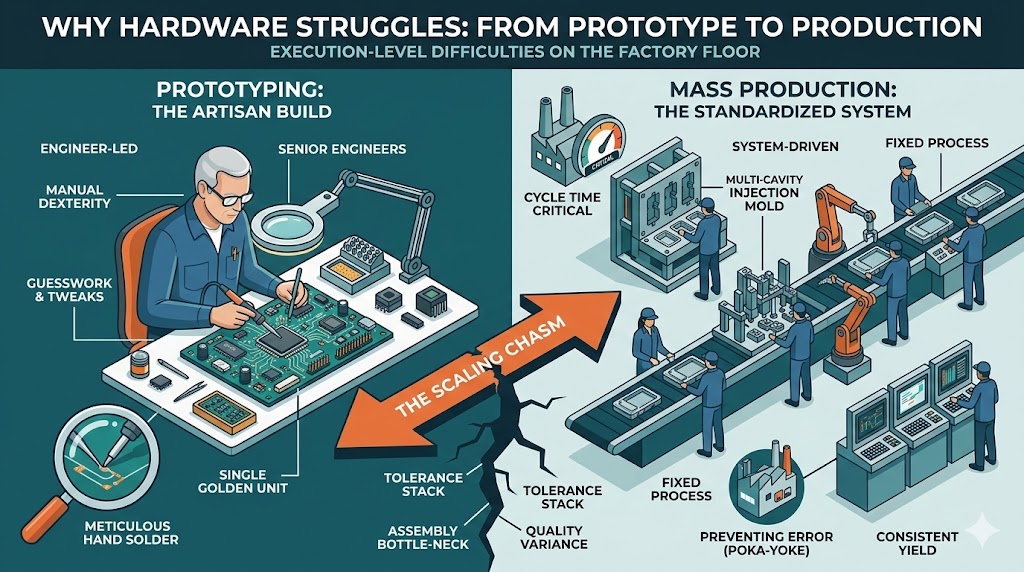
From Concept to Consumer: Why Hardware Products Struggle When Scaling From Prototype to Production

CINDY Mould The “Hardware is Hard” Reality Check In the hardware startup world, there’s a common saying: “The first 1% is the idea, the next 9% is the prototype, and the remaining 90% is the struggle to scale.” For many engineering teams, seeing a functional prototype finally come to life is a moment of triumph. The PCBA design works, the mechanical enclosure fits, and the firmware performs as expected. However, the transition from a single “golden unit” to a production run of 10,000 units is rarely straightforward. What appears stable in a prototype environment often becomes fragile when exposed to the realities of mass manufacturing. Products that perform perfectly in a lab environment may experience assembly issues, quality inconsistencies, or supply chain disruptions once production volumes increase. Understanding why hardware products struggle when scaling from prototype to production is essential for teams preparing to commercialize their designs. 1. The Fundamental Dichotomy: P

Read More »
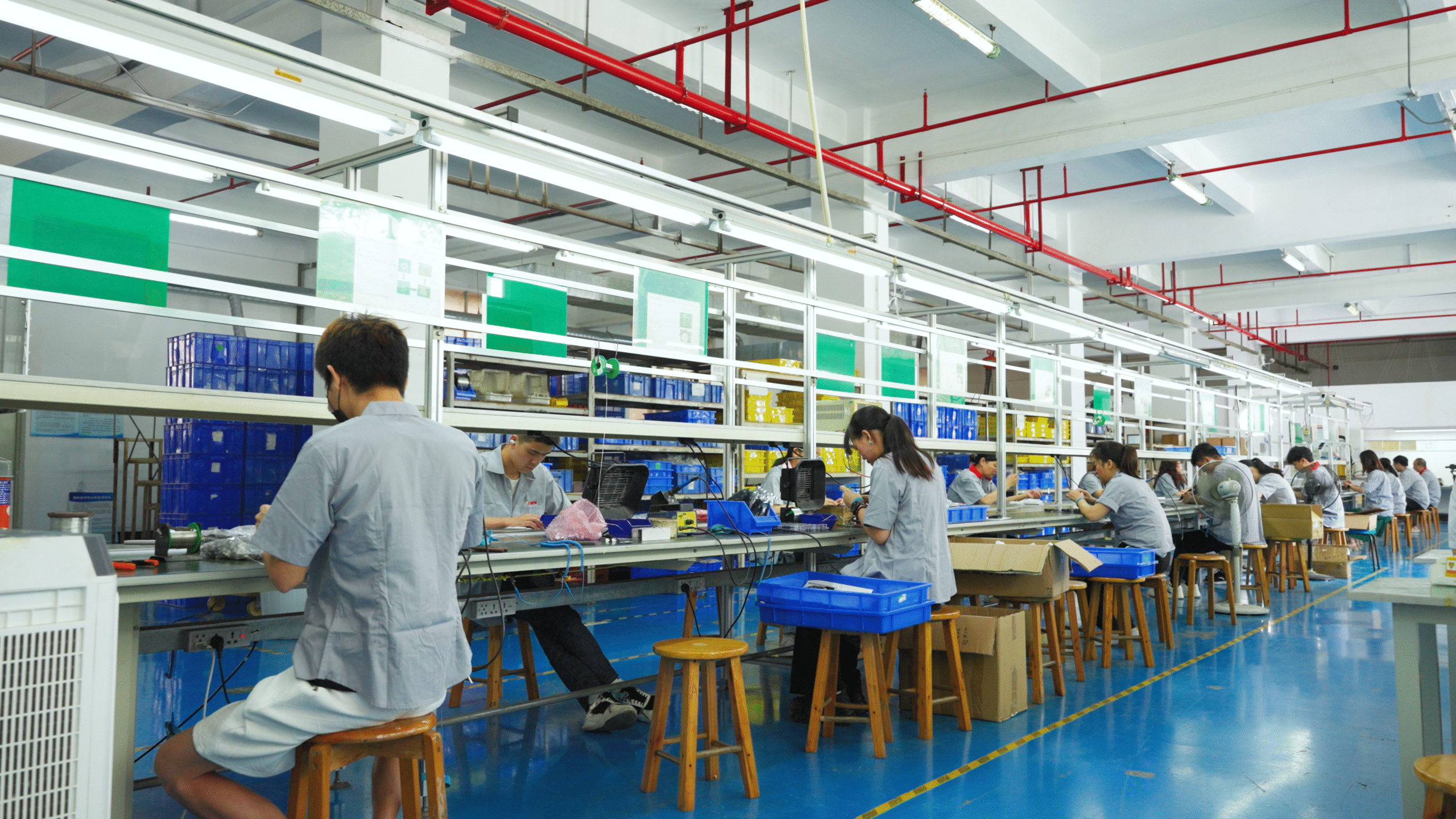
Mass production environment following injection mold trials in plastic injection molding factory

Production Stability Challenges After Injection Mold Trials

Injection mold trials confirm short-run manufacturability under controlled conditions, but mass production exposes structural gaps. This article examines why production stability challenges emerge after injection mold trials and how validation environments differ from sustained manufacturing systems.

Read More »
sink-mark-defect

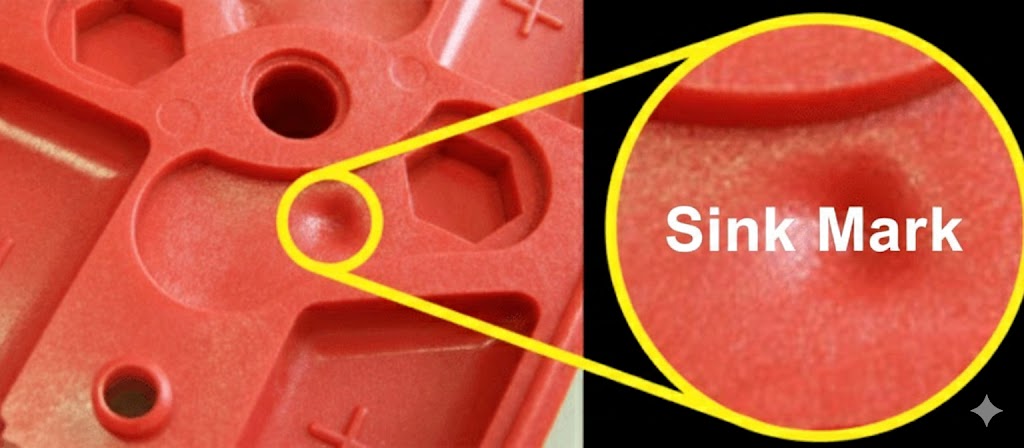
Why Sink Marks Still Appear Even With Perfect Mold Design

Sink marks in injection molding are one of the most common cosmetic defects in plastic parts. They typically appear as small depressions on the surface of molded components, often above ribs, bosses, or thick sections. Most plastic design guidelines recommend maintaining uniform wall thickness, proper rib ratios, and efficient mold cooling. In theory, following these rules should prevent sink marks from appearing. However, in real manufacturing environments, sink marks can still occur even when the mold design is technically correct. This happens because sink marks are not caused by a single factor. Instead, they result from the interaction between material properties, mold design, cooling conditions, and processing parameters. In this article, we explore the most common reasons why sink marks in injection molding still appear despite a well-designed mold. What Are Sink Marks in Injection Molding? Sink marks are surface depressions that occur when the interior of a plastic part shrink

Read More »