
Plastic injection mold steel is one of the most important materials used in mold manufacturing. It directly affects mold durability, part appearance, dimensional stability, maintenance frequency, and long-term production cost.
For buyers, engineers, and product developers, selecting the right mold steel is not simply a material comparison exercise. It is a lifecycle cost decision.
A lower-cost steel may reduce the initial mold price, but it can also increase the risk of surface wear, corrosion, poor polishing results, dimensional variation, frequent repair, and shorter tool life.
For projects involving plastic electronic enclosures, mold steel selection becomes even more important because the molded housing often needs to support appearance, structure, assembly fit, and long-term production stability at the same time.
👉 This article explains what plastic injection mold steel is, why it matters, and how different steel grades influence mold performance, production stability, and total manufacturing cost.
What Is Plastic Injection Mold Steel?
Plastic injection mold steel refers to the steel materials used to manufacture molds for plastic injection molded parts.
These molds are used to shape molten plastic into finished components through repeated injection, cooling, and ejection cycles. In a typical injection mold construction, different mold components may require different steel grades depending on their function, surface requirement, stress level, and expected service life.
Injection mold steel is commonly used for:
- Mold cavities and cores
- Sliders and lifters
- Inserts and gate areas
- Mold bases and support plates
- Wear plates and moving components
Unlike general structural steel, plastic injection mold steel must maintain stable performance under repeated molding cycles, clamping pressure, plastic flow, cooling, ejection force, and long-term wear.
For plastic parts with high appearance requirements, such as electronic housings, transparent covers, control panels, and consumer product enclosures, mold steel also affects polishing quality and final surface finish.
👉 The most commonly used mold steels include P20, 718, NAK80, S136, and H13, each offering different advantages in machinability, polishability, corrosion resistance, wear resistance, and tool life.
Why Plastic Injection Mold Steel Matters
The choice of plastic injection mold steel is not just a tooling decision. It directly affects mold performance, product quality, production efficiency, and total lifecycle cost.
🔥 1. Tool Life and Mold Durability
Mold steel has a direct impact on mold lifespan under repeated injection molding cycles.
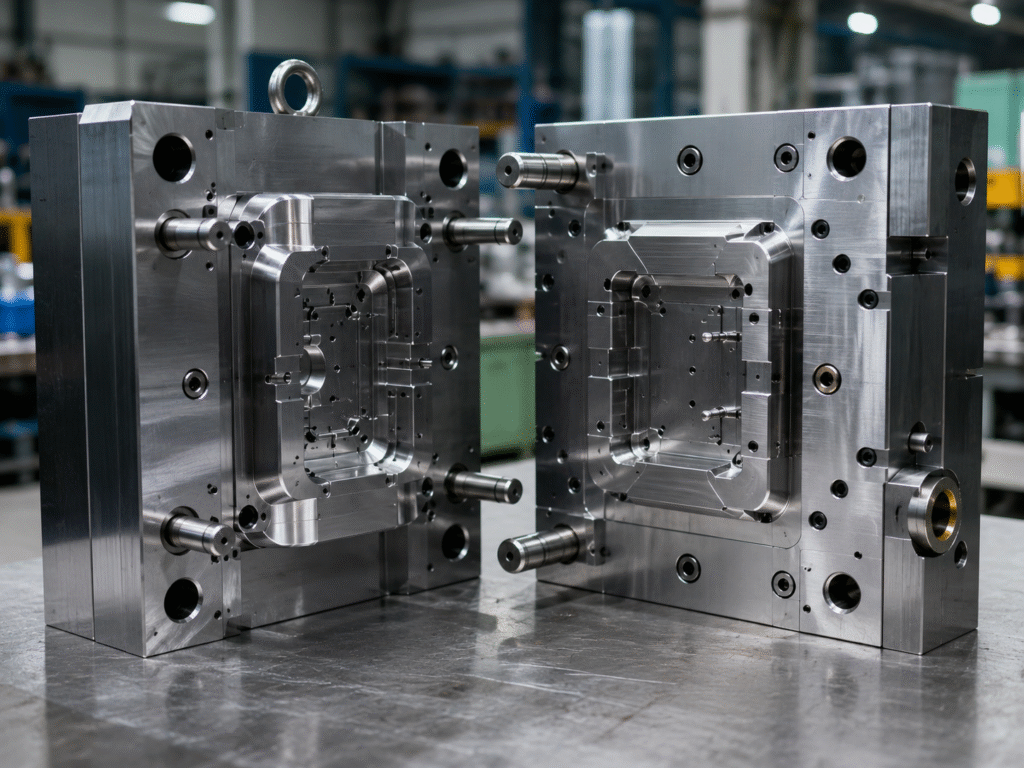
High-quality mold steel can help extend tool life in long-term production. Poor-grade or incorrectly selected steel can lead to faster wear, surface damage, dimensional instability, and more frequent mold maintenance.
Common failure risks include:
- Cavity and core wear
- Rust or corrosion on molding surfaces
- Cracking around thin or stressed areas
- Damage around gates, sliders, or inserts
- Dimensional drift after repeated production cycles
👉 In real production, mold life often determines whether the project remains cost-effective over time.
✨ 2. Surface Finish and Part Appearance
Mold steel directly affects the final appearance of plastic parts.
For high-gloss parts, transparent components, or visible plastic housings, poor mold steel selection can lead to polishing marks, uneven gloss, surface defects, or reduced transparency.
This is especially important for:
- Consumer electronics housings
- Transparent plastic covers
- Display windows
- Control panels
- Cosmetic plastic parts
A suitable mold steel helps maintain stable surface quality during both trial runs and mass production.
💰 3. Total Manufacturing Cost
Mold steel cost is only one part of the initial mold investment, but it strongly influences long-term manufacturing cost.
Key cost factors include:
- Mold maintenance frequency
- Production downtime
- Scrap and rework rates
- Surface repair cost
- Tool life before major refurbishment
- Stability of molded part dimensions
👉 In many projects, a higher-grade mold steel may increase the upfront tooling cost, but it can reduce long-term cost per part by improving durability and production stability.
📌 Key Engineering Insight
Plastic injection mold steel should not be selected based on purchase price alone. The right decision should balance material performance, part appearance, plastic material behavior, production volume, mold life, and lifecycle cost.
Common Types of Plastic Injection Mold Steel
Different mold steels are used for different production requirements. Instead of treating mold steels as a general material list, engineers usually evaluate them based on part requirements, plastic material, surface finish, production volume, and expected tool life.
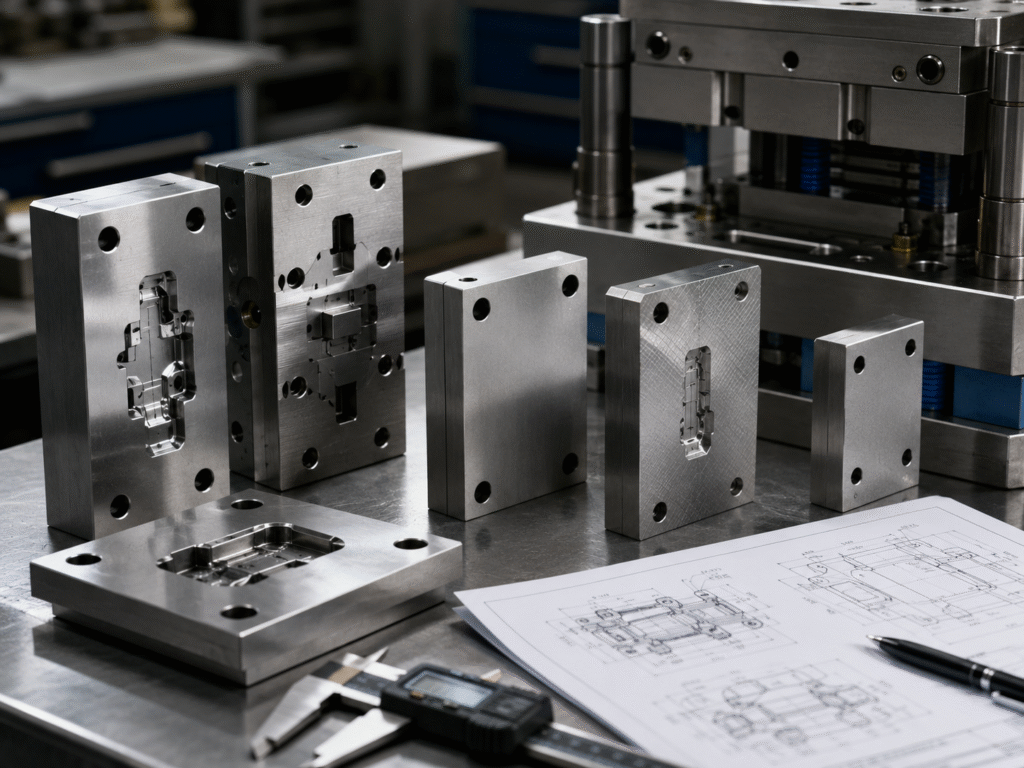
Tool steel is commonly used for tooling applications because it can offer properties such as hardness, wear resistance, toughness, and resistance to deformation. In plastic injection molding, those properties must be matched with the actual plastic material and production requirements.
📊 Plastic Injection Mold Steel Comparison Table
| Steel Grade | Key Strength | Typical Application | Notes |
|---|---|---|---|
| P20 | Good machinability and cost balance | General plastic housings, medium-volume molds | Common pre-hardened mold steel |
| 718 | Better hardenability and polishing than P20 | Larger molds, automotive parts, electronic enclosures | Suitable for medium to high-volume production |
| NAK80 | Excellent polishability and dimensional stability | High-gloss parts, cosmetic housings, precision plastic parts | Often used for appearance-critical parts |
| S136 | Corrosion resistance and high polishability | Transparent parts, medical parts, corrosive plastics | Suitable for clear PC, PMMA, and high-gloss parts |
| H13 | Heat resistance, toughness, and wear resistance | Inserts, gate areas, sliders, glass-filled plastics | Often used in high-wear mold areas |
📌 Engineering Summary
There is no single best mold steel for every plastic injection mold. The correct choice depends on plastic material, product structure, surface finish, production volume, and expected tool life.
P20 Mold Steel
P20 is one of the most widely used pre-hardened mold steels for plastic injection molds. It offers a practical balance between cost, machinability, and general mold performance.
P20 is commonly used for:
- General plastic housings
- Medium-volume production molds
- Non-transparent plastic parts
- Functional plastic components
- Prototype or bridge production molds
P20 is suitable for many common plastics such as ABS, PP, PE, and PS.
However, it may not be the best choice for transparent parts, high-gloss surfaces, corrosive plastics, or very high-volume production molds.
For simple plastic housings with moderate appearance requirements, P20 may be a cost-effective choice. But if the product requires better surface finish, longer mold life, or more stable dimensions, an upgraded mold steel may be more suitable.
718 Mold Steel
718 mold steel is often used when better mold performance is required compared with standard P20.
It offers improved hardenability, better polishing performance, and more stable properties for larger mold sections.
718 is commonly used for:
- Medium to large plastic molds
- Electronic product enclosures
- Automotive plastic parts
- Home appliance components
- Plastic parts with better surface requirements
- Medium to high-volume production
For larger injection molds, uniform hardness and stable machining performance are important. 718 can help reduce performance variation across large mold sections.
In projects where plastic housings require stable dimensions, clean surface quality, and reliable assembly fit, 718 may provide a better balance between cost and long-term mold performance.
NAK80 Mold Steel
NAK80 is a pre-hardened plastic mold steel known for good polishing performance, dimensional stability, and suitability for high-appearance plastic parts.
NAK80 is commonly used for:
- High-gloss plastic parts
- Cosmetic plastic housings
- Electronic product covers
- Control panels
- Precision plastic components
- Parts requiring stable surface finish
For products where appearance matters, NAK80 can be a suitable option because it supports better surface quality without requiring additional heat treatment in many cases.
This makes it useful for visible product surfaces such as front covers, user-interface panels, display frames, and electronic device housings.
However, NAK80 may not always be necessary for simple internal parts or products with low cosmetic requirements. The selection should still be based on the actual part design and production needs.
S136 Stainless Mold Steel
S136 is a stainless plastic mold steel known for corrosion resistance, high polishability, and long-term surface stability.
S136 is commonly used for:
- Transparent plastic parts
- Optical-related components
- Medical plastic parts
- High-gloss plastic parts
- Corrosive or flame-retardant plastic materials
- Long-life molds requiring surface stability
For transparent PC or PMMA parts, polishing quality is especially important. Any scratches, polishing marks, corrosion, or contamination on the mold surface may appear clearly on the final molded part.
S136 is often selected when transparency, gloss, and surface cleanliness are critical.
Although S136 usually increases mold cost, it can reduce long-term maintenance problems in demanding applications, especially when plastic materials or additives may increase corrosion risk during molding.
H13 Mold Steel
H13 is a hot-work tool steel with good toughness, heat resistance, and wear resistance.
In plastic injection molding, H13 is often used for mold components that experience higher stress, friction, or wear.
H13 is commonly used for:
- Hot runner components
- Gate areas
- Sliders and inserts
- High-wear mold areas
- Engineering plastics
- Glass-filled plastic materials
For abrasive materials such as PA+GF or PBT+GF, wear resistance becomes more important. H13 or other hardened steels may be selected for critical mold areas to improve durability.
H13 is not always used for the entire mold cavity in standard plastic molds. Instead, it is often used in specific inserts or mold components where strength, heat resistance, or wear resistance is required.
Key Properties to Consider When Choosing Injection Mold Steel
Choosing plastic injection mold steel requires more than comparing steel grade names. Each property affects mold performance in a different way.
⚙️ Hardness
Hardness affects wear resistance and the ability of the mold surface to withstand repeated molding cycles.
Higher hardness generally improves wear resistance, but excessive hardness may make machining more difficult and increase the risk of cracking if toughness is not balanced.
For simple plastic parts, moderate hardness may be enough. For abrasive plastics or high-volume production, higher hardness or hardened inserts may be required.
🛡️ Wear Resistance
Wear resistance is especially important when molding abrasive plastics.
Materials such as PA+GF, PBT+GF, and other glass-filled engineering plastics can wear the cavity, core, gate, and runner areas faster than standard plastics.
If wear is not controlled, the mold may lose dimensional accuracy, causing flash, loose assembly fit, or inconsistent part dimensions.
✨ Polishability
Polishability is critical for transparent, glossy, or cosmetic plastic parts.
For products such as transparent covers, display windows, and high-gloss enclosures, mold steel must support a stable polished surface.
Poor polishability may result in visible surface defects, uneven gloss, or reduced transparency.
🌧️ Corrosion Resistance
Corrosion resistance is important when molding materials that contain flame retardants, additives, or chemical fillers.
Some materials may release corrosive gases during molding. If the mold steel lacks corrosion resistance, the cavity surface may rust, pit, or degrade over time.
For this reason, stainless mold steel or corrosion-resistant mold treatment may be considered for corrosive or flame-retardant plastic materials.
📐 Dimensional Stability
Dimensional stability is important for precision plastic parts and assembly-ready components.
For electronic products, plastic enclosures often need to fit with PCBA, buttons, displays, cables, connectors, and internal structures. If the mold wears or dimensions drift, assembly problems may occur.
This is why mold steel selection should be considered together with PCBA integration, enclosure structure, and final product requirements.
How to Select Mold Steel Based on Plastic Part Requirements
Mold steel selection should be based on actual product requirements, not only on standard material availability.
1. For General Plastic Housings
For common plastic housings made from ABS, PP, PE, or PC+ABS, P20 or 718 may be suitable depending on production volume and surface requirements.
P20 is often cost-effective for simple parts, while 718 may be better for larger molds or parts with better surface requirements.
For electronic enclosure projects, the mold steel should also support screw bosses, ribs, clips, mounting posts, connector openings, and other assembly-related structures.
2. For High-Gloss Appearance Parts
For high-gloss cosmetic parts, mold steel must support good polishing and surface consistency.
NAK80 or S136 may be more suitable than general-purpose mold steel.
High-gloss parts also require careful mold design, proper venting, stable injection molding parameters, and controlled polishing procedures.
3. For Transparent Plastic Parts
Transparent parts require excellent mold surface quality.
For transparent PC, PMMA, or optical-related parts, S136 is often preferred because of its polishability and corrosion resistance.
The mold design should also consider gate location, flow marks, weld lines, cooling balance, and ejection design.
4. For Glass-Filled Plastic Materials
Glass-filled plastics are stronger than many standard materials, but they are also more abrasive to the mold surface.
When molding PA+GF, PBT+GF, or other reinforced materials, wear-resistant steel or hardened inserts may be required in the cavity, core, gate, and runner areas.
If the mold steel is too soft, long-term production may lead to dimensional wear, flash, and unstable assembly fit.
5. For Corrosive or Flame-Retardant Materials
Some flame-retardant plastics and chemically modified materials increase corrosion risk during molding.
For these materials, stainless mold steel or corrosion-resistant treatment should be considered.
Choosing corrosion-resistant mold steel can help extend mold life and reduce maintenance caused by rust, surface pitting, or cavity damage.
6. For Long-Life Production Molds
For high-volume production, mold steel should be selected based on total tool life and maintenance cost.
A higher-grade mold steel may increase initial tooling cost, but it can reduce repair frequency, downtime, and part quality variation during mass production.
For long-term manufacturing programs, mold steel should be selected together with mold structure, cooling design, surface treatment, maintenance strategy, and production volume forecast.
Mold Steel Selection Before Tooling Starts
Mold steel selection should ideally be confirmed before mold fabrication begins.
Once CNC machining, EDM processing, polishing, or mold fitting has started, changing the steel grade becomes difficult and costly. This is why early engineering review is important.
Before tooling starts, buyers should confirm:
- 3D CAD files
- 2D drawings with tolerances
- Plastic material requirement
- Surface finish requirement
- Expected production volume
- Annual order forecast
- Product application
- Assembly requirements
- Transparent or cosmetic surface areas
- Flame-retardant or glass-filled material requirements
- Expected tool life
- Testing and approval standards
For early-stage projects, prototype validation can help check structure, PCB fit, wall thickness, screw posts, connector clearance, and assembly feasibility before mold making.
This reduces the risk of choosing a mold steel or tooling strategy that does not match the final production requirements.
How Mold Steel Affects Tool Life
Injection mold tool life depends on many factors, including mold steel, plastic material, mold design, heat treatment, surface treatment, injection parameters, and maintenance quality.
Mold steel is not the only factor, but it is one of the most important foundations.
A suitable plastic injection mold steel can help improve:
- Wear resistance
- Corrosion resistance
- Dimensional stability
- Surface finish retention
- Repairability
- Long-term production consistency
An unsuitable steel may lead to:
- Faster cavity wear
- Surface rust or corrosion
- Poor polishing quality
- Cracking around thin or stressed areas
- Frequent mold repair
- Shorter production life
- Higher cost per part
For buyers, this means the lowest mold price is not always the lowest total cost. A cheaper mold steel may look attractive during quotation, but it can create higher expenses later through downtime, scrap, repair, and replacement.
📌 Key Takeaway
Plastic injection mold steel selection directly affects whether a mold can maintain stable production quality over time. The right steel helps protect tool life, part appearance, and dimensional consistency.
Mold Steel Selection Is a Lifecycle Cost Decision
In injection molding projects, mold steel cost is only one part of the total mold investment. The real cost should be evaluated across the full production lifecycle.
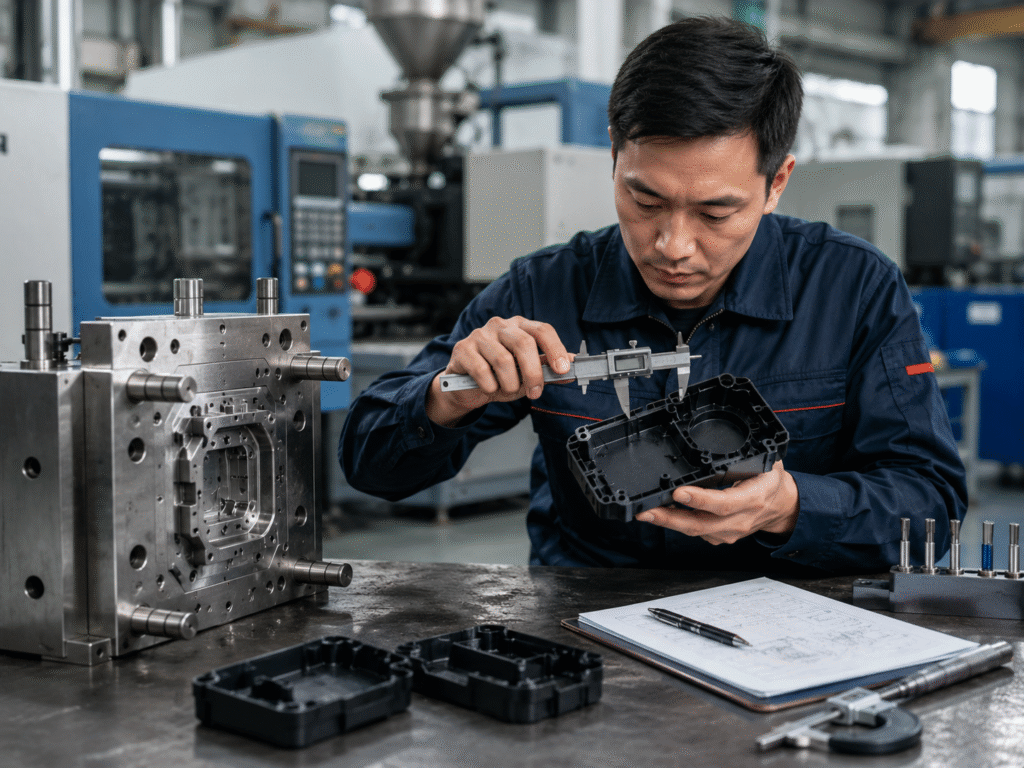
Important cost factors include:
- Initial mold cost
- Mold manufacturing lead time
- Expected production volume
- Maintenance frequency
- Downtime caused by mold repair
- Scrap and rework rate
- Part quality stability
- Tool life before major refurbishment or replacement
For low-volume projects, a cost-effective steel may be reasonable. For high-volume or high-appearance projects, better mold steel can reduce long-term risk.
This is especially important for electronic products, where plastic enclosures often need to match internal PCBA, buttons, displays, connectors, cables, and final assembly requirements.
If mold wear causes dimensional drift, the issue may not only affect the plastic part itself. It may also affect product assembly, functional testing, and final product reliability.
📌 Engineering Summary
The best mold steel is not always the most expensive steel. It is the steel that matches the plastic material, part structure, surface finish, production volume, and expected tool life.
Common Mistakes When Choosing Plastic Injection Mold Steel
1. Choosing Steel Based Only on Mold Price
A lower-cost mold steel may reduce the initial quotation, but it can increase long-term maintenance and production risk.
The better question is not “Which steel is cheapest?” but “Which steel is suitable for this part, material, surface finish, and production volume?”
2. Ignoring the Plastic Material
Different plastics interact with mold steel differently.
Standard ABS is very different from glass-filled nylon, transparent PC, flame-retardant materials, or chemically modified engineering plastics.
Before choosing mold steel, the plastic material and additives should be confirmed.
3. Over-Specifying Mold Steel
Higher-grade steel is not always necessary.
For simple low-volume parts, using premium mold steel may increase cost without creating meaningful value.
The goal is not to choose the most expensive steel, but to choose the most suitable steel.
4. Ignoring Surface Finish Requirements
Surface finish should be considered before mold manufacturing starts.
If the part requires high gloss, texture, transparency, or cosmetic appearance, mold steel selection must support the required finish.
Changing mold steel after tooling starts is difficult, costly, and often unrealistic.
5. Not Considering Tool Life Early Enough
Tool life should be discussed before mold fabrication, especially for production molds.
Buyers should communicate expected annual volume, total project volume, material type, part function, and appearance requirements. This helps the mold manufacturer recommend suitable steel and mold structure.
Quality Control After Mold Steel Selection
Selecting a suitable mold steel is only the first step. Stable production also requires controlled mold manufacturing, sample approval, and process inspection.
During mold development and production, quality checks may include:
- Material confirmation
- Mold component inspection
- Cavity and core dimensional inspection
- Polishing and surface review
- T1 / T2 sample approval
- Mold adjustment records
- Part appearance inspection
- Assembly fit verification
A strong quality control process helps confirm whether the selected mold steel, mold structure, and injection molding process are suitable for stable production.
For plastic parts used in electronic products, quality control should not only focus on appearance. It should also check fit, structure, assembly performance, and functional reliability after molding.
FAQ About Plastic Injection Mold Steel
What is plastic injection mold steel?
Plastic injection mold steel is the steel material used to manufacture molds for plastic injection molding. It is used for cavities, cores, inserts, sliders, and other mold components that shape molten plastic into finished parts.
Which steel is commonly used for plastic injection molds?
Common plastic injection mold steels include P20, 718, NAK80, S136, and H13. Each steel has different advantages in cost, machinability, polishability, wear resistance, corrosion resistance, and tool life.
Is higher-grade mold steel always better?
No. Higher-grade mold steel is not always necessary. The best choice depends on plastic material, part design, surface finish, production volume, and expected tool life.
For simple low-volume plastic parts, a standard pre-hardened mold steel may be enough. For transparent parts, abrasive plastics, high-gloss surfaces, or long-life production molds, a higher-grade steel may be more suitable.
Which mold steel is suitable for transparent plastic parts?
Transparent plastic parts often require mold steel with excellent polishability and corrosion resistance. S136 is commonly used for transparent or high-gloss parts because it can support better surface quality and long-term cavity stability.
Which mold steel is better for glass-filled plastics?
Glass-filled plastics are abrasive, so mold steel should have better wear resistance. Hardened inserts or wear-resistant steels may be used in areas such as the cavity, core, gates, and runners.
How does mold steel affect tool life?
Mold steel affects wear resistance, corrosion resistance, dimensional stability, surface quality, and repair frequency. A suitable mold steel can help extend tool life and reduce long-term maintenance cost.
When should mold steel be confirmed?
Mold steel should be confirmed before mold fabrication starts. Buyers should provide plastic material, expected production volume, surface finish, part function, tolerance requirements, and assembly needs so the mold manufacturer can recommend a suitable steel option.
Conclusion: Plastic Injection Mold Steel Is More Than a Material Choice
Plastic injection mold steel is not just a material used to build a mold. It is a key engineering factor that affects product quality, mold life, production stability, and total manufacturing cost.
Different steel grades such as P20, 718, NAK80, S136, and H13 serve different purposes. Some are suitable for general plastic housings, while others are better for high-gloss parts, transparent components, abrasive plastics, corrosive materials, or long-life production molds.
The right mold steel should be selected based on:
- Plastic material
- Part structure
- Surface finish
- Production volume
- Mold complexity
- Assembly requirements
- Expected tool life
- Long-term maintenance strategy
For buyers and engineers, mold steel selection should not be based only on initial mold price. A suitable plastic injection mold steel can improve production stability, reduce repair frequency, and lower total cost per part over the full lifecycle of the project.
At CINDY MOULD, mold steel selection is evaluated together with part design, material requirements, DFM review, mold structure, injection molding conditions, sample approval, and final product assembly needs. This helps customers build molds that are not only manufacturable, but also stable for real production.