
Introduction
When evaluating electronics manufacturing cost, most buyers focus on the most visible factors:
- BOM (component cost)
- PCB fabrication price
- assembly quotation
- lead time
These numbers are easy to compare, but they rarely reflect the true cost of a project.
In real production environments, the final cost is not defined by the quotation alone. It is defined by how stable the manufacturing system remains once production begins.
👉 This is where hidden costs emerge.
Electronics manufacturing cost is often underestimated because many hidden cost factors are not included in the initial quotation.
These hidden costs are not explicitly listed in quotations. They are generated by interactions between:
- design decisions
- process capability
- supply chain stability
- quality control systems
At CINDY MOULD, we have seen many projects where:
- initial quotations were competitive
- yet total cost increased by 20–40% during production
👉 Not because suppliers changed prices,
but because the system behind production introduced cost escalation.
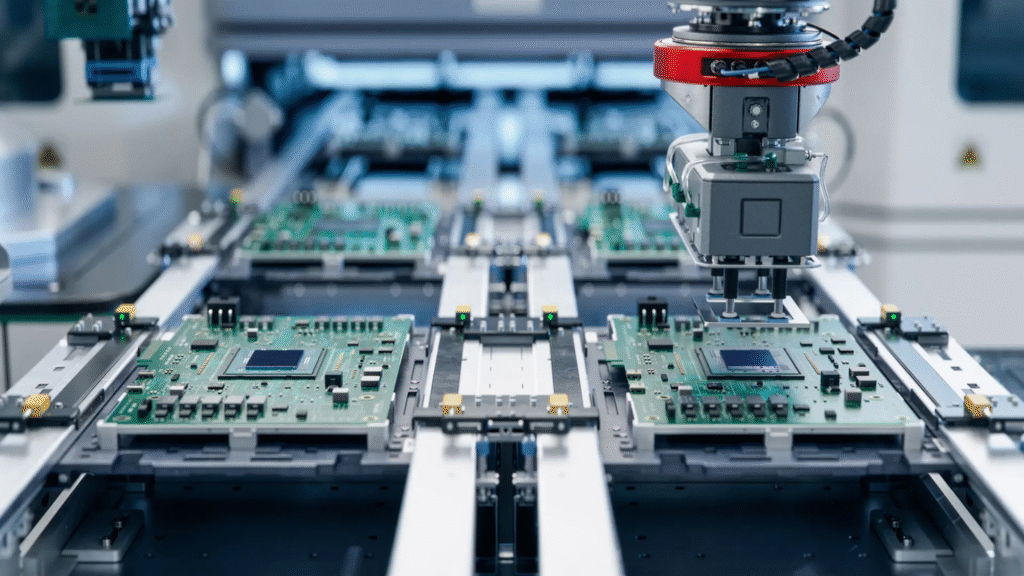
This article provides a real electronics manufacturing cost breakdown, focusing on the 7 hidden costs that actually drive total cost increase, and more importantly, how these costs are created, amplified, and controlled in real manufacturing environments.
Before evaluating cost, it is also important to choose the right electronics manufacturing partner. You can read our guide on how to evaluate an electronics manufacturing partner to avoid common sourcing mistakes.
Electronics Manufacturing Cost Breakdown (System-Level Perspective)
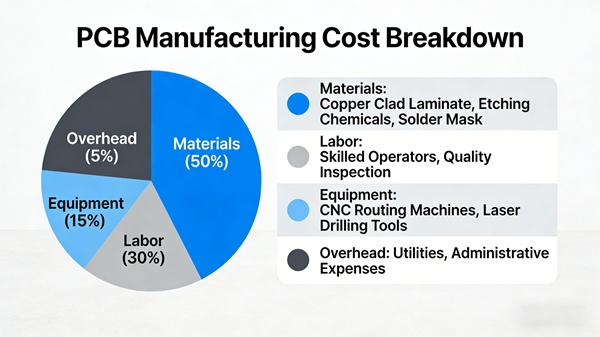
This electronics manufacturing cost breakdown shows that cost is not only driven by BOM, but also by system stability across the entire production process.
A typical cost structure appears straightforward:
| Cost Category | Typical Share |
|---|---|
| BOM (Components) | 60–70% |
| PCB + Assembly | 20–30% |
| Testing + Logistics | 5–15% |
According to industry standards for electronics manufacturing, electronics manufacturing cost is influenced by material selection, process capability, and production stability across the entire manufacturing lifecycle.
However, this view hides the most critical factor:
👉 Total Cost = Quoted Cost + Process Loss + Coordination Loss + Risk Cost
Where:
- Process Loss → yield loss, inefficiency, rework
- Coordination Loss → multi-supplier misalignment
- Risk Cost → delays, instability, field failures
👉 The 7 hidden costs originate from these three layers.
Understanding this system is the foundation of real cost control.
The 7 Hidden Costs That Increase Electronics Manufacturing Cost
Understanding electronics manufacturing cost requires analyzing these hidden cost drivers that appear during real production.
Hidden Cost 1: Design Change Cost (ECO Loop Cost)
What actually happens
Most designs are technically manufacturable at prototype stage. However, many are not stable when scaled to volume production.
Small issues—such as pad design, thermal imbalance, or tolerance stacking—may not fail immediately, but they create instability during production.
Cost mechanism
Design issue → manufacturing defect → engineering change → revalidation → production interruption
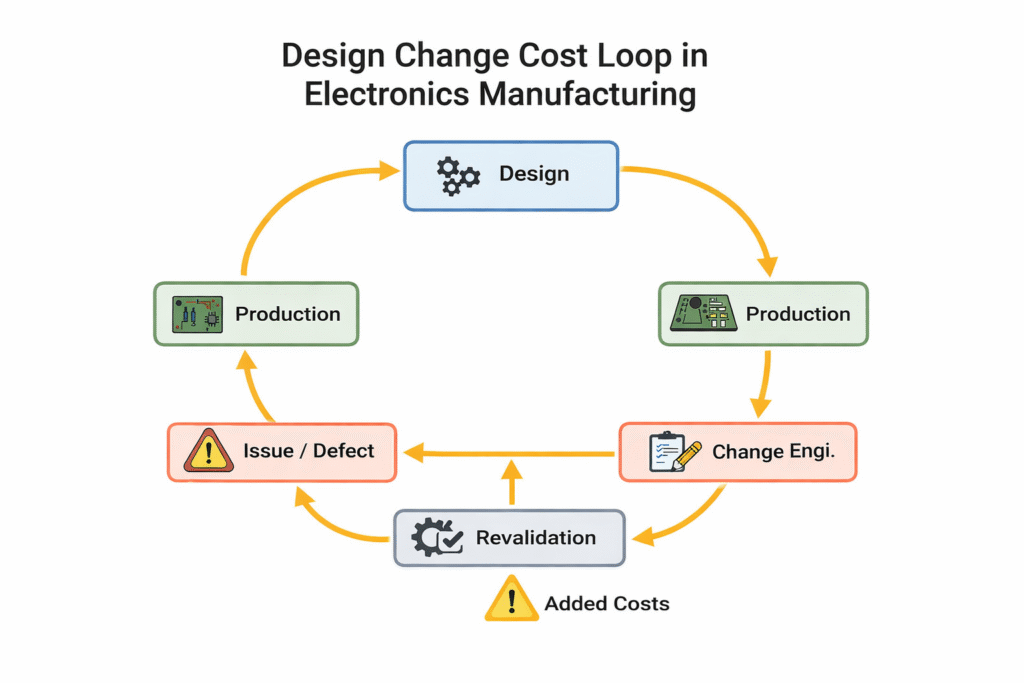
👉 This forms a closed loop, not a one-time event.
Cost amplification
Each ECO triggers:
- PCB redesign and re-fabrication
- BOM modification and re-sourcing
- test program updates
- process re-qualification
👉 The cost is not linear—it spreads across engineering, sourcing, production, and QA.
Engineering insight
A design that “works” is not necessarily a design that is cost-stable.
Cost control starts before production—with DFM optimization.
A structured PCB DFM checklist can help identify these risks early and prevent costly design changes during production.
Hidden Cost 2: Yield Loss Cost (Throughput Collapse Cost)
What yield really represents
Yield is not simply defect rate—it defines how efficiently a production line converts input into usable output.
Cost mechanism
When yield drops:
- scrap increases
- rework increases
- effective output per cycle decreases
👉 Cost increases from both directions:
- more resources consumed
- fewer sellable units produced
Cost amplification
A relatively small yield drop can result in:
- higher labor cost per unit
- increased machine utilization cost
- longer production cycles
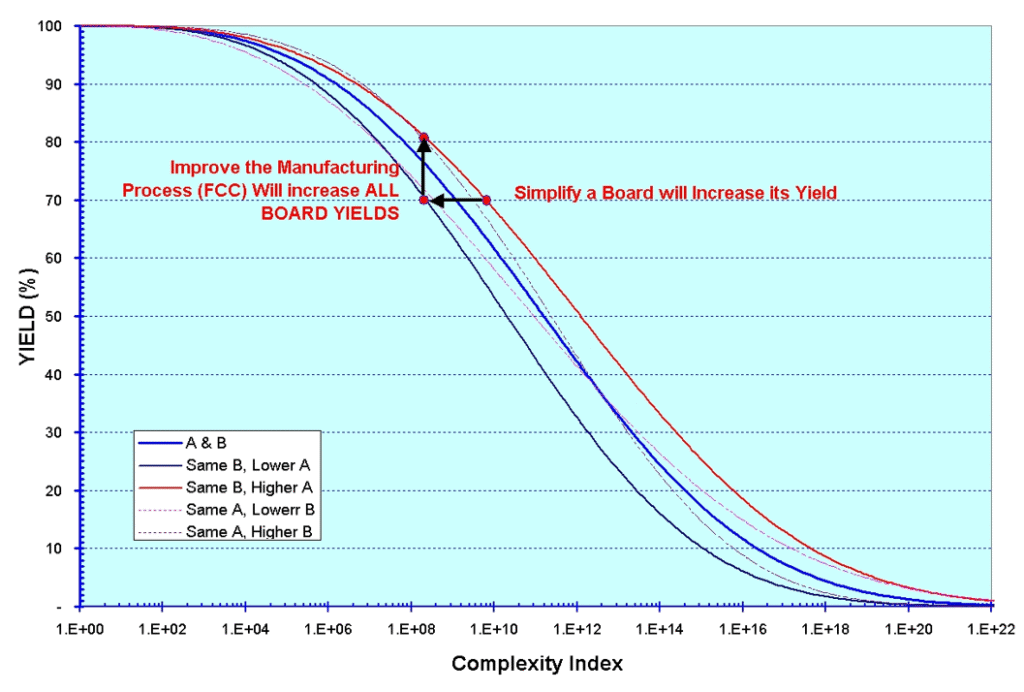
👉 A 5% yield drop can easily lead to 10–15% total cost increase
Engineering insight
Yield loss is often driven by:
- narrow process windows (e.g., reflow sensitivity)
- component variability
- design-process mismatch
👉 Yield stability is one of the most powerful cost control levers.
This is why electronics manufacturing cost is highly sensitive to process stability rather than just initial pricing.
Hidden Cost 3: Rework & Repair Cost (Flow Disruption Cost)
What rework actually means
Rework removes products from the standard production flow.
Instead of moving forward through a controlled process, units are:
- diagnosed
- manually repaired
- retested
Cost mechanism
Rework introduces:
- additional labor
- increased cycle time
- process variability
👉 It disrupts flow efficiency, which is critical for cost control.
Hidden impact
Manufacturing efficiency depends on repetition and predictability.
Rework introduces exceptions, which:
- reduce throughput
- complicate scheduling
- increase management overhead
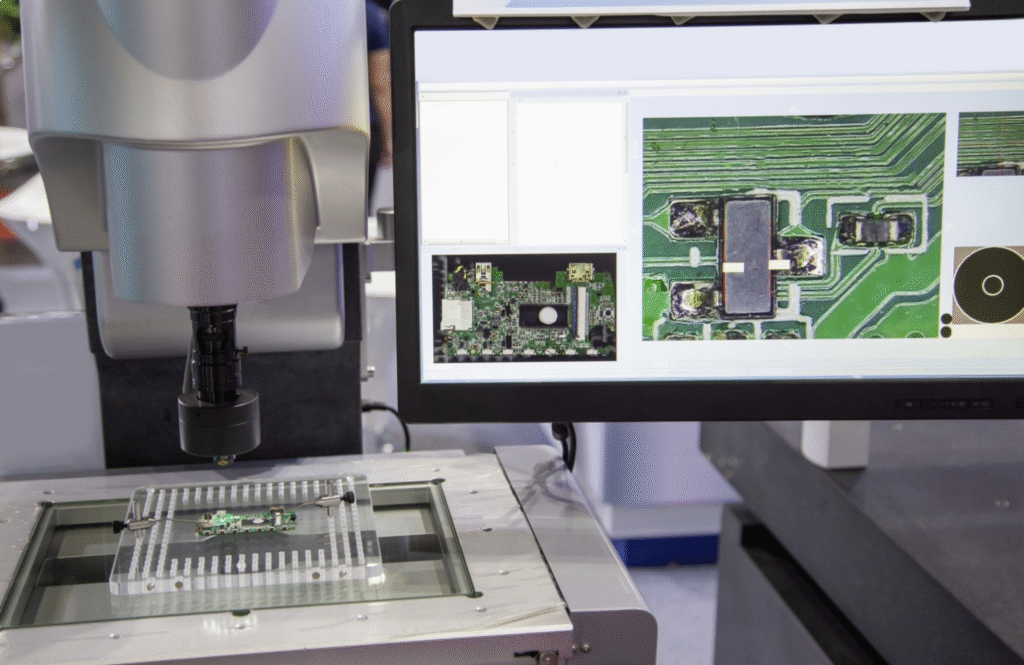
Understanding common PCB assembly defects is critical to reducing rework and improving overall electronics manufacturing cost.
Reliability risk
Repeated handling and thermal exposure during rework may reduce long-term product reliability.
Hidden Cost 4: Supply Chain Disruption Cost (Production Stop Cost)
What happens in real production
Electronics manufacturing is a synchronized system.
👉 If one component is missing, the entire production flow stops.
Cost mechanism
Material shortage → line stop → rescheduling → urgent sourcing
According to recent global electronics supply chain analysis, disruptions in component availability and logistics continue to significantly impact electronics manufacturing cost.
Cost amplification
- expedited component procurement at higher cost
- idle labor and equipment
- missed delivery schedules
👉 Production is not delayed incrementally—it is fully interrupted
Engineering insight
Supply chain stability directly affects manufacturing cost, not just procurement efficiency.
Hidden Cost 5: MOQ & Inventory Cost (Capital Lock Cost)
What causes this issue
Mismatch between procurement quantities and actual production demand.
Cost mechanism
- components purchased in excess
- inventory held for long periods
- unused stock becomes obsolete
Cost amplification
- capital tied up in inventory
- storage and handling costs increase
- write-offs for unusable materials
Strategic insight
MOQ issues do not change unit price immediately,
but they increase total program cost and financial pressure over time.
Hidden Cost 6: Coordination Cost (Fragmented Manufacturing Cost)
What happens with multiple suppliers
Different vendors handle:
- PCB fabrication
- component sourcing
- assembly
- enclosure
Cost mechanism
Each interface introduces risk:
- tolerance mismatch
- communication delay
- unclear responsibility
Cost amplification
- repeated problem-solving
- duplicated validation
- delayed issue resolution
👉 Cost is not just in production—it is in how many times problems must be solved
Strategic insight
Integrated manufacturing reduces coordination cost by eliminating interface gaps and aligning responsibility.
Hidden Cost 7: Field Failure Cost (Post-Delivery Cost Explosion)
What makes this cost critical
By the time a defect is discovered in the field:
- full manufacturing cost has already been invested
- logistics and delivery costs have been incurred
Cost mechanism
- product returns
- warranty replacements
- failure analysis
- customer dissatisfaction
Cost amplification
👉 Field failure cost can reach:
5–10× manufacturing cost
Strategic insight
Cost control does not end at production—it ends when product performance is validated in real use.
Real Case Study: System-Level Cost Escalation
Initial Situation
A customer sourced:
- PCB from Supplier A
- assembly from Supplier B
- components independently
Problem chain
- PCB tolerance mismatch
- assembly misalignment
- repeated rework cycles
Result
- production delay: +3 weeks
- total cost increase: ~30%
Optimization
CINDY MOULD implemented:
- integrated manufacturing
- DFM optimization
- centralized supply chain
Outcome
- yield improved
- production stabilized
- total cost reduced by ~25%
👉 Cost reduction came from eliminating system inefficiencies—not lowering unit price.
This case clearly shows how electronics manufacturing cost increases when system inefficiencies are not controlled early.
Key Insight: Why Low Quotes Often Lead to Higher Total Cost
Low quotes often assume:
- stable yield
- smooth supply chain
- minimal defects
👉 In reality, these assumptions frequently fail.
When they fail, hidden costs appear and accumulate.
How to Control Electronics Manufacturing Cost
To reduce total cost effectively, focus on:
- early DFM optimization
- yield stability
- supply chain reliability
- integrated manufacturing
- effective testing strategy
👉 Cost control is about managing system stability, not just reducing unit price.
How CINDY MOULD Controls Total Cost
At CINDY MOULD, we approach cost from a system perspective.
We reduce cost by:
- identifying risks before production
- stabilizing manufacturing processes
- integrating supply chain and assembly
- improving yield and consistency
👉 This results in:
- predictable cost
- stable production
- reduced risk
Conclusion
Electronics manufacturing cost is not defined by quotation alone, but by how effectively hidden cost drivers are controlled throughout production.
👉 It is defined by how well hidden cost drivers are controlled.
Understanding these 7 hidden costs allows buyers to:
- avoid cost escalation
- improve production efficiency
- achieve true cost control
👉 The goal is not the lowest price,
but the lowest total cost under real production conditions.
Frequently Asked Questions (FAQ)
1. What is the biggest factor affecting electronics manufacturing cost?
The biggest factor is not just BOM pricing, but overall production stability.
While components often account for 60–70% of the total cost, the largest cost increases usually come from yield loss, design changes, and supply chain disruptions.
👉 In real production, unstable processes can increase total cost far more than material price differences.
2. How does yield affect PCB assembly cost?
Yield directly impacts PCB assembly cost because it determines how many usable units are produced from each production cycle.
When yield decreases:
- More products are scrapped
- More labor is required for rework
- Output per hour decreases
👉 As a result, the effective cost per unit increases significantly.
3. Why do low-cost manufacturing quotes often lead to higher total cost?
Low quotes often exclude hidden cost factors such as:
- rework and repair
- insufficient testing
- unstable component sourcing
👉 These issues appear during production and increase total cost beyond the initial quotation.
4. What is included in an electronics manufacturing cost breakdown?
A typical electronics manufacturing cost breakdown includes:
- BOM (components)
- PCB fabrication
- assembly (SMT/THT)
- testing and quality control
- logistics and packaging
👉 However, hidden costs such as yield loss, supply chain instability, and coordination issues are often not included but can significantly impact total cost.
5. How can I reduce electronics manufacturing cost without sacrificing quality?
To reduce cost effectively, focus on:
- optimizing DFM (Design for Manufacturability)
- improving production yield
- stabilizing the supply chain
- using integrated manufacturing solutions
👉 Reducing hidden costs is more effective than simply lowering unit price.
6. What is the difference between unit cost and total manufacturing cost?
Unit cost refers to the price per product based on quotation.
Total manufacturing cost includes:
- production losses
- rework
- delays
- supply chain risks
- post-delivery failures
👉 Total cost is always higher than unit cost if hidden factors are not controlled.
7. How does integrated manufacturing reduce overall cost?
Integrated manufacturing reduces cost by minimizing:
- communication gaps between suppliers
- tolerance mismatches
- repeated rework across processes
👉 By managing the entire production flow under one system, total cost becomes more predictable and stable.