
Introduction
Product reliability in final assembly is a critical factor in electronics manufacturing, yet it is often overlooked compared to PCB quality, component selection, and inspection processes. These elements establish the technical foundation of performance and are typically well controlled in modern production environments.
However, even when these upstream stages are stable, variations can still appear after final assembly. Products built with identical designs and components may behave differently in real-world conditions, particularly over extended periods of use.
This highlights an important but often underestimated factor: how assembly conditions influence overall product performance.
Final assembly is not simply the last step of production. It is the stage where product performance is ultimately shaped through system-level integration.
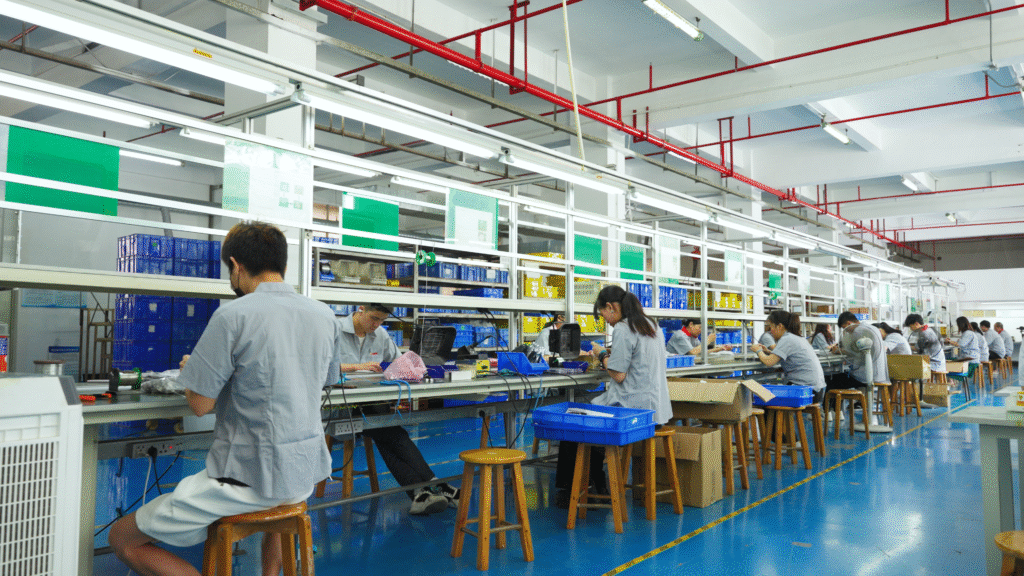
What Is Final Assembly in Electronics Manufacturing?
Final assembly refers to the stage where components and subassemblies are integrated into a complete product. At this point, electrical, mechanical, and structural elements begin to interact as a unified system.
Typical activities at this stage include:
- Completing electrical connections
- Securing mechanical structures and enclosures
- Routing and fixing wires and connectors
- Integrating functional modules
Because multiple interfaces are involved, product reliability in final assembly depends on how consistently these elements are combined and controlled.
Factors Affecting Product Reliability in Final Assembly
Even when assembly procedures are defined and followed, small variations can still occur during execution. These variations are often introduced through handling, positioning, and fixation differences.
Typical sources of variation include:
- Differences in connection handling
- Variation in wire routing and fixation
- Mechanical alignment differences
- Variation in assembly force and positioning
Individually, these factors may not cause immediate defects. However, when repeated across production batches, they can accumulate and influence overall performance.
This accumulation is one of the main reasons why product reliability in final assembly can vary between units that otherwise appear identical.
Interface Consistency and Its Role in Reliability
Interfaces play a critical role in determining system stability. These include connector contacts, structural joints, and electrical interfaces between components.
Maintaining consistency at these interfaces is essential for achieving stable performance.
Variability at the interface level may include:
- Differences in contact pressure
- Misalignment between mating components, often associated with tolerance stack-up challenges in electronics product assembly
- Inconsistent cable support
- Uneven distribution of mechanical stress
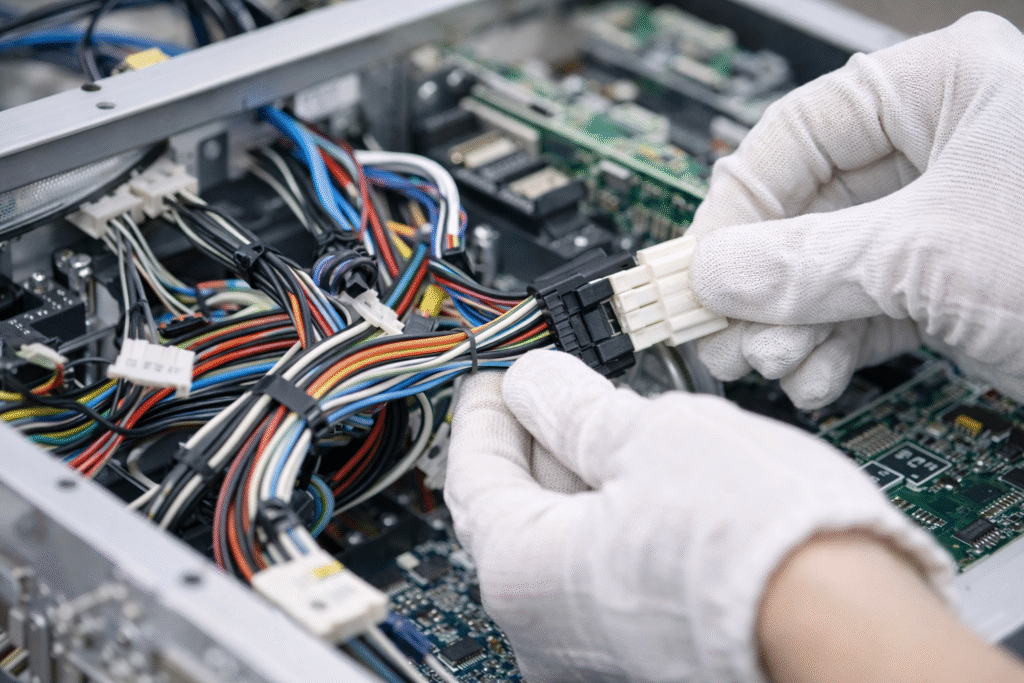
These factors may not be visible during inspection, but they directly influence product stability, especially under dynamic conditions such as vibration or temperature changes.
Mechanical–Electrical Interaction in Final Assembly
Final assembly involves close interaction between mechanical and electrical systems.
Mechanical conditions can directly influence electrical performance. For example:
- Mechanical stress can affect contact resistance
- Structural deformation can impact connector alignment
- Movement or insufficient fixation can weaken connections over time
These interactions are often not captured during initial inspection but can significantly affect long-term reliability.
From a system perspective, product reliability in final assembly depends on how well mechanical and electrical elements function together within the assembled product.
Sources of Variation in Assembly Operations
Assembly processes inherently involve multiple steps, each of which can introduce variation. Even when procedures are clearly defined, differences in execution can still occur.
Common sources of variation include:
- Differences in assembly sequence execution
- Variation in applied force during fastening or connection
- Inconsistent positioning of components
- Differences in handling methods for wires and connectors
These variations are often minor at the individual level. However, when accumulated across production batches, they can lead to measurable differences in performance.
Delayed Effects of Assembly Variation
One of the challenges in managing assembly-related variation is that its effects are often delayed.
Products may pass:
- Functional testing
- Visual inspection
- Initial quality checks
However, performance differences may appear later under real-world conditions such as:
- Transportation and handling
- Mechanical vibration during operation
- Thermal cycling
- Long-term use
Because these effects develop over time, it becomes difficult to trace them back to specific assembly steps. This delayed manifestation makes product reliability in final assembly more challenging to evaluate and control.
Limitations of Inspection in Final Assembly
Inspection is an important part of quality control, but it has inherent limitations when addressing assembly-related variability.
Inspection evaluates results at a specific point in time, often based on IPC standards for electronics assembly. It confirms whether a product meets defined criteria but does not guarantee that all units are produced under consistent conditions.
In particular, inspection may not detect:
- Subtle variation between units
- Sensitivity to environmental conditions
- Gradual degradation of connections
For this reason, improving product reliability in final assembly requires focusing on process control rather than relying solely on inspection outcomes.
Process Control and Repeatability
Achieving consistent results in final assembly requires strong process control and repeatability.
Key practices include:
- Defining standardized assembly procedures
- Controlling handling methods for critical interfaces
- Establishing consistent routing and fixation guidelines
- Ensuring repeatable execution across batches
By improving process control in manufacturing, variation can be reduced at its source, leading to more stable production outcomes.
Operator Consistency and Training Impact
In assembly processes, consistency is also influenced by how operations are executed across different personnel.
Even with clearly defined procedures, variations can still arise due to differences in experience, handling habits, and interpretation of assembly steps.
These differences may include:
- Variations in applied force during connections
- Differences in how components are positioned or fixed
- Inconsistent handling of wires and connectors
To improve product reliability in final assembly, it is important to establish:
- Standardized training programs
- Clear visual and procedural guidelines
- Consistent execution methods across operators
Assembly Design Considerations for Reliability
Product design has a direct influence on assembly consistency.
Design decisions made during development can affect how easily and reliably a product can be assembled.
Examples include:
- Limited space for cable routing, increasing variability
- Insufficient structural support for connectors or wires
- Complex assembly sequences that rely heavily on manual execution
- Poor accessibility that makes consistent assembly difficult
Design for assembly (DFA) helps align product design with assembly requirements, improving consistency and reducing variation.
Environmental and Handling Factors
Environmental and handling conditions during production and logistics can also influence reliability.
Factors such as:
- Humidity and temperature during assembly
- Electrostatic discharge (ESD) conditions
- Handling during transportation and packaging
- Exposure to vibration before end use
can affect how stable connections and interfaces remain over time.
Managing these factors helps ensure that assembly quality is maintained beyond the production stage.
Integrated Manufacturing and Cross-Stage Coordination
Final assembly performance is influenced by upstream processes such as design, component manufacturing, and structural production.
An integrated manufacturing systems approach improves product reliability in final assembly by:
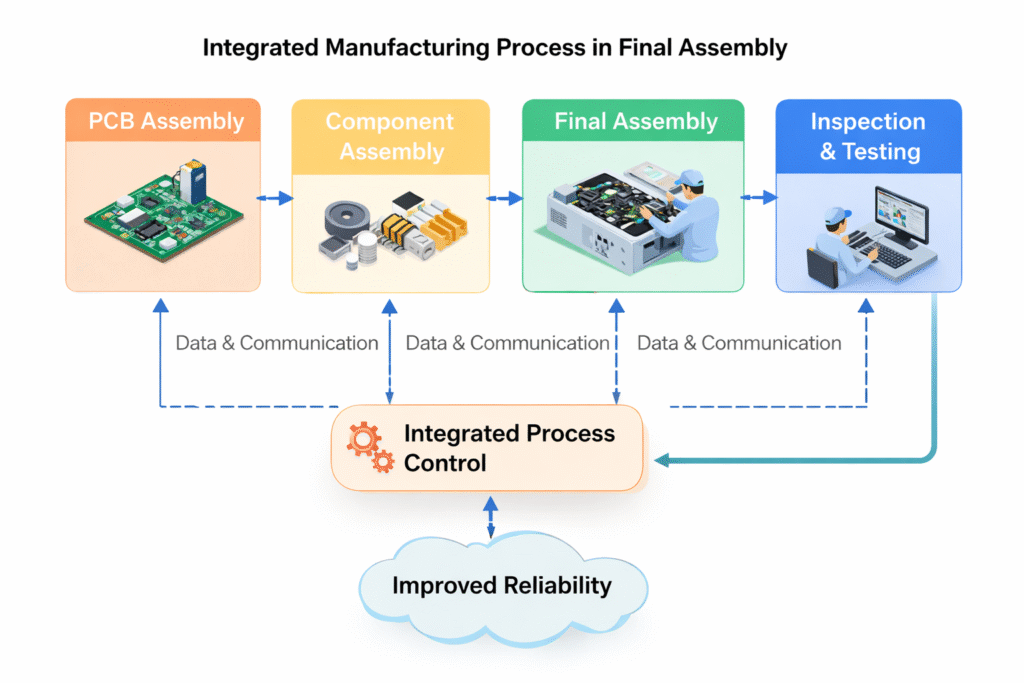
- Aligning standards across production stages
- Reducing variation during process handoffs
- Improving communication between teams
- Ensuring assembly requirements are considered early
Conclusion
Product reliability in electronics manufacturing is influenced by more than component quality and inspection results.
Final assembly plays a critical role in determining how consistently a product performs as a complete system. Variability introduced during this stage can affect long-term stability, even when all upstream processes are well controlled.
By focusing on process consistency, interface stability, and system-level coordination, manufacturers can significantly improve product reliability in final assembly and achieve more predictable production outcomes.
FAQ
What is final assembly in electronics manufacturing?
Final assembly refers to the stage where components and subassemblies are integrated into a complete product, often referred to as box build assembly in electronics manufacturing.
Why does product reliability vary after assembly?
Variations occur due to differences in assembly execution, interface consistency, environmental conditions, and mechanical–electrical interactions.
Can inspection ensure product reliability?
Inspection helps detect defects, but it does not guarantee consistency. Process control is more important for ensuring stable reliability.
How to improve product reliability in final assembly?
Improvement requires standardized processes, controlled handling, consistent execution, design alignment, and coordination across manufacturing stages.