
Introduction
In electronics manufacturing, speed to market is often the deciding factor between success and missed opportunity.
However, delays are rarely caused by a single issue. In most projects, slow market entry is the result of:
- Repeated design iterations
- Poor coordination between engineering and manufacturing
- Component sourcing delays
- Unstable production ramp-up
From an engineering perspective, the real challenge is not just speed—but process integration and execution efficiency.
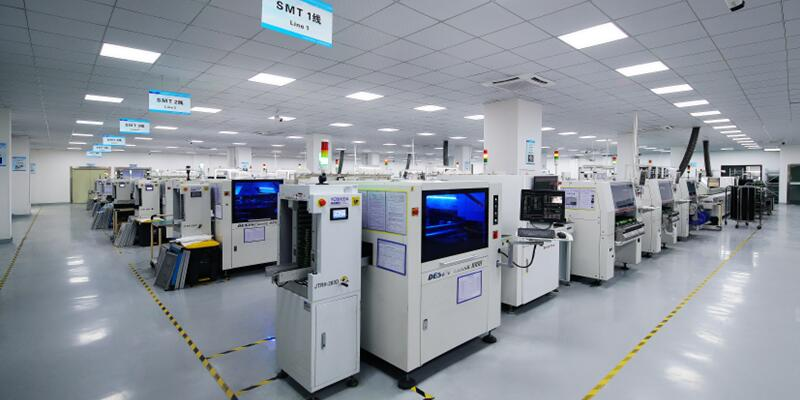
This is where ODM electronics manufacturing provides a structured advantage. As part of modern electronics manufacturing services, it integrates design, engineering, sourcing, and production into a unified workflow, reducing complexity and improving overall efficiency.
By aligning these stages early, ODM electronics manufacturing enables faster development cycles and more predictable product launches.
ODM electronics manufacturing plays a critical role in helping companies achieve faster and more predictable market entry by integrating design, engineering, sourcing, and production into a unified system.
However, delays are rarely caused by a single issue. In most projects, slow market entry is the result of:
- Repeated design iterations
- Poor coordination between engineering and manufacturing
- Component sourcing delays
- Unstable production ramp-up
From an engineering perspective, the real challenge is not just speed—but process integration and execution efficiency.
This is where ODM electronics manufacturing provides a structured advantage. By integrating design, engineering, sourcing, and production, ODM electronics manufacturing reduces complexity and enables faster, more predictable product launches.
Quick Engineering Reference
ODM electronics manufacturing provides a more integrated and efficient approach compared to traditional models.
| Factor | ODM Electronics Manufacturing | Traditional Model |
|---|---|---|
| Development Cycle | 20–40% shorter (typical projects) | Longer due to fragmentation |
| Engineering Iterations | Reduced by early DFM | Frequent revisions |
| Supply Chain Readiness | Pre-aligned | Reactive sourcing |
| Production Ramp-Up | Fast (integrated) | Slower |
| Risk Level | Lower | Higher |
💡 Tip: Most delays are not caused by manufacturing itself, but by misalignment between stages.
When ODM Electronics Manufacturing Makes Sense
ODM electronics manufacturing is particularly suitable in the following scenarios:
- You need to launch within tight timelines (3–6 months typical)
- The product concept is defined but not fully optimized
- Multiple functions can be integrated into fewer assemblies
- Internal engineering resources are limited
👉 In these scenarios, ODM reduces both engineering workload and coordination overhead.
When NOT to Use ODM
ODM may not be ideal when:
- Very low production volume (<50–100 units)
- Product design is still evolving rapidly
- Ultra-high precision is required (±0.01mm level)
- Full internal design control is required
💡 Engineering Note:
In many projects, teams start with prototyping or EMS, and transition to ODM once the design stabilizes.
ODM vs EMS vs OEM: Which Model Fits Your Project?
Choosing the right manufacturing model is a critical engineering decision. Many companies confuse ODM, EMS, and OEM, but each serves a different purpose.
| Model | Scope | Best For | Limitation |
|---|---|---|---|
| ODM | Design + Manufacturing | Fast market entry, limited engineering resources | Less control over full design |
| EMS | Manufacturing + Assembly | Mature designs ready for production | Requires strong internal engineering |
| OEM | Build to customer design | Full control projects | Longer development cycle |
Engineering Perspective
- ODM reduces coordination complexity
- EMS requires strong internal design capability
- OEM offers maximum control but slower execution
👉 Practical Rule:
- Early stage → ODM
- Mature design → EMS
- High customization → OEM
👉 This decision alone can impact project timelines by weeks or even months.
7 Engineering Advantages of ODM Electronics Manufacturing
- Integrated Design and Manufacturing Reduce Iteration Cycles
Engineering Challenge
Separated design and manufacturing often lead to multiple revision loops.
ODM Approach
With ODM electronics manufacturing, design and production teams collaborate from the beginning, applying DFM (Design for Manufacturability) early.
Engineering Impact
- Iteration cycles reduced by ~30%
- Faster transition to production
Practical Example
In one consumer electronics project, early DFM eliminated 3 redesign cycles, saving approximately 2–3 weeks in development time.
2. Pre-Engineered Platforms Reduce Development Time
Engineering Challenge
Starting from scratch increases both time and technical risk.
ODM Approach
Use of modular platforms and validated circuit designs.
Engineering Impact
- Development time reduced by 20–50%
- Faster product customization
Practical Example
Instead of designing a new control board, a customer reused an existing ODM platform and reduced development time from 10 weeks to 5 weeks.
3. Optimized Supply Chain Shortens Lead Time
Engineering Challenge
Component shortages can delay entire projects.
ODM Approach
Established supplier networks and pre-qualified components.
Engineering Impact
- Procurement lead time reduced by 15–30%
- Improved delivery reliability
Data Insight
Projects using ODM sourcing strategies typically avoid 1–2 weeks of delay caused by last-minute component shortages.
4. Standardized Manufacturing Improves Production Stability
Engineering Challenge
Inconsistent processes cause defects and delays.
ODM Approach
Standardized SMT, assembly, and inspection workflows.
Engineering Impact
- Yield rate improved to >95%
- Reduced production variability
Practical Insight
Stable processes reduce rework cycles, which can otherwise delay production by several days per batch.
5. Rapid Prototyping and Testing Accelerate Validation
Engineering Challenge
Slow prototyping delays validation and increases risk.
ODM Approach
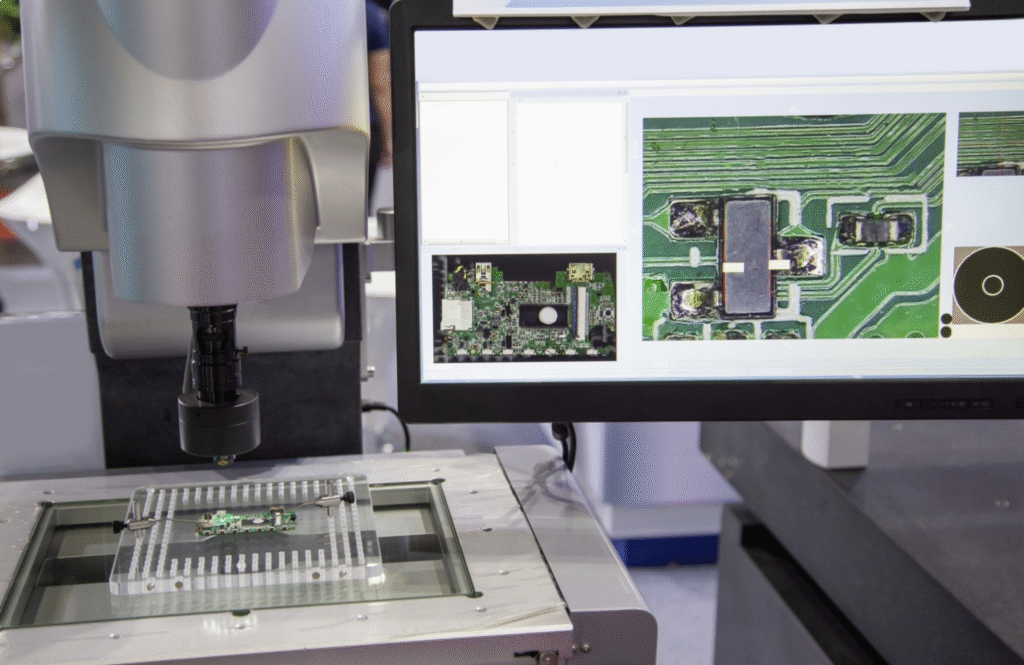
With ODM electronics manufacturing, integrated prototyping, testing, and validation systems enable faster iteration, especially when combined with an optimized PCB assembly process that ensures efficient testing and rapid design adjustments.
Engineering Impact
- Prototype cycles shortened by 30–50%
- Faster issue detection
Example
A smart device project completed functional validation in 2 weeks instead of 4, allowing earlier transition to mass production.
6. Early Risk Control Reduces Rework
Engineering Challenge
Late-stage issues lead to costly delays.
ODM Approach
DFM, engineering reviews, and early-stage validation.
Engineering Impact
- Rework reduced by 20–40%
- Higher first-pass success rate
Engineering Insight
Fixing a design issue early can take hours; fixing it during production can take days or weeks.
7. Scalable Production Enables Faster Market Entry
Engineering Challenge
Limited capacity delays product launch.
ODM Approach
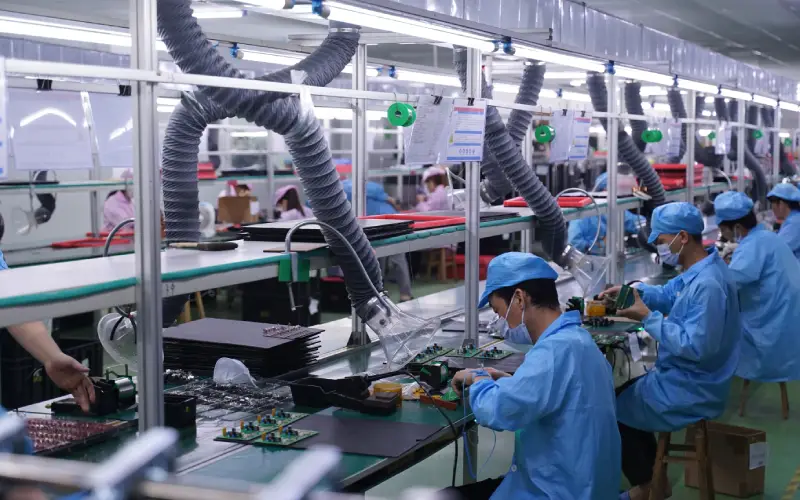
With ODM electronics manufacturing, flexible and scalable production systems support full box build assembly, enabling faster product integration and efficient transition to mass production.
Engineering Impact
- Faster ramp-up (typically within 1–2 weeks)
- Ability to meet demand immediately
Practical Example
In one project, ODM production ramped from prototype to mass production in 10 days, compared to 3–4 weeks in a traditional model.
Understanding the Real Cost Structure of ODM
Many buyers focus only on unit price—but from an engineering perspective, total cost is more important.
Cost Comparison
| Cost Element | ODM | Traditional Model |
|---|---|---|
| Engineering Cost | Lower (integrated) | Higher (separate teams) |
| Tooling Cost | Moderate | Varies |
| Unit Cost | Competitive | Often higher due to inefficiencies |
| Rework Cost | Low | High |
Hidden Cost Factors
From real projects, the biggest cost differences come from:
1. Engineering Rework
- Traditional: repeated revisions
- ODM: early DFM reduces redesign
2. Assembly Complexity
- Multiple suppliers → more assembly steps
- ODM → integrated design reduces components
3.Time Cost
- Delays = lost market opportunity
- ODM reduces launch delay by 20–40%
These patterns are also reflected in broader electronics manufacturing industry trends, where integration and efficiency are becoming key competitive factors.
👉 Key Insight:
The biggest savings in ODM do not come from cheaper manufacturing—but from reduced inefficiency across the system.
Hidden Advantages Most Buyers Overlook
Beyond engineering improvements, ODM also provides:
- Reduced assembly complexity (fewer parts)
- Fewer suppliers to manage
- Better production consistency
- Lower long-term engineering cost
👉 In many projects, these hidden factors create more value than unit cost savings.
How to Maximize the Benefits of ODM Electronics Manufacturing
ODM is not just about choosing the right partner—it also depends on how the product is designed.
1. Design for Integration
Instead of designing multiple separate components:
- Combine functions into fewer parts
- Reduce connectors and assembly steps
👉 This improves reliability and reduces production time.
2. Standardize Where Possible
Using standardized components:
- Reduces sourcing complexity
- Improves lead time stability
👉 Especially important in global supply chain environments.
3. Align Design with Manufacturing Early
Many delays happen because:
- Design is completed first
- Manufacturing is considered later
ODM avoids this by integrating both from the start.
4. Avoid Over-Engineering
From experience:
- Many designs include unnecessary complexity
- This increases cost and slows production
👉 ODM helps simplify designs while maintaining functionality.
5. Plan for Scalability
Design decisions should consider:
- Future production volume
- Assembly efficiency
- Testing requirements
👉 This ensures smooth transition to mass production.
Practical Insight from Real Projects
From our experience in electronics manufacturing:
- Many projects start with fragmented workflows
- Engineering and production misalignment causes delays
- Communication overhead increases as complexity grows
After switching to ODM:
- Engineering coordination improves
- Validation cycles shorten
- Production becomes more predictable
👉 The biggest advantage is not just speed—but system efficiency and stability.
FAQ: ODM Electronics Manufacturing
What is ODM electronics manufacturing?
ODM combines product design and manufacturing into one integrated service, enabling faster and more efficient product development.
How is ODM different from EMS or OEM?
ODM includes design + manufacturing, while EMS focuses on production and OEM follows customer-provided designs.
Does ODM always reduce cost?
Not always in unit price, but it reduces total cost by improving efficiency, reducing rework, and shortening timelines.
Is ODM suitable for low-volume production?
For very low volumes, EMS or prototyping methods may be more flexible. ODM becomes more effective as projects scale.
Can ODM accelerate product launch significantly?
Yes. In many projects, ODM reduces overall project timelines by 20–40%.
About CINDY Mould
In electronics manufacturing, one of the biggest challenges is coordinating design, sourcing, and production efficiently.
At CINDY Mould, we provide integrated electronics manufacturing solutions, including:
- PCB assembly (PCBA)
- Component sourcing
- Full product assembly (box build)
- Engineering support from prototype to mass production
From our experience, many delays are not caused by technical limitations, but by fragmented workflows.
👉 By integrating engineering and manufacturing, we help customers:
- Reduce development cycles
- Improve production efficiency
- Achieve faster and more reliable market entry
Conclusion
ODM electronics manufacturing is not just a production model—it is an engineering strategy.
By integrating design, supply chain, and production, ODM reduces inefficiencies across the entire product lifecycle.
The result is:
- Faster development cycles
- Lower engineering risk
- More predictable execution
👉 Faster market entry is achieved not by working faster, but by eliminating delays across the system.