
Introduction
New Product Introduction (NPI) is one of the most critical stages in electronics manufacturing, yet it is also where many projects begin to lose control.
In real production environments, it is common to see products perform well during prototype validation but encounter unexpected issues once production scales. Yield may drop, assembly inconsistencies increase, and delivery timelines become difficult to maintain. In many cases, there is no single failure point—problems emerge from the interaction between design decisions, assembly processes, and production conditions.
This gap between prototype success and production stability is not accidental. It is often the result of an incomplete or poorly executed New Product Introduction (NPI) process.
In electronics manufacturing, New Product Introduction (NPI) is not just a transition step. It is a structured process used to validate manufacturability, align engineering and production teams, and ensure that a product can move from prototype to mass production with stability and consistency, especially during critical stages such as final product assembly.
What Does NPI (New Product Introduction) Mean?
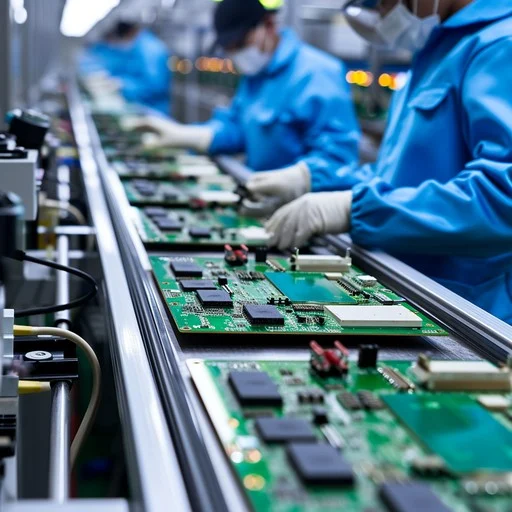
NPI, or New Product Introduction, refers to the structured process of bringing a new product from concept and design into production.
Across industries, the term “NPI” is commonly used to describe how a product moves from development to manufacturing. However, in electronics manufacturing, New Product Introduction (NPI) has a more specific meaning. It focuses not only on launching a product, but on ensuring that the product can be manufactured consistently, efficiently, and at scale.
The New Product Introduction (NPI) process typically includes multiple stages such as design validation, prototype builds, pilot production, and mass production ramp-up. Each stage is used to reduce risk, improve process stability, and ensure that the final product meets quality and reliability requirements.
Understanding what NPI (New Product Introduction) means in a manufacturing context helps teams avoid the common gap between prototype success and production performance.
What Is New Product Introduction (NPI) in Electronics Manufacturing?
New Product Introduction (NPI) refers to the process of transitioning a product from design and prototype stages into full-scale manufacturing.
Unlike prototyping, which focuses on verifying functionality, New Product Introduction (NPI) focuses on repeatability, scalability, and process control under real production conditions.
In electronics manufacturing, this process typically involves coordination across multiple domains:
- PCB design and PCB assembly (PCBA), including key processes such as solder paste printing and reflow soldering
- mechanical enclosure design and tooling development
- firmware programming and version control
- supply chain and component sourcing
- manufacturing engineering and process setup
The objective of New Product Introduction (NPI) is to ensure that a product can be produced consistently, not just once, but across batches, shifts, and production lines.
Key Stages of the New Product Introduction (NPI) Process
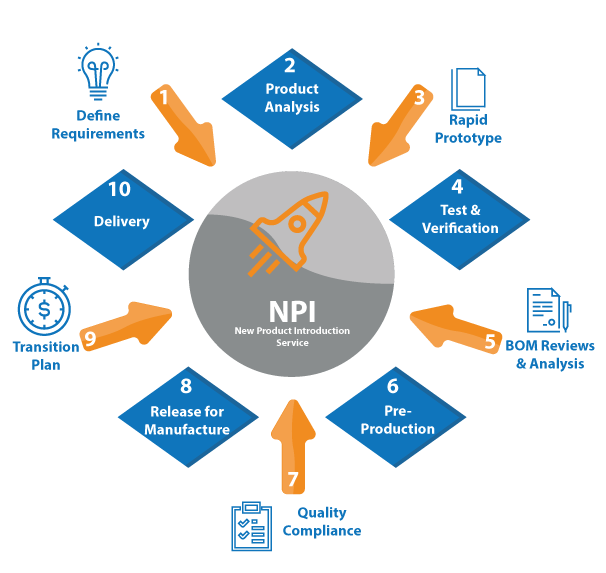
Although workflows may vary depending on product complexity, most New Product Introduction (NPI) processes follow a structured sequence.
1. Design Review and DFM Validation
The New Product Introduction (NPI) process begins with a comprehensive design review.
At this stage, engineering teams evaluate whether the product design is suitable for manufacturing at scale. This includes both electrical and mechanical considerations:
- PCB layout, pad design, and component spacing
- enclosure tolerances and material behavior (especially for injection-molded parts)
- connector positioning and accessibility
- assembly feasibility and tool clearance
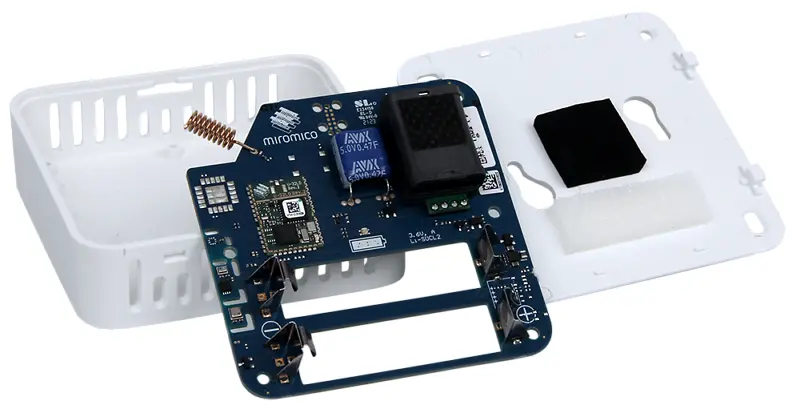
From practical manufacturing experience, many issues identified at this stage are not “design errors” but design decisions that become risks at scale.
This is why design for manufacturability (DFM) is a critical part of the New Product Introduction (NPI) process.
Typical risks include:
- tolerance stack-up between PCB, enclosure, and connectors
- tight clearances that require manual adjustment during assembly
- designs that increase assembly time or operator dependency
Addressing these issues early in the New Product Introduction (NPI) stage significantly reduces the likelihood of redesign during production.
2. Prototype Build and Engineering Validation
Prototype builds are used to validate basic product functionality and mechanical fit.
At this stage, teams focus on:
- electrical performance verification
- structural alignment and enclosure fit
- firmware functionality
- initial assembly feasibility
However, in real manufacturing scenarios, prototype builds often benefit from engineering flexibility that does not exist in mass production.
For example:
- operators may manually adjust component positions
- small alignment issues may be corrected during assembly
- rework is often acceptable at low volumes
These practices can mask underlying problems.
Common risks observed during this stage:
- reliance on manual fixes instead of process stability
- inconsistent assembly methods
- insufficient testing coverage
This is why New Product Introduction (NPI) should treat prototype validation as a risk identification phase, not a confirmation of production readiness.
3. Pilot Production and Process Validation
Pilot production is one of the most important steps in the New Product Introduction (NPI) process.
This stage uses actual production conditions—standard operators, real tools, and defined workflows—to build small batches.
The goal is to evaluate:
- assembly workflow stability
- process repeatability and traceability across production batches
- first-pass yield
- defect types and frequency
In practical production environments, this is often the stage where hidden issues begin to surface.
Typical problems include:
- PCB and enclosure misalignment due to tolerance accumulation
- cable routing inefficiencies increasing assembly time
- connector stress caused by improper positioning
- unclear or incomplete work instructions
Unlike prototypes, pilot builds reveal how the product behaves under real constraints.
4. Process Optimization and Documentation
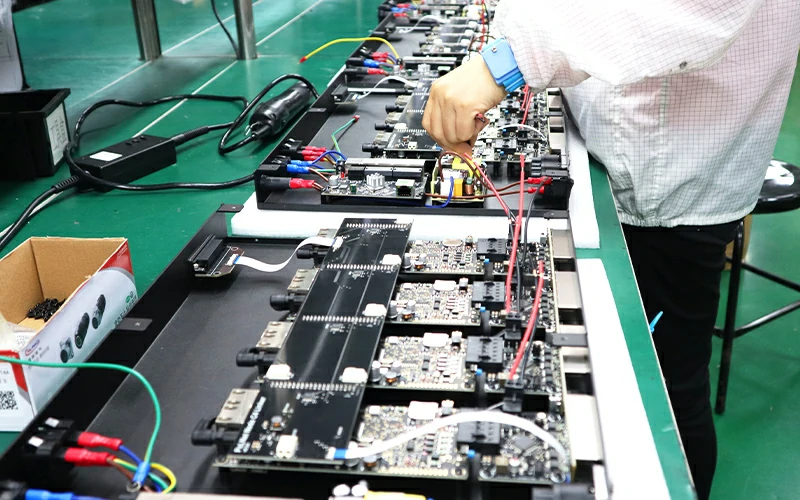
After pilot validation, the focus shifts to process refinement.
In New Product Introduction (NPI), this stage is critical for transforming a workable process into a repeatable one.
Key activities include:
- optimizing assembly sequences
- defining fixtures and tooling
- setting torque specifications for fasteners
- standardizing work instructions
- establishing inspection checkpoints
From a manufacturing perspective, well-defined documentation is one of the strongest indicators of process maturity.
Typical outputs include:
- Standard Operating Procedures (SOPs)
- assembly guidelines with visual references
- testing procedures
- quality control plans
Without clear documentation, production variability increases significantly.
5. Supply Chain Alignment and Risk Control
A stable supply chain is essential for successful New Product Introduction (NPI).
At this stage, teams ensure that:
- components are available at production volumes
- supplier quality is consistent
- lead times align with production schedules
- alternative sourcing options are available
In electronics manufacturing, supply chain issues are one of the most common causes of production delays.
Typical risks include:
- component shortages
- inconsistent material quality between batches
- last-minute design changes affecting sourcing
Addressing these risks early improves production stability.
6. Mass Production Ramp-Up and Process Control
Once processes are validated, production moves into ramp-up.
During this phase, New Product Introduction (NPI) transitions into ongoing production control.
Key focus areas include:
- maintaining stable yield levels
- controlling defect rates
- ensuring consistent assembly quality
- monitoring process performance over time
Even with a successful NPI process, scaling introduces new variables.
Common challenges include:
- yield drop compared to pilot builds
- increased variability across production batches
- process drift caused by operator differences or equipment conditions
Continuous monitoring and process control are required to maintain consistency.
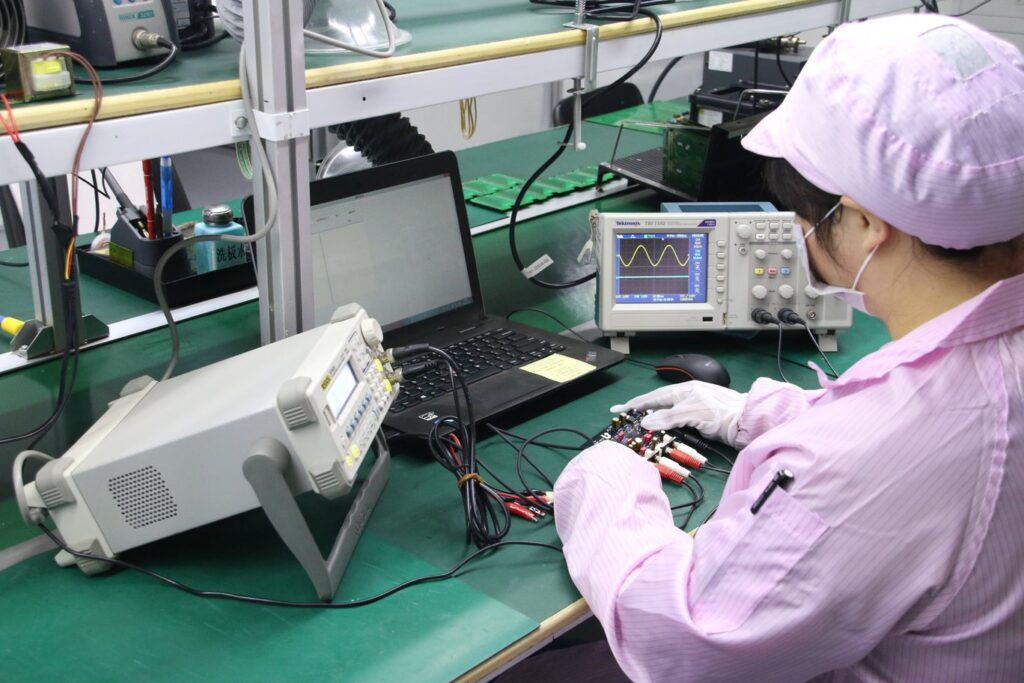
These practices are often aligned with IPC standards for electronics manufacturing to ensure consistent quality and reliability.
Common Challenges in New Product Introduction (NPI)
Even with structured workflows, several challenges frequently affect New Product Introduction (NPI) outcomes.
Prototype-to-Production Gap
Products that perform well in prototypes may not maintain consistency in production.
This gap is often caused by:
- differences in assembly methods
- lack of process standardization
- increased variability at scale
Cross-Functional Coordination
New Product Introduction (NPI) requires alignment between electrical, mechanical, and manufacturing teams.
Misalignment can result in:
- design conflicts
- assembly inefficiencies
- delayed production decisions
Incomplete Process Validation
Skipping pilot validation increases the risk of unresolved issues entering production.
This often leads to:
- higher rework rates
- reduced yield
- production delays
Scalability Challenges
Processes that work in low-volume environments may not scale effectively.
Factors such as operator variation, equipment differences, and supply chain fluctuations can introduce instability.
Why Integrated Manufacturing Improves NPI Outcomes
In many projects, New Product Introduction (NPI) involves multiple suppliers, including PCB assembly providers, enclosure manufacturers, and final assembly teams.
This fragmented approach can introduce:
- inconsistent documentation
- communication delays
- tolerance mismatches
Integrated manufacturing environments help reduce these risks.
When PCB assembly, injection molding, and final assembly are coordinated within a unified system, teams can:
- improve alignment between components
- respond faster to design changes
- reduce production risks
This approach enhances both efficiency and product reliability.
Conclusion
New Product Introduction (NPI) is a critical phase that determines whether an electronic product can successfully transition from prototype to mass production.
By focusing on design validation, pilot production, process standardization, and supply chain alignment, companies can significantly reduce manufacturing risks and improve overall manufacturing process stability.
A well-executed New Product Introduction (NPI) process leads to:
- improved production stability
- consistent product quality
- reduced time to market
Next Steps
If your product is moving from prototype to production, early evaluation during the New Product Introduction (NPI) stage can help identify potential risks before they impact manufacturing.
Key areas to review include:
- PCB and enclosure compatibility
- assembly workflow efficiency
- cable routing and structural integration
- testing coverage and validation methods
If you are preparing for production or evaluating manufacturing options, working with an experienced engineering team can help ensure a smoother transition through the New Product Introduction (NPI) process.
For an initial technical discussion, you can contact CINDY Mould to explore suitable manufacturing solutions.