
In high-volume injection molding, mold wear and tear is rarely treated as a design problem.
Most teams only start paying attention once defects appear, cycle times drift, or maintenance frequency becomes impossible to ignore.
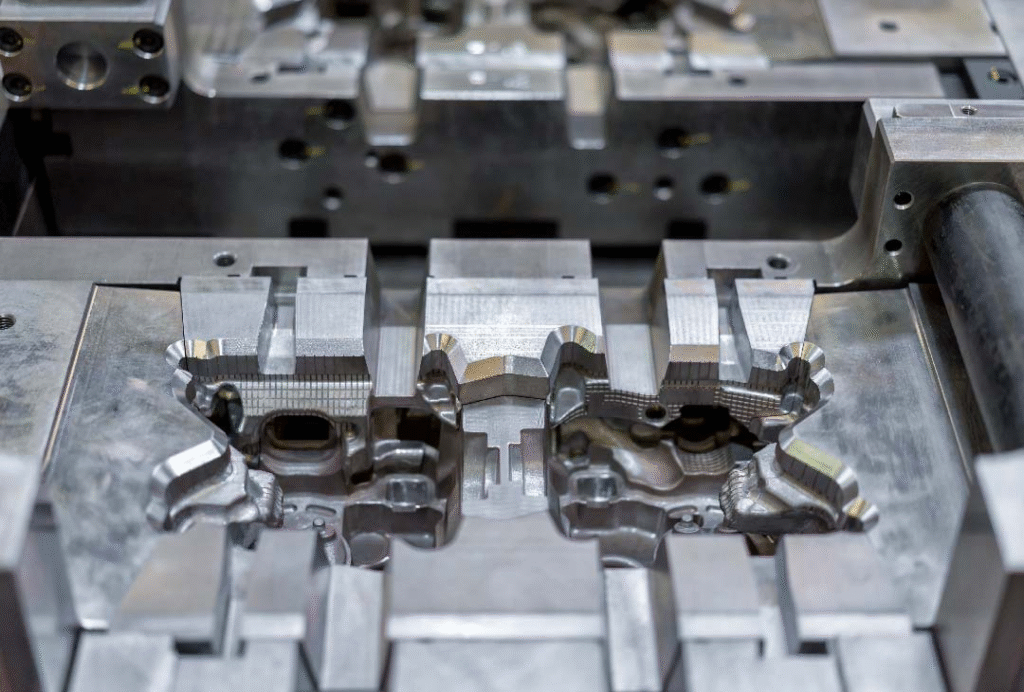
By that point, the damage has already been done.
Mold wear and tear is not an unavoidable byproduct of mass production. In most projects, it is the delayed result of early design and process decisions that did not fully account for long-term operating conditions. When a mold is expected to run tens or hundreds of thousands of cycles, small compromises made during design or early trials often turn into accelerated wear, unstable quality, and rising production costs.
This article examines mold wear and tear from a high-volume production perspective—focusing on why molds degrade faster than expected, how wear typically develops during continuous operation, and what practical design and process measures actually extend mold life in real manufacturing environments.
Why Mold Wear and Tear Accelerates in High-Volume Production
In low-volume or short-run projects, mold wear progresses slowly and is often negligible.
In high-volume production, however, mold wear and tear mechanisms compound over time, especially when early design decisions fail to support long-term production stability
👉 https://cindy-mould.com/news/
Several factors consistently accelerate mold degradation:
- Continuous thermal cycling causing repeated expansion and contraction
- High injection pressure concentrated in localized areas
- Repeated mechanical friction in sliders, lifters, and guide systems
- Increasing process compensation as the mold ages
- Minor imbalances that magnify over thousands of cycles
What makes mold wear and tear difficult to manage is that it rarely presents as a single failure point. Instead, it appears gradually—through surface damage, dimensional drift, sticking parts, or shortened maintenance intervals.
By the time these symptoms become obvious, corrective action often requires mold rework or downtime rather than simple process adjustment.
Common Mold Wear Patterns Seen in Mass Production
1. Cavity and Core Surface Degradation
Surface wear is one of the earliest signs of mold fatigue in high-volume runs.
It typically appears as:
- Loss of surface polish
- Fine scratches or pitting
- Reduced gloss consistency on molded parts
This type of mold wear and tear is often caused by insufficient material hardness, improper surface treatment, or high shear flow near gates and thin sections. From a materials engineering perspective, these mold wear mechanisms are driven by a combination of friction, surface fatigue, and thermal cycling
👉https://www.sciencedirect.com/topics/engineering/wear-mechanisms
Once surface degradation begins, cosmetic defects become harder to control, and polishing cycles become more frequent—shortening mold service intervals.
In extreme cases, repeated polishing removes material unevenly, leading to dimensional deviation and part inconsistency.
2. Core Pin and Insert Wear
Core pins and inserts experience concentrated stress, especially when located near:
- Thick ribs or bosses
- High packing pressure zones
- Areas with uneven cooling
Thermal imbalance causes localized expansion, increasing friction and accelerating wear. Over time, this leads to:
- Loose fit between mating components
- Increased flash risk
- Dimensional instability
In high-volume projects, pins that should last 150,000 cycles may begin failing after 50,000 cycles if cooling and pressure distribution are poorly balanced—an issue frequently discussed in high-volume injection molding projects
👉 https://cindy-mould.com/news/
3. Slider, Lifter, and Guide System Fatigue
Moving components are particularly vulnerable in continuous production.
Common failure modes include:
- Increased friction due to thermal distortion
- Inadequate lubrication pathways
- Misalignment caused by uneven mold heating
Once friction increases, mold wear and tear accelerates rapidly. The mold may still run, but operators begin compensating by slowing cycles, increasing lubrication frequency, or applying manual intervention—all of which reduce efficiency and increase risk.
4. Ejection System Wear and Part Sticking
Ejector pins and sleeves suffer wear when parts do not release cleanly.
This is often traced back to:
- Insufficient draft angles
- Uneven cooling causing part distortion
- Localized vacuum effects
As ejection force increases, pins bend, sleeves wear, and ejection marks appear on parts. Over time, sticking becomes more frequent, increasing downtime and risking cavity damage during manual removal.
Many of these risks are avoidable through better balanced flow and pressure design during early mold development
👉 https://cindy-mould.com/news/
Why Mold Wear Is Often Misdiagnosed
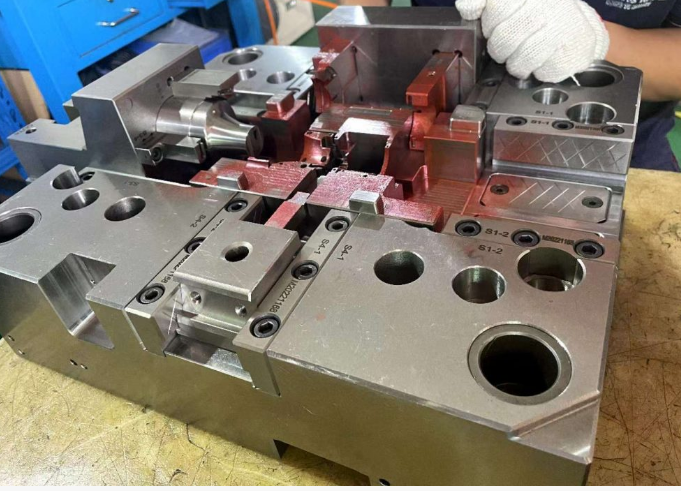
In many factories, mold wear is treated as a maintenance issue rather than a design issue.
Typical misdiagnoses include:
- “The steel quality wasn’t good enough”
- “The operator didn’t maintain lubrication properly”
- “The process window was too aggressive”
While these factors contribute, they rarely explain why mold wear and tear accelerates in specific areas or why it appears earlier than expected.
In most cases, mold wear and tear is the result of cumulative stress created by:
- Unbalanced pressure and flow
- Localized thermal hotspots
- Inadequate allowance for long-term deformation
- Design choices optimized for trials, not endurance
Without addressing these root causes, replacing worn components only resets the clock temporarily.
Design-Level Strategies to Extend Mold Life
1. Prioritize Thermal Balance Over Average Temperature
Maintaining an average mold temperature is not enough.
What matters is minimizing temperature gradients across the mold.
Targeted cooling near thick sections, ribs, and bosses reduces localized expansion and slows the progression of mold wear and tear—an issue closely tied to long-term production behavior rather than short-term trial results
👉 https://cindy-mould.com/news/
2. Match Steel Selection to Production Volume
Using general-purpose steel in high-volume projects is a common cost-saving mistake.
For molds expected to exceed 100,000 cycles, cavity and core materials should be selected based on:
- Wear resistance
- Thermal stability
- Surface treatment compatibility
Heat treatment quality often matters more than base material selection. Inconsistent hardness across inserts creates uneven mold wear and tear patterns that are difficult to correct later.
3. Design for Replaceability, Not Permanence
High-wear components should be treated as consumables, not permanent features.
Insert-based designs allow localized replacement without reworking the entire mold. This approach reduces downtime, lowers maintenance cost, and extends the effective life of the mold base.
4. Reduce Process Compensation Through Better Design
When a mold requires constant process tuning to maintain quality, wear accelerates.
Stable molds rely on:
- Balanced flow and pressure
- Predictable cooling behavior
- Adequate draft and ejection margins
Designs that operate near the edge of feasibility during trials almost always suffer accelerated mold wear and tear during mass production, especially when transitioning from T1 to real mass production conditions
👉 https://cindy-mould.com/news/
Process Practices That Protect Mold Life
Even a well-designed mold can degrade quickly without proper production discipline.
Effective long-term practices include:
- Monitoring cycle time drift as an early warning signal
- Tracking cavity-to-cavity variation over time
- Maintaining consistent cooling water quality
- Avoiding incremental pressure increases to mask defects
Extending mold life is less about aggressive maintenance and more about avoiding the conditions that cause mold wear and tear in the first place.
Conclusion
Mold wear and tear is not an inevitable outcome of high-volume injection molding.
It is the long-term expression of design, material, and process decisions made much earlier in the project lifecycle.
Extending mold life requires shifting focus from short-term feasibility to long-term stability—designing molds that tolerate thermal cycling, pressure variation, and continuous operation without relying on constant process correction.
In mass production, mold life is not lost in a single failure.
It is lost gradually—through small design compromises that quietly accumulate over time.
Understanding and addressing those compromises early is the most effective way to control mold wear and tear, protect tooling investment, and maintain stable production efficiency.