
Introduction
An integrated manufacturing partner plays a critical role when transitioning from prototype development to scalable production.
Many products perform well during early testing, yet encounter structural and operational challenges when moving toward pilot builds and sustained mass production.
For companies developing electronic devices, IoT products, or integrated plastic assemblies, manufacturing complexity increases rapidly once production scales.
Selecting the right integrated manufacturing partner during this transition often determines whether a product reaches stable commercialization or experiences costly delays.
This article examines key structural considerations when choosing an integrated manufacturing partner for prototype-to-scale product assembly.
For a deeper discussion of common prototype-to-scale production challenges, see our analysis of production stability after injection mold trials.
The Structural Gap Between Prototype and Scalable Production
Prototype builds are typically controlled, low-volume environments.
They involve:
- Limited production runs
- Intensive engineering supervision
- Flexible parameter adjustments
- Manual intervention when required
Scaling production introduces different requirements:
- Repeatability across shifts
- Stable supply chain coordination
- Consistent quality monitoring
- Defined maintenance schedules
- Formalized documentation systems
A partner capable of producing prototypes is not automatically equipped to manage scalable production systems.
The structural difference between prototype builds and sustained manufacturing must be evaluated carefully.
Multi-Supplier Fragmentation vs Integrated Manufacturing
One of the most common risks during scale-up is supplier fragmentation.
When separate vendors manage:
- PCB fabrication
- PCBA
- Plastic injection molding
- Final assembly
- Testing
- Packaging
Coordination complexity increases significantly.
Common issues include:
- Responsibility ambiguity
- Delayed issue resolution
- Process parameter mismatch
- Tolerance stacking between suppliers
- Logistics delays between production stages
An integrated manufacturing partner centralizes coordination across processes. This does not eliminate technical challenges, but it reduces communication friction and shortens problem-solving cycles.
In prototype-to-scale transitions, structural alignment often matters more than individual process capability.
Assembly as the Convergence Point of Risk
Final product assembly is where multiple manufacturing streams converge.
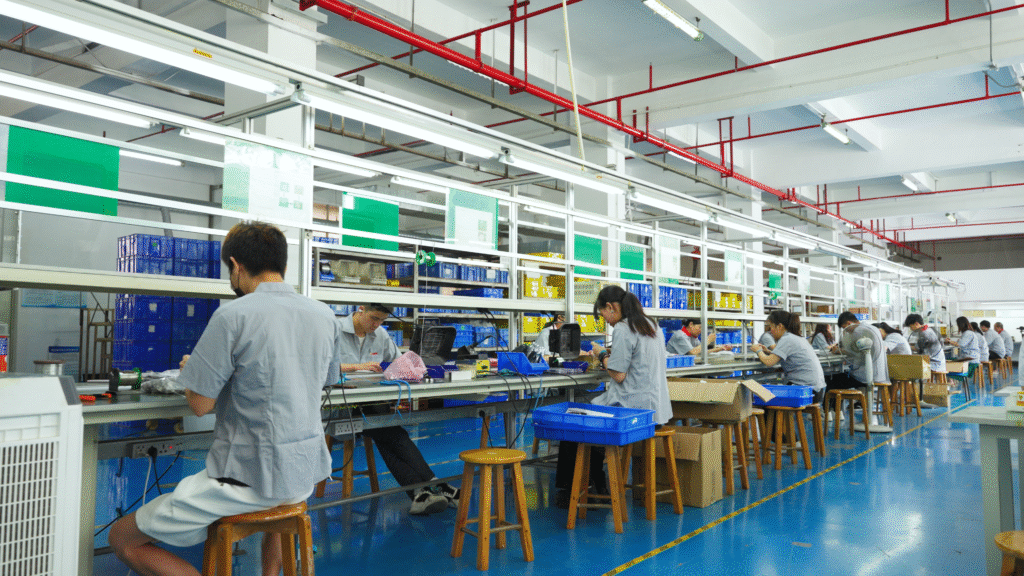
At this stage:
- PCB functionality meets enclosure design
- Mechanical tolerances interact
- Fastening methods influence structural integrity
- Firmware loading integrates with hardware
- Final inspection validates system performance
If earlier processes operate independently, integration risk becomes concentrated at the assembly stage.
An experienced integrated manufacturing partner designs assembly processes with awareness of upstream constraints, minimizing late-stage surprises.
Assembly is not merely a finishing step. It is a system integration checkpoint.
This structural alignment also helps reduce downstream risks, as discussed in our analysis of production stability in high-volume injection molding.
Process Documentation and Traceability Systems
Scalable manufacturing requires structured documentation.
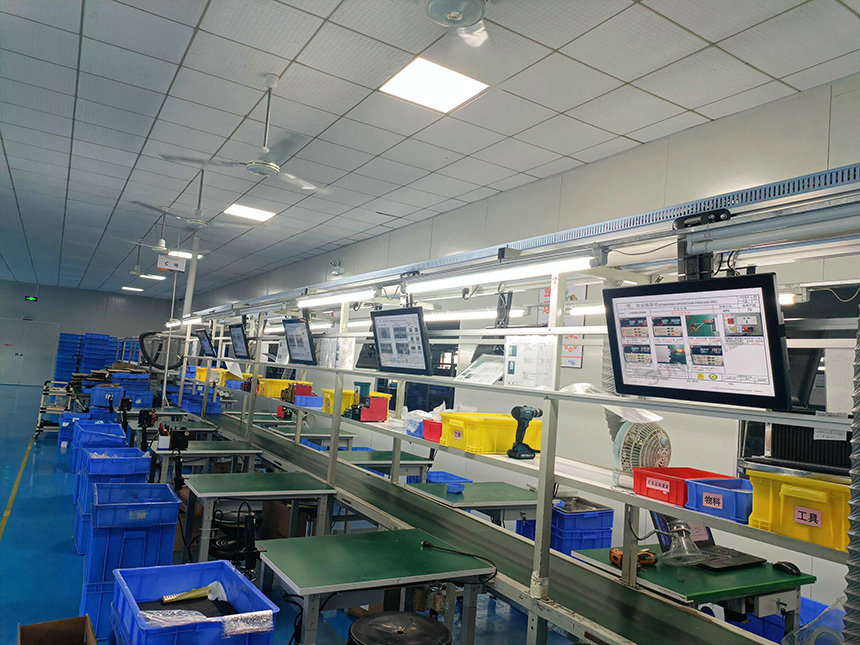
Key elements include:
- Work instructions
- Revision control
- Change management systems
- Traceability records
- Quality inspection logs
Prototype environments often tolerate informal adjustments. Production environments require controlled modification processes.
When selecting an integrated manufacturing partner, companies should evaluate:
- Documentation discipline
- Version control mechanisms
- Traceability capabilities
- Data recording systems
Without these systems, scaling production introduces regulatory and quality risks.
Structured quality management principles are widely discussed by organizations such as the American Society for Quality (ASQ).
Engineering Responsiveness During Scale-Up
During pilot builds and early production runs, engineering responsiveness remains essential.
Scaling production often reveals:
- Minor tolerance conflicts
- Process window sensitivity
- Material variation effects
- Assembly sequence inefficiencies
A qualified integrated manufacturing partner maintains cross-functional engineering teams capable of rapid adjustment while preserving system stability.
The ability to respond without destabilizing production flow is a key differentiator during prototype-to-scale transitions.
Capacity Planning and Infrastructure Readiness
Scalable production requires more than technical expertise.
It depends on:
- Available assembly line capacity
- Workforce training structure
- Equipment redundancy
- Preventive maintenance planning
- Supply chain stability
A partner focused solely on prototype capability may lack infrastructure readiness for sustained output.
Before committing to long-term production, companies should evaluate whether the manufacturing partner has:
- Structured capacity planning
- Defined expansion pathways
- Equipment utilization monitoring
- Workforce cross-training programs
Infrastructure maturity supports predictable growth.
Risk Distribution and Accountability
In fragmented supplier models, accountability becomes distributed.
When defects occur, root-cause analysis may stall due to cross-company boundaries.
Integrated manufacturing reduces this complexity by consolidating process ownership.
This does not remove technical challenges, but it clarifies responsibility and accelerates corrective action.
During prototype-to-scale product assembly, clarity of accountability significantly influences project stability.
Long-Term Partnership Considerations
Selecting an integrated manufacturing partner is not merely a procurement decision. It is a structural decision affecting product lifecycle management.
Long-term considerations include:
- Scalability beyond initial volumes
- Change management during product updates
- Continuous improvement programs
- Cost optimization pathways
- Global logistics coordination
A manufacturing partner aligned with long-term commercialization strategy provides stability beyond the initial scale-up phase.
Conclusion
Transitioning from prototype to scalable production introduces structural challenges that extend beyond individual process performance.
Choosing an integrated manufacturing partner for prototype-to-scale product assembly requires evaluating:
- Structural coordination capability
- Assembly integration awareness
- Documentation systems
- Engineering responsiveness
- Infrastructure readiness
- Clear accountability
Manufacturing scalability is achieved through coordinated system design rather than isolated technical capability.
Selecting the right integrated partner during this transition can significantly reduce risk and support sustainable product commercialization.