
Introduction
The electronics manufacturing process is the foundation of how electronic products move from design concepts to finished goods ready for the market. While product design defines functionality, it is the manufacturing process that determines whether a product can be produced consistently, efficiently, and at scale.
In real production environments, many product issues are not caused by design flaws alone. Instead, they arise from how manufacturing steps are executed and how well different stages are coordinated. A product may pass initial inspections but still show variability in performance once production scales.
This is because the electronics manufacturing process is not a single step, but a system of interconnected stages.
This concept is widely discussed in modern manufacturing systems.
Small variations in soldering, assembly, or component alignment can accumulate and affect the final product.
Understanding this process helps engineering teams, procurement managers, and product developers identify risks early and ensure smoother transitions from prototype to mass production, especially during structured stages such as New Product Introduction (NPI).
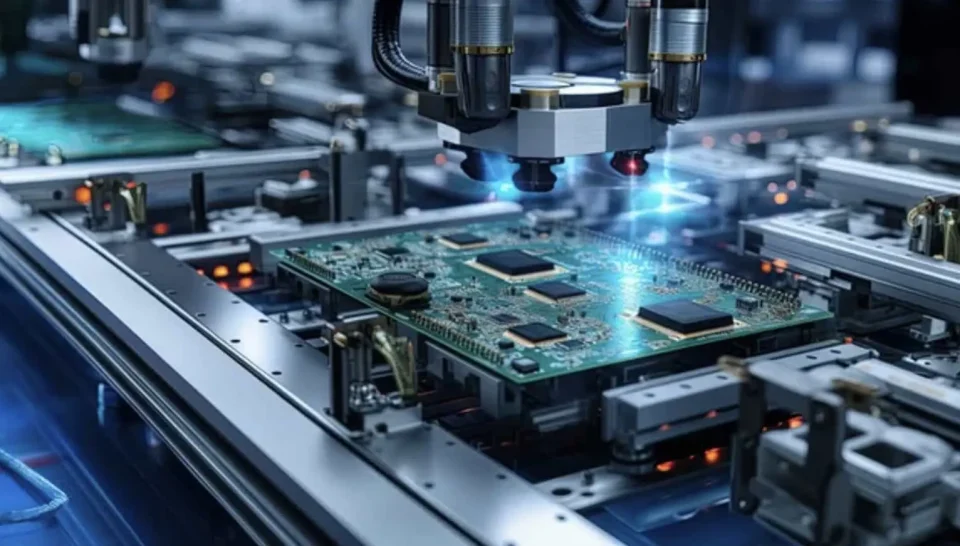
What Is the Electronics Manufacturing Process?
The electronics manufacturing process refers to the complete workflow used to transform raw materials and components into fully functional electronic products.
This process typically includes:
- PCB fabrication and PCB assembly (PCBA), including processes such as solder paste printing and reflow soldering
- component sourcing and supply chain coordination
- mechanical manufacturing such as injection molding
- cable harness and connector integration
- box build assembly (final product assembly)
- firmware programming and configuration
- functional testing and validation
Unlike isolated steps, the electronics manufacturing process functions as a connected system. Each stage influences the next, and issues introduced early may only become visible during final assembly or testing.
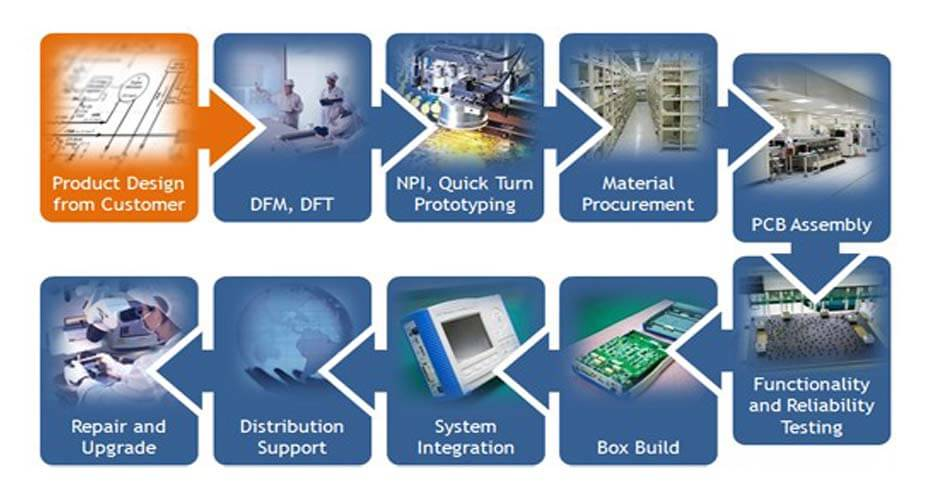
Key Stages in the Electronics Manufacturing Process
1. PCB Fabrication and PCB Assembly (PCBA)
The process begins with PCB fabrication and assembly, where electronic components are mounted onto circuit boards, including key processes such as solder paste printing and reflow soldering.
Key steps include:
- solder paste printing
- component placement using SMT machines
- reflow soldering
- inspection processes such as AOI and X-ray
At this stage, process control is essential. Variations in solder paste deposition or reflow temperature profiles can directly affect solder joint reliability and long-term performance.
Inconsistent solder paste thickness may lead to bridging or insufficient solder, while unstable temperature profiles can weaken connections and increase defect rates.
2. Component Sourcing and Supply Chain Management
Reliable component sourcing is critical for maintaining production stability.
This stage involves:
- selecting qualified suppliers
- managing lead times and inventory
- ensuring consistency in material quality
- mitigating risks such as shortages or substitutions
In practice, supply chain disruptions are one of the most common causes of production delays. Even when manufacturing processes are stable, inconsistent component availability can affect both timelines and product quality.
3. Mechanical Manufacturing and Enclosure Production
For products that require housings or structural components, mechanical manufacturing plays a key role.
This stage includes:
- injection molding of plastic enclosures
- machining of metal parts
- surface finishing and coating
Mechanical tolerances must align with PCB dimensions and connector positions. Misalignment between these elements can create challenges during assembly and lead to increased variability.
Tolerance mismatches may result in:
- difficulty in component installation
- increased assembly time
- stress on connectors or PCB structures
4. Cable Harness and Internal Wiring Integration
Electronic products often require multiple internal connections between components.
This stage includes:
- cable harness preparation
- connector installation
- routing and securing internal wiring
Proper cable routing is essential for both functionality and long-term reliability. Poor routing can introduce mechanical stress on connectors or interfere with airflow and thermal performance.
Inconsistent wiring practices can also increase assembly time and lead to variability across production units.
5. Box Build Assembly (Final Product Assembly)
The electronics manufacturing process reaches system-level integration during box build assembly, where all components are integrated into a complete product..
This stage involves:
- installing PCB assemblies into enclosures
- connecting internal wiring and connectors
- fastening structural components
- assembling the complete product
At this stage, small variations can have a significant impact. Differences in alignment, torque, or handling can affect product performance and consistency.
Many issues that are not visible during earlier stages become apparent during final assembly.
6. Firmware Programming and Configuration
Firmware installation ensures that the product operates according to design specifications.
Typical activities include:
- firmware flashing
- device configuration
- calibration procedures
- assigning serial numbers
Consistency in firmware programming is critical. Incorrect firmware versions or configuration errors can lead to functional issues that are difficult to detect through visual inspection.
7. Functional Testing and Quality Validation
Functional testing verifies that the product meets performance requirements before shipment.
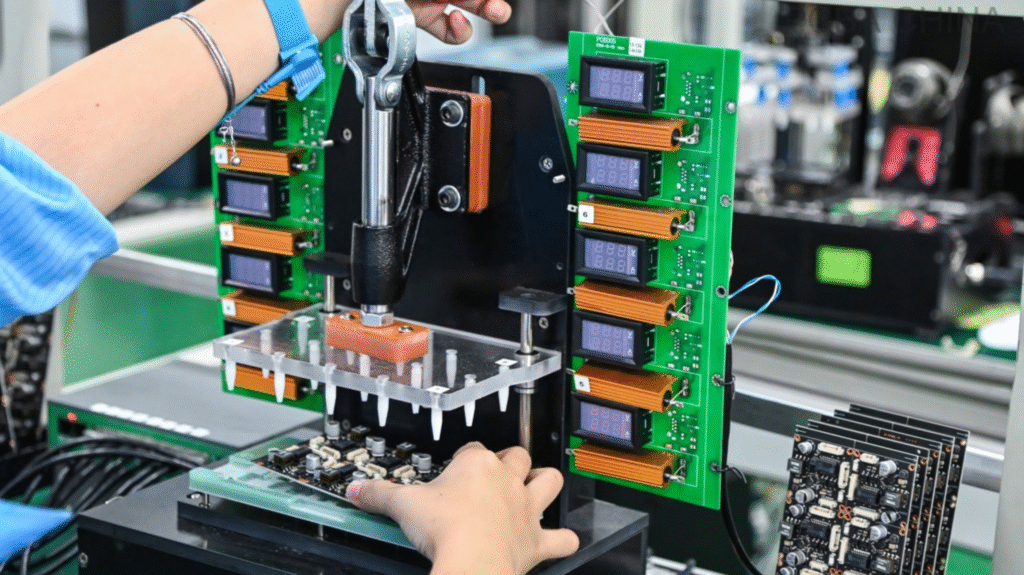
These practices often align with widely recognized industry standards.
This stage may include:
- power-on testing
- signal verification
- communication testing
- system-level validation
Testing is not only used to detect defects but also to confirm that the product performs reliably under expected operating conditions.
Traceability systems are often used to link testing data with production batches, enabling faster root cause analysis when issues occur.
How the Electronics Manufacturing Process Impacts Product Reliability
The electronics manufacturing process has a direct impact on product reliability, especially in real-world operating conditions.
Even when components meet specifications and PCBs pass inspection, variations introduced during manufacturing can affect long-term performance. Minor inconsistencies in soldering, cable routing, or mechanical fastening may not cause immediate failures but can lead to instability over time.
In many cases, reliability issues originate from cumulative variations across multiple stages rather than a single defect. This is particularly common in complex products that integrate PCB assemblies, mechanical enclosures, and internal wiring.
To improve reliability, manufacturers must focus on process consistency rather than relying solely on final inspection.
Common Challenges in the Electronics Manufacturing Process
Process Variability
Small variations in materials, handling, or assembly methods can lead to inconsistent outcomes across production batches.
Cross-Stage Dependencies
Issues introduced in earlier stages, such as PCB design or enclosure tolerances, often become visible during assembly or testing.
Scaling from Prototype to Mass Production
Processes that work during prototype builds may not remain stable at higher volumes. Increased production speed, operator differences, and equipment variability can introduce new challenges.
Structured approaches such as the New Product Introduction (NPI) process are essential for managing this transition.
Supply Chain Disruptions
Component shortages or inconsistent supplier quality can disrupt production schedules and affect overall product performance.
Process Control Points That Affect Production Stability
Maintaining stability in the electronics manufacturing process requires identifying and controlling key variables.
Important control points include:
- solder paste thickness and printing consistency
- reflow temperature profiles and cooling rates
- mechanical alignment between PCB and enclosure
- cable routing and connector stress
- torque control during assembly
Without proper control, small variations can accumulate and lead to defects or performance issues.
Successful manufacturers focus on standardization, clear work instructions, and continuous monitoring of production data.
Why Integrated Manufacturing Improves Efficiency
When different stages of the electronics manufacturing process are handled by separate suppliers, coordination challenges often arise.
These may include:
- inconsistent documentation
- communication delays
- tolerance mismatches between components
- longer production cycles
Integrated manufacturing environments help address these issues by aligning PCB assembly, mechanical production, and final assembly within a unified workflow.
This approach improves efficiency, reduces risk, and enhances overall product reliability.
How to Evaluate an Electronics Manufacturing Process
For companies selecting a manufacturing partner, evaluating the electronics manufacturing process is essential.
Key factors to consider include:
- process transparency and documentation
- ability to control critical process parameters
- integration between PCB assembly, mechanical manufacturing, and final assembly
- traceability systems and data management
- experience with similar products
A well-structured process should demonstrate consistency, repeatability, and scalability.
Conclusion
The electronics manufacturing process is a complex system that connects multiple stages, from PCB assembly to final product integration and testing.
By focusing on process control, alignment between stages, and production consistency, manufacturers can achieve:
- stable production performance
- consistent product quality
- efficient scaling from prototype to mass production
Understanding and optimizing each stage of the electronics manufacturing process is essential for reducing risk and improving overall manufacturing outcomes.
Next Steps
If you are developing a new electronic product or evaluating manufacturing options, reviewing your electronics manufacturing process early can help identify potential risks.
Key areas to evaluate include:
- PCB assembly stability
- enclosure and mechanical integration
- cable routing and internal connections
- testing and validation strategies
For a technical discussion on optimizing your manufacturing process, you can contact CINDY Mould to explore suitable solutions.