
Introduction
Firmware programming control plays a critical role in ensuring product consistency in electronics manufacturing.
In electronics manufacturing, product consistency is often assumed to be the result of stable assembly processes and reliable component sourcing.
When the PCB is properly assembled, components are correctly installed, and inspection results meet expectations, the product appears ready for shipment.
However, many teams encounter a different reality once products reach real-world use.
Units that look identical may behave differently.
Some products require rework shortly after delivery, while others perform as expected.
In certain cases, issues only appear under specific conditions, making them difficult to reproduce and even harder to trace.
These challenges are not always caused by visible defects or assembly errors.
In many cases, the root cause lies in firmware programming.
These issues often become more apparent during production scaling, when small variations start to affect large volumes.
Firmware programming is often treated as a routine step at the end of production. Yet in practice, it plays a critical role in determining whether every unit behaves consistently.
Without proper firmware programming control, variation can be introduced into products that should be identical.
In production environments, effective firmware programming control is typically built around three key areas:
- Version control
- Programming process control
- Traceability
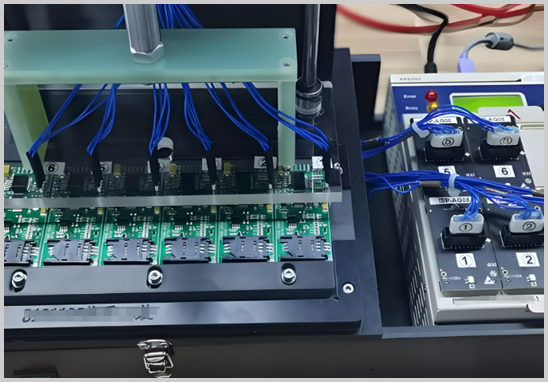
Where Firmware Programming Fits in Production
Firmware programming is typically performed after PCB assembly and initial electrical testing.
At this stage:
- Components are already mounted
- Soldering has been completed
- Basic electrical tests have been passed
From a production perspective, the product appears nearly finished.
However, this stage is one of the final opportunities to ensure that every unit operates as intended.
Because firmware programming occurs late in the process, any inconsistency introduced here:
- Is harder to detect
- Is more expensive to correct
- Has a direct impact on final product performance
Unlike earlier manufacturing steps, issues at this stage are often not visible. A product may pass inspection and still carry hidden variation at the system level.
This is why firmware programming should not be viewed as a simple technical step, but rather as a critical control point within the production system.
Firmware Programming Control in Version Management
Firmware version control is one of the most important factors in maintaining product consistency.
In a production environment, multiple firmware versions often exist due to:
- Ongoing product updates
- Engineering changes
- Customer-specific configurations
Without proper firmware programming control, different versions can unintentionally be used across batches or production lines.
When this happens, products that are physically identical may behave differently.
Even minor differences between versions can lead to:
- Inconsistent functionality
- Unexpected behavior
- Compatibility issues with other systems
These inconsistencies are particularly challenging because products may still pass standard testing procedures. The variation only becomes visible during actual use.
This approach is consistent with widely used firmware version control best practices in electronics production.
- Centralized firmware management
- Clear version approval processes
- Strict control of released versions in production
In addition, version changes should be documented and communicated clearly across teams. Engineering, production, and quality departments must all operate with the same version awareness.
Consistency at the firmware level begins with ensuring that every unit receives the correct and intended version.
Programming Process Control
In addition to version control, the programming process itself must be carefully managed.
Process consistency is a key part of firmware programming control in production.
Even when the correct firmware version is used, inconsistencies in execution can introduce variation.
Common process-related risks include:
- Different programming tools or station settings
- Manual operations that vary between operators
- Lack of standardized workflow
- Inconsistent handling of programming failures
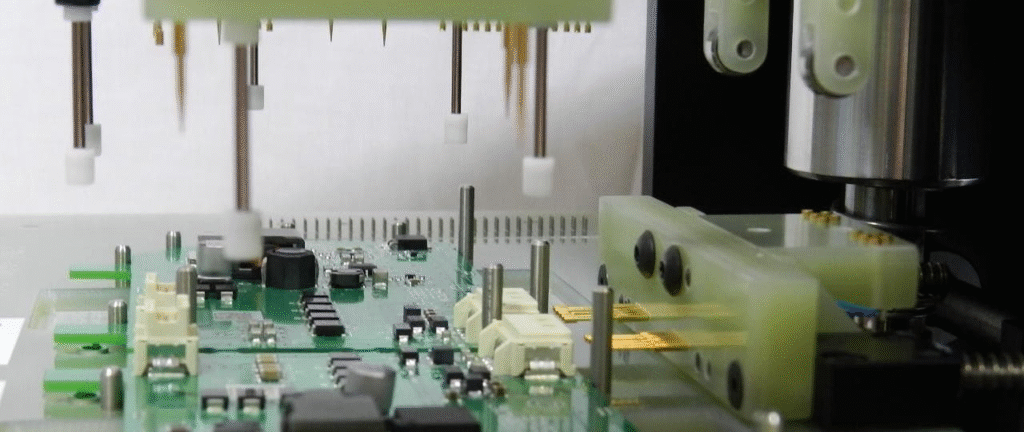
These variations can result in:
- Incomplete programming
- Incorrect parameter loading
- Unstable or inconsistent system behavior
Because these issues are not always visible, they can pass through inspection and only appear during operation or in the field.
To reduce these risks, manufacturers should focus on:
- Defining a standardized programming workflow
- Using controlled and validated tools
- Reducing manual intervention wherever possible
- Implementing clear verification steps after programming
Automation can also play a role in improving consistency, especially in high-volume production. By reducing operator dependency, the process becomes more repeatable and less prone to variation.
A consistent process ensures that every unit is programmed under the same conditions, minimizing the risk of inconsistency introduced at this stage.
Traceability in Firmware Programming
Traceability is essential for maintaining product quality and supporting after-sales operations, as emphasized in IPC standards for electronics manufacturing.
Traceability is also an essential component of firmware programming control.
In firmware programming, traceability means having a clear record of:
- Firmware version used
- Configuration parameters applied
- Device identity (such as serial number or MAC address)
Traceability systems link firmware data with each individual unit in production.
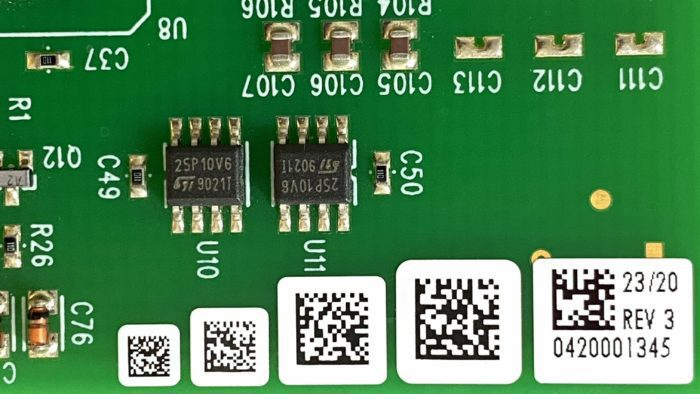
Without traceability:
- Affected products cannot be easily identified
- Root cause analysis becomes more complex
- Field issues take longer to resolve
- Customer communication becomes more difficult
In contrast, strong traceability provides several advantages:
- Problems can be linked back to production data
- Affected batches can be identified quickly
- Corrective actions can be implemented efficiently
- Product history can be accessed for future reference
Traceability also supports long-term product lifecycle management. As products evolve or require updates, having a clear record of firmware and configuration data ensures compatibility and continuity.
In practice, traceability is achieved by linking programming data with unique device identifiers and storing this information in a structured and accessible system.
This connection between production data and real-world performance is critical for maintaining control and improving reliability.
Why Firmware Control Matters More in Mass Production
The importance of firmware programming control becomes more significant as production scales.
In small production runs or prototype builds:
- Issues can be identified quickly
- Engineering teams can intervene directly
- Adjustments can be made in real time
In mass production:
- Small inconsistencies are repeated across large volumes
- Rework becomes more costly and time-consuming
- Delivery schedules may be affected
- Customer impact becomes more significant
What was once a minor issue can quickly become a large-scale problem — especially when moving from prototype to mass production.
Firmware programming is one of the stages where these issues can originate. Because it occurs late in the process, it has a direct influence on the final state of the product.
Ensuring strong firmware programming control at this stage helps prevent variation from being introduced into the system, rather than attempting to correct it afterward.
Firmware and Assembly: Different Layers of Consistency
Firmware programming and assembly processes address different aspects of product consistency.
Assembly ensures physical consistency.
This is closely related to what we discussed in product reliability in final assembly.
- Components are correctly installed
- Connections are properly made
- Mechanical structures are stable
Firmware programming ensures system consistency:
- The correct logic is executed
- The correct configuration is applied
- The system behaves as expected
Even when assembly processes are stable, system-level variation can still occur if firmware programming is not properly controlled.
Achieving true product consistency requires both layers to be aligned.
Physical consistency ensures that the product is built correctly.
System consistency ensures that it performs correctly.
Conclusion
Firmware programming is often considered a routine step in electronics manufacturing.
However, its impact on product consistency is significant.
As one of the final stages before shipment, it determines whether each unit operates as intended.
Without proper control over:
- Firmware version
- Programming process
- Traceability
variation can be introduced into products that should be identical.
By implementing structured firmware programming control in these areas, manufacturers can:
- Improve product consistency
- Reduce production risk
- Enhance traceability and after-sales support
Ensuring product reliability is not only about building hardware correctly.
It is also about ensuring that every unit runs the correct system under controlled and traceable conditions.
In practice, improving consistency often starts with better control at this stage.
If you are experiencing inconsistent product performance,
it may be worth taking a closer look at how firmware programming control is implemented in your production.
A structured approach to version management, process control, and traceability can make a measurable difference.
If you would like to discuss your current process or explore possible improvements,
feel free to contact us.