
Introduction
Manufacturing delays in electronics production are one of the most common challenges faced by engineering and procurement teams. Even when product design is completed and suppliers are selected, projects often fail to meet planned timelines.
In reality, manufacturing delays in electronics production rarely result from a single issue. Instead, they are typically caused by multiple small problems accumulating across design, supply chain, process setup, and production stages.
Understanding the common causes of manufacturing delays in electronics production is essential for improving project planning, reducing risks, and ensuring stable, on-time delivery.
1. Design Validation Issues That Cause Manufacturing Delays in Electronics Production
One of the most common causes of manufacturing delays in electronics production is insufficient validation during early development stages.
Products that pass prototype testing (EVT or DVT) may still encounter issues when transitioning into mass production. This is because early validation often focuses on functionality rather than manufacturability.
Common design-related risks include:
- Assembly constraints not identified during design
- Component placement conflicts
- Tolerance stack-up issues
- Insufficient DFM validation
When these issues appear during production, engineering changes become necessary. These changes interrupt production flow, require revalidation, and significantly delay project timelines.
2. Supply Chain Instability and Component Availability
Electronics manufacturing depends heavily on supply chain stability. Delays frequently occur when critical components are unavailable or have extended lead times. For industry standards and best practices in electronics manufacturing, see IPC, a global leader in electronics manufacturing standards.
Typical supply chain risks include:
- Component shortages or allocation
- Long lead times for key ICs
- Supplier delivery delays
- Last-minute component substitutions
Even a single missing component can stop an entire production line.
📊 Typical Supply Chain Impact on Delays
| Issue Type | Impact on Production | Delay Risk |
|---|---|---|
| Component shortage | Line stoppage | High |
| Late supplier delivery | Rescheduling required | Medium–High |
| Component substitution | Revalidation needed | High |
| Inconsistent supply batches | Quality variation | Medium |
To reduce delays, companies must secure critical components early and maintain visibility across the supply chain.
3. Process Setup and SMT Production Readiness
Before mass production begins, SMT lines must be properly prepared. Any issue during setup can delay production startup.
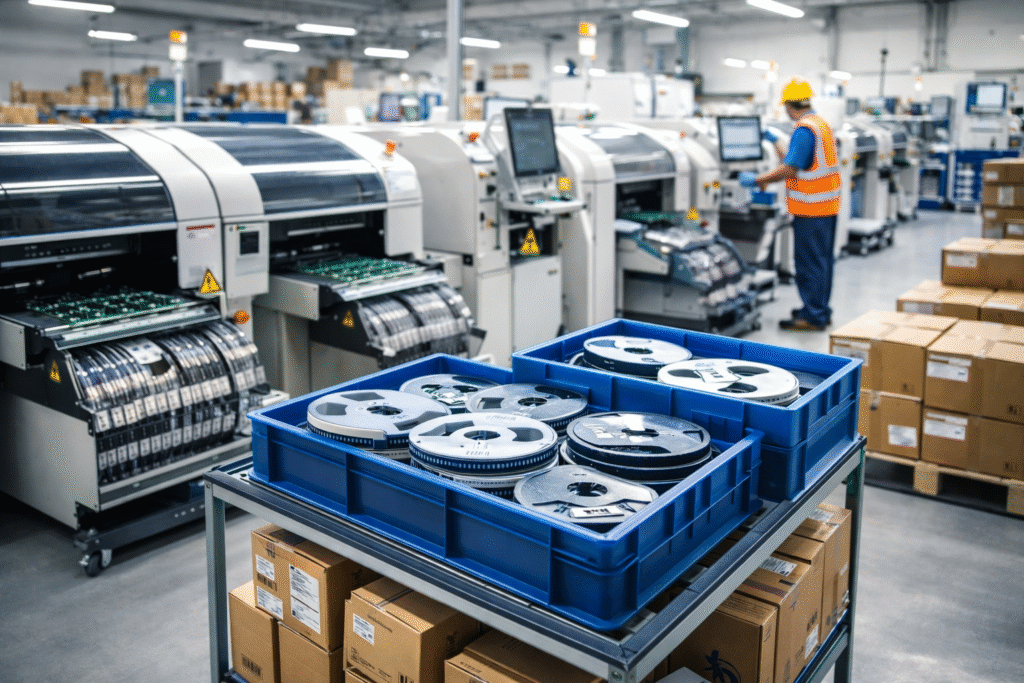
Key factors include:
- Stencil design and solder paste preparation
- Machine programming and feeder setup
- First article inspection (FAI) validation
If setup is incomplete or rushed, defects will appear early in production, leading to rework and downtime.
For a detailed process overview, see
PCB Assembly Process Step by Step: A Complete Guide from SMT to Final Testing
4. Poor Process Stability During Mass Production
Maintaining stable production is more challenging than starting production.
Even small variations can accumulate and affect output consistency.
Common sources of instability include:
- Equipment variation between machines
- Operator differences across shifts
- Environmental factors such as temperature and humidity
📊 Process Stability vs Delay Risk
| Stability Level | Production Behavior | Delay Impact |
|---|---|---|
| High | Consistent output | Low |
| Medium | Occasional defects | Medium |
| Low | Frequent rework | High |
In many projects, manufacturing delays in electronics production occur not because production stops, but because efficiency gradually decreases over time.
5. Inefficient Inspection and Quality Control Strategy
Inspection systems are designed to prevent defects, but inefficient strategies can create bottlenecks.
Common problems include:
- Over-reliance on manual inspection
- Late detection of defects
- Limited inspection coverage
When defects are not detected early, they propagate into later stages, increasing rework and slowing down production.
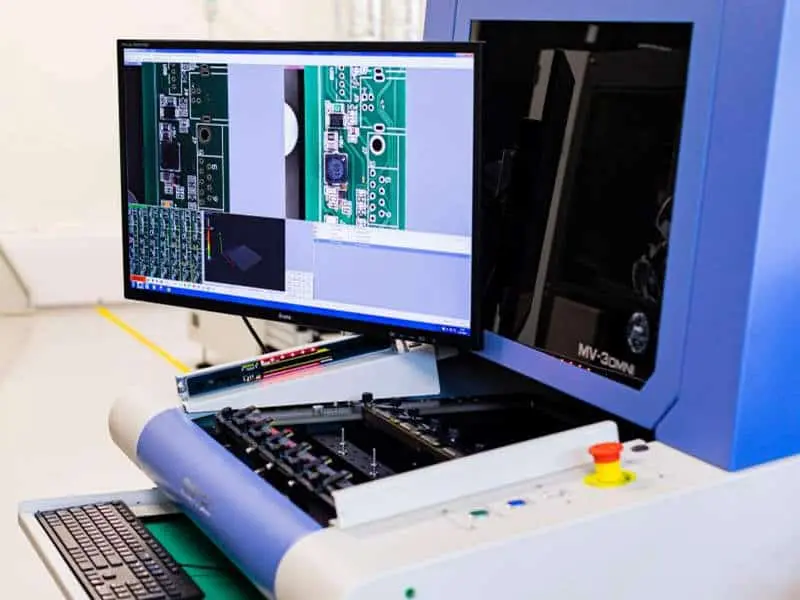
For more details, refer to
SMT Inspection Strategy: SPI AOI AXI Explained
6. Engineering Changes During Production
Engineering changes are one of the most disruptive factors in electronics manufacturing.
They may be triggered by:
- Design optimization
- Performance issues
- Component substitutions
Each engineering change requires:
- Design updates
- Process adjustments
- Testing and validation
📊 Impact of Engineering Changes
| Change Stage | Impact on Timeline |
|---|---|
| Before production | Low |
| Early production | Medium |
| During mass production | High |
Frequent changes reduce production stability and significantly increase delay risks.
7. Lack of Coordination Between Processes
Electronics manufacturing is a multi-process system involving PCB assembly, mechanical integration, and final testing.
Delays often occur when these processes are not aligned.
Typical coordination issues include:
- PCB design not matching enclosure constraints
- Connector alignment problems during assembly
- Communication gaps between teams
For system-level understanding, see
Box Build Assembly Process in Electronics Manufacturing
8. Production Bottlenecks in Testing and Assembly
Testing and final assembly are often the slowest stages in production.
Common bottlenecks include:
- Limited testing capacity
- Complex functional testing procedures
- Manual assembly operations
When upstream processes run faster than downstream stages, work-in-progress accumulates, causing delays.
9. Scaling Challenges from Pilot to Mass Production
Scaling production introduces new challenges that are not visible during pilot runs.
These include:
- Increased production volume
- Multi-line coordination
- Maintaining consistency across shifts
📊 Pilot vs Mass Production Differences
| Stage | Characteristics | Risk Level |
|---|---|---|
| Pilot Run | Controlled, low volume | Low |
| Early Mass Production | Increasing variability | Medium |
| Full Production | High complexity | High |
Without proper scaling strategies, production efficiency drops and delays become inevitable.
Conclusion
Manufacturing delays in electronics production are rarely caused by a single issue. Instead, they result from interconnected factors across design, supply chain, process control, and production coordination.
Improving delivery performance requires a systematic approach that addresses each stage of the manufacturing process.
Reducing manufacturing delays in electronics production requires consistent control across design, supply chain, and production processes.
Next Steps
If manufacturing delays in electronics production are affecting your project timelines, the root cause is often not limited to a single stage.
In many cases, delays originate from accumulated risks across design validation, supply chain stability, SMT setup, inspection strategy, and cross-process coordination.
A structured review of your manufacturing workflow—from component sourcing to production scaling—can help identify hidden risks and improve delivery performance.
If you would like to assess your current production setup or reduce project delays, you can start a technical discussion with an experienced electronics manufacturing partner. For an initial conversation, see Contact CINDY Mould.