
Introduction
Production yield in electronics manufacturing is a key indicator of process efficiency and product quality. It reflects how effectively materials and processes are converted into functional, defect-free products.
In many projects, prototype builds perform well. Engineering validation passes, and early samples meet specifications. However, once production scales, yield often declines. Defects increase, rework becomes more frequent, and process stability becomes harder to maintain.
Understanding what affects production yield in electronics manufacturing—and how to improve it—is essential for achieving consistent performance in mass production.
What Is Production Yield in Electronics Manufacturing?
Production yield refers to the percentage of products that meet quality standards without requiring rework or repair.
For example:
- High yield = stable processes and consistent quality
- Low yield = defects, variation, and inefficiency
Production yield is not determined by a single process but by the combined performance of materials, equipment, and manufacturing control.
Key Factors That Affect Production Yield
1. Process Control in SMT Assembly
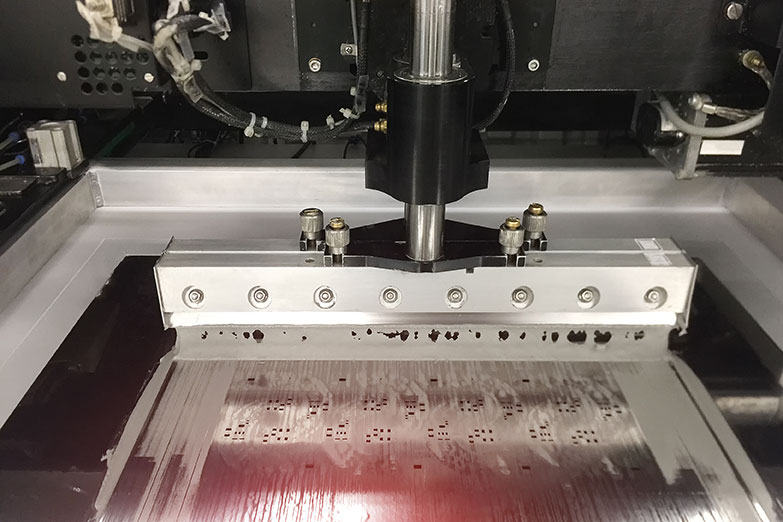
Surface Mount Technology (SMT) is the foundation of electronics manufacturing.
Key factors include:
- Solder paste printing consistency
- Component placement accuracy
- Equipment calibration
Even small variations can lead to defects such as bridging, tombstoning, or insufficient solder joints.
For more details, see SMT inspection process.
2. Material Quality and Consistency
Material stability directly impacts production yield.
Common risks include:
- Solder paste viscosity variation
- Component tolerance differences
- PCB surface finish inconsistency
Even well-controlled processes cannot compensate for unstable materials.
3. Reflow Soldering Stability
Reflow soldering determines the final quality of solder joints.
Key variables include:
- Temperature profile
- Heating uniformity
- Cooling rate
Improper control can cause cold joints, voiding, or component damage.
For more details, see reflow soldering profile.
4. Inspection and Defect Detection Strategy
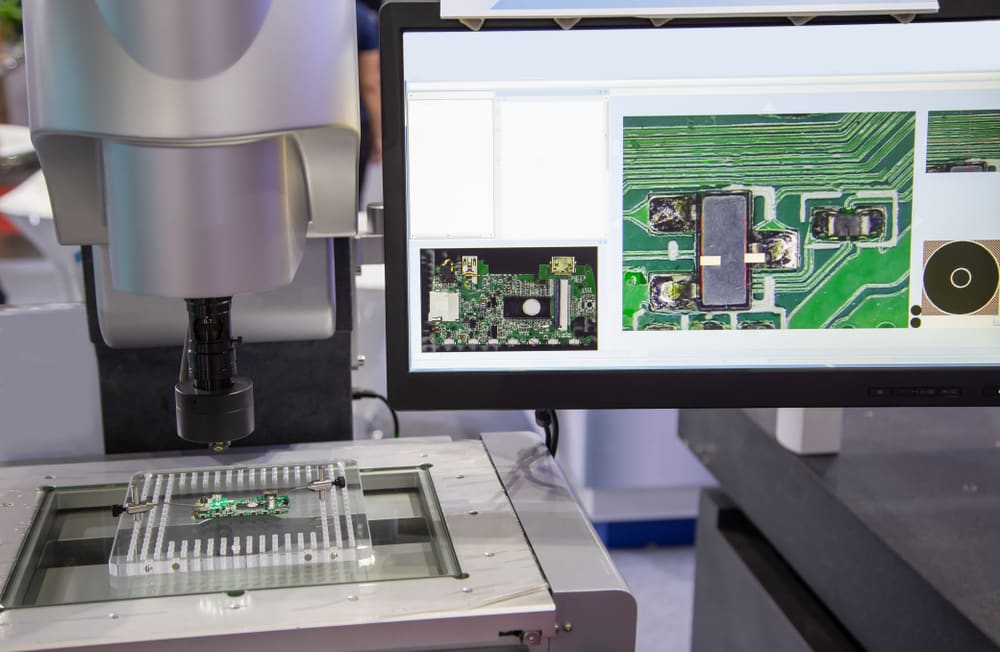
Inspection systems help detect defects early and prevent propagation.
Typical methods include:
- SPI
- AOI
- AXI
These practices follow IPC standards for electronics manufacturing to ensure consistent quality control.
5. Functional Testing Coverage
Functional testing verifies real-world performance.
It helps detect:
- Electrical failures
- Signal issues
- Hidden defects
For more details, see functional testing in electronics manufacturing.
6. Engineering Coordination Across Processes
Yield loss often results from poor coordination between design and manufacturing.
Common issues include:
- PCB design not aligned with assembly requirements
- Mechanical constraints affecting integration
- Incomplete DFM validation
For more details, see PCB assembly process.
7. Process Stability During Mass Production
Processes that perform well during prototypes may fail at scale.
Key challenges include:
- Equipment variation
- Operator differences
- Environmental changes
Maintaining consistent production conditions is critical for stable yield.
8. Integration with Final Assembly
Yield is affected by system-level integration.
Key risks include:
- Mechanical misalignment
- Connector issues
- Enclosure tolerance mismatch
For more details, see box build assembly process.
How Production Yield Is Measured in Electronics Manufacturing
Production yield is typically evaluated using several key metrics.
First Pass Yield (FPY)
Measures the percentage of products that pass all tests without rework.
Final Yield
Represents the percentage of products that meet specifications after rework.
Rolled Throughput Yield (RTY)
Evaluates yield across multiple process steps, providing a comprehensive view of manufacturing performance.
These metrics help identify weak points in the production process and track improvement over time.
Common Causes of Low Production Yield
Low production yield is usually caused by accumulated variation rather than a single failure.
Typical causes include:
- Process inconsistency
- Poor material control
- Insufficient inspection coverage
- Lack of cross-functional coordination
Understanding these root causes is essential for effective improvement.
Relationship Between Process Variation and Yield Loss
Production yield is highly sensitive to process variation.
Even small deviations in solder paste volume, placement accuracy, or temperature control can accumulate across production batches.
For example:
- Slight stencil misalignment affects multiple boards
- Temperature fluctuation impacts solder joint quality
- Material variation causes inconsistent results
These variations, when repeated across large production volumes, can significantly reduce overall yield.
Reducing variation is therefore one of the most effective ways to improve production yield.
How to Improve Production Yield in Electronics Manufacturing
Improving yield requires a systematic and controlled approach.
Standardize processes
Reduce variation across production steps.
Improve inspection strategy
Detect defects early and prevent propagation.
Control materials
Ensure consistency in components and consumables.
Strengthen engineering coordination
Align design, manufacturing, and assembly requirements.
Monitor production data
Use data analysis to identify trends and optimize processes.
Why Production Yield Drops During Mass Production
Many yield issues only appear at scale.
This is because:
- Small variations accumulate
- Production speed introduces variability
- Manual adjustments reduce consistency
Understanding this transition is critical for maintaining stable production yield.
Why Production Yield Is Critical for Cost and Delivery
Production yield directly affects both manufacturing cost and delivery performance.
Low yield leads to:
- Increased rework and labor cost
- Higher material waste
- Production delays
- Greater risk of late delivery
High yield enables:
- Predictable production schedules
- Lower manufacturing cost
- Improved customer satisfaction
For companies scaling production, maintaining stable yield is not only a quality issue—it is a business requirement.
Conclusion
Production yield in electronics manufacturing is influenced by multiple interconnected factors.
It depends not only on individual processes but on how well those processes are controlled and integrated.
Improving production yield requires a holistic approach that focuses on consistency, coordination, and continuous improvement.
FAQ
What is production yield in electronics manufacturing?
Production yield is the percentage of products that meet quality standards without requiring rework.
What affects production yield?
Key factors include process control, material quality, inspection strategy, and engineering coordination.
How can production yield be improved?
By standardizing processes, improving inspection coverage, controlling materials, and enhancing cross-functional coordination.
Next Steps
If production yield issues are affecting your product quality or increasing manufacturing costs, the root cause is often related to variation across multiple processes rather than a single step.
Evaluating SMT stability, material consistency, inspection coverage, and system-level integration together can help improve production performance.
👉 Contact CINDY Mould to discuss your project and explore practical manufacturing solutions.