
Introduction
The box build assembly process is a critical stage in electronics manufacturing where PCBs, wiring, enclosures, and mechanical components are integrated into a complete product.
Many products pass the PCB assembly process but still encounter issues such as connection instability, mechanical misalignment, or inconsistent performance during final assembly.
Understanding the key steps, common challenges, and quality control methods in the box build assembly process is essential for improving product reliability and ensuring a smooth transition from prototype to mass production.
What Is Box Build Assembly?
Box build assembly is a key part of the box build assembly process, focusing on system-level integration in electronics manufacturing. Unlike PCB assembly, which concentrates on mounting electronic components onto circuit boards, box build assembly combines both mechanical and electrical elements to create a complete product.
Typical box build activities include:
- Installing PCB assemblies into the product housing
- Integrating cable harnesses and connectors
- Mechanical fastening and structural assembly
- Installing thermal management components
- Firmware loading and configuration
- Functional testing and validation
- Final inspection and packaging
This stage transforms individual components into a complete electronic system ready for deployment.
For projects that require PCBA integration, enclosure fitting, wiring, testing, and final packaging, explore our electronic product assembly services.
Because box build assembly involves both electronics and mechanical integration, it requires close collaboration between electrical engineers, mechanical designers, and manufacturing engineers.
Box Build Assembly Process Steps
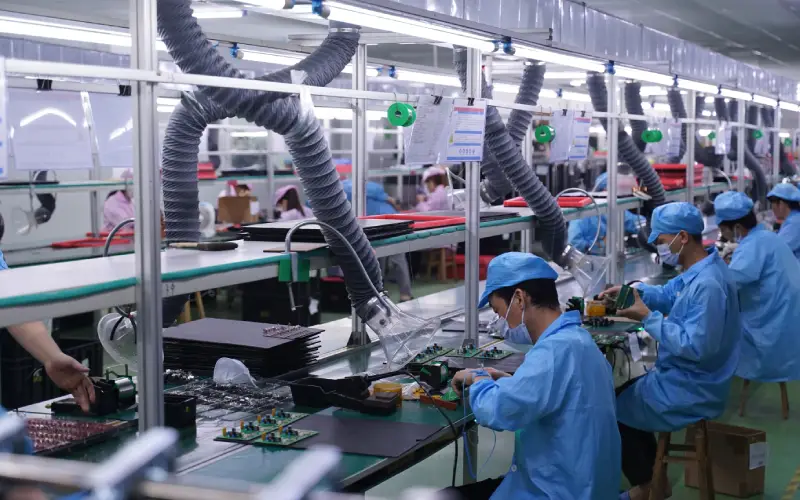
The box build assembly process typically follows a structured sequence of steps to ensure consistency, efficiency, and product quality.
1. Incoming Material Preparation
Before assembly begins, all required components must be prepared and verified. These typically include PCB assemblies, enclosures, cable harnesses, connectors, thermal materials, and mechanical hardware.
Incoming inspection ensures that all materials meet specifications and dimensional tolerances before entering production. Proper inventory management and traceability at this stage help reduce delays and prevent assembly defects.
2. PCB Installation into the Enclosure
Once materials are prepared, the PCB assembly is installed into the product enclosure.
This step requires careful attention to:
- Mounting hole alignment
- Mechanical clearance and standoff height
- Connector accessibility
- Enclosure tolerance compatibility
Tolerance mismatches between PCBs and enclosures can lead to installation difficulty, increased assembly time, or even component damage. These issues are often related to tolerance stack-up in electronic assemblies.
3. Cable Harness and Connector Integration
Cable routing and connector integration are critical for ensuring stable electrical performance.
Electronic products often require multiple internal connections between power modules, control boards, sensors, and interface components. Improper cable routing can introduce stress on connectors, reduce reliability, and increase assembly variability.
Standardized routing diagrams and clear work instructions help maintain consistency across production batches.
4. Mechanical Assembly and Structural Integration
After electronic components and wiring are installed, the product structure is assembled.
This stage includes:
- Installing brackets or shielding components
- Attaching enclosure covers
- Integrating thermal solutions
- Fastening structural elements
Torque control is essential. Excessive torque may damage plastic housings, while insufficient fastening can compromise structural stability. Defined torque standards and assembly sequences help ensure repeatable quality.
5. Firmware Loading and Configuration
Firmware programming is often integrated into the box build assembly process.
Typical operations include:
- Firmware flashing
- Device configuration
- Serial number programming
- Calibration procedures
Automated programming stations are commonly used to improve efficiency and maintain traceability across production units.
6. Functional Testing and System Validation
Functional testing in electronics manufacturing ensures that the assembled product performs according to design specifications.
Testing may include:
- Power-on verification
- Communication interface checks
- Sensor validation
- Signal integrity testing
- System performance validation
Effective functional testing helps identify assembly errors or defective components before shipment. In many cases, multiple testing methods such as ICT and system-level testing are combined.
These testing practices often follow IPC standards for electronics manufacturing, which define widely accepted quality and inspection guidelines.
7. Final Inspection and Packaging
After testing, the product undergoes final inspection before packaging.
This includes:
- Visual inspection of assembly quality
- Mechanical fit verification
- Labeling and traceability marking
- Packaging preparation
Proper packaging protects products from mechanical shock, vibration, and electrostatic discharge during transportation.
Common Challenges in Box Build Assembly
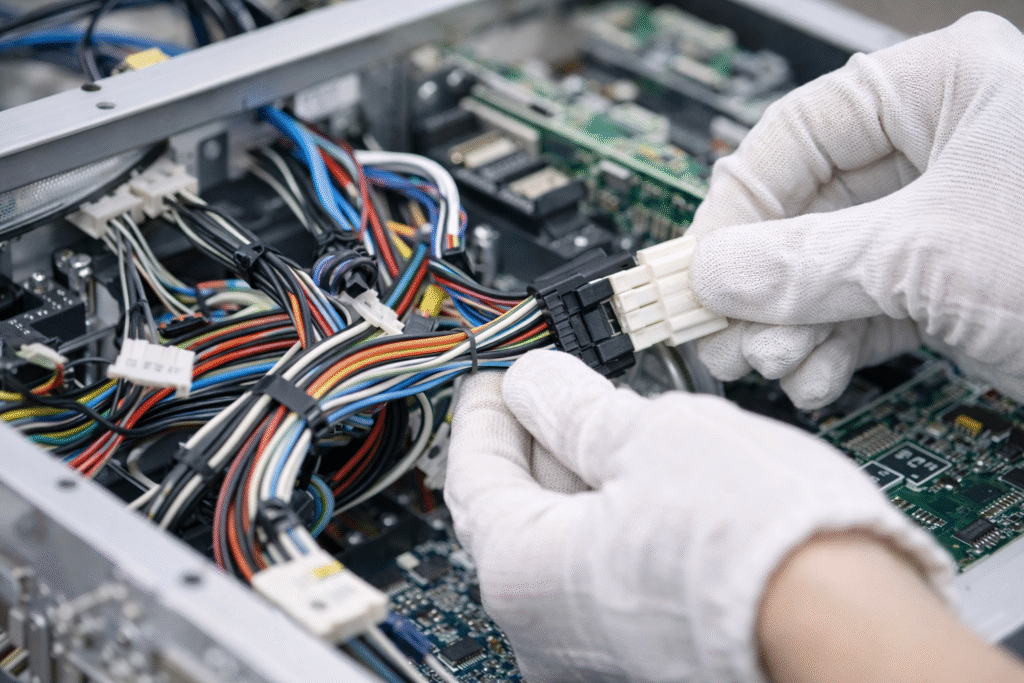
Several common problems can occur during the box build assembly process, especially when scaling from prototype to mass production.
Tolerance mismatches between PCB and enclosure
Dimensional variations can accumulate during assembly, causing alignment issues or installation difficulties.
Cable routing complexity
Improper harness routing can increase assembly time and introduce long-term reliability risks.
Cross-disciplinary coordination issues
Because box build combines electrical and mechanical systems, design changes in one area may impact the entire assembly process.
Production scalability challenges
Processes that work during prototyping may not scale efficiently for mass production, leading to inconsistencies and delays.
These challenges can directly impact production yield in electronics manufacturing, especially when scaling from prototype to mass production.
Quality Control in Box Build Assembly
Effective quality control in the box build assembly process helps reduce defects, improve consistency, and ensure product reliability.
Key control measures include:
- Standardized work instructions
- Fixture and tooling control
- In-process inspection
- Torque and fastening control
- Functional testing validation
By implementing structured quality control systems, manufacturers can significantly improve assembly stability and reduce production risks.
Why Integrated Manufacturing Improves Box Build Efficiency
When box build assembly involves multiple suppliers, coordination becomes more complex.
Challenges may include:
- Inconsistent documentation
- Communication delays
- Misaligned tolerances between components
Integrated manufacturing environments help address these issues by combining PCB assembly, injection molding, and final assembly within a unified workflow.
This approach allows faster implementation of design changes, better process coordination, and improved production efficiency.
Conclusion
The box build assembly process plays a crucial role in transforming individual components into fully functional electronic products. From PCB installation and cable routing to firmware programming and functional testing, each stage directly affects product reliability and production stability.
Optimizing the box build assembly process is essential for achieving consistent quality, reducing manufacturing risks, and ensuring successful product scaling.
FAQ
What is box build assembly process?
The box build assembly process involves integrating PCBs, wiring, enclosures, and mechanical components into a complete electronic product.
What are common problems in box build assembly?
Common issues include tolerance mismatches, cable routing errors, connector instability, and assembly inconsistencies.
How to improve box build assembly quality?
Quality can be improved through standardized processes, proper cable routing, fixture control, and effective functional testing.
Next Steps
If your product requires coordination between PCB assembly, mechanical structures, and final system integration, early planning of the box build assembly process can significantly reduce risks.
Working with an experienced manufacturing partner can help identify potential issues early and improve production efficiency.
👉 Contact CINDY Mould to discuss your project and explore practical manufacturing solutions.