
Introduction
Integrated manufacturing systems have become increasingly important as modern manufacturing projects grow more complex. A single product may involve multiple disciplines and production stages, including PCB fabrication, SMT assembly, injection molding, mechanical assembly, testing, and final packaging.
To manage this complexity, many companies build production chains by selecting specialized suppliers, while others adopt an integrated manufacturing system to improve coordination between different production stages. A mold manufacturer may develop tooling, a plastic injection molding factory produces structural components, and another partner manages electronics assembly or final product integration.
On paper, this distributed supplier model appears efficient. Each supplier focuses on their area of expertise, and companies expect that strong individual capabilities will naturally lead to stable production.
However, once manufacturing begins, many projects encounter challenges that were not visible during the planning phase.
Assembly operations may become slower than expected.
Product alignment may require repeated adjustment.
Engineering modifications may take longer to implement.
These issues often do not originate within a single manufacturing process. Instead, they tend to appear at the boundaries between processes.
Understanding how integrated manufacturing systems coordinate multiple production stages is essential for improving production stability in complex manufacturing environments.
Many industry organizations also highlight the importance of system-level coordination in modern manufacturing environments.
Manufacturing Challenges Often Appear Between Processes
In multi-process production environments, manufacturing performance depends not only on the capability of each process but also on how well these processes interact.
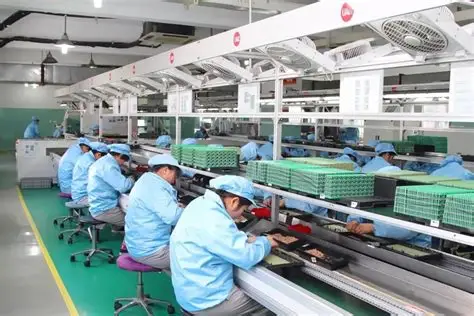
For example, a plastic enclosure produced through injection molding may meet all dimensional tolerances during quality inspection. However, when the same component moves into the assembly stage, positioning it consistently in assembly fixtures may become difficult.
Similarly, a PCB layout may meet electrical performance requirements, but connector placement may complicate integration with the mechanical housing.
These issues occur because engineering decisions made during one stage of development often influence downstream processes when an integrated manufacturing system is not properly implemented.
Examples of cross-process interactions include:
• PCB component height affecting enclosure clearance
• Connector orientation influencing assembly accessibility
• Mold shrinkage behavior affecting final product alignment
• Surface finish requirements influencing molding parameters
• Cooling channel design affecting part dimensional stability
During early prototype builds, these issues can often be managed through manual adjustments. Engineers may modify fixtures, compensate for minor dimensional differences, or temporarily adjust process parameters.
However, as production volume increases, these workarounds become difficult to sustain. Small variations across processes can accumulate and gradually create production inefficiencies.
The Coordination Challenges of Multiple Suppliers
When different manufacturing stages are distributed across multiple suppliers, coordination complexity increases significantly.
Many of these coordination issues originate from cross-discipline interactions between PCB design, mechanical structure, tooling, and assembly processes, which are discussed in more detail in common manufacturing challenges between PCB design and enclosure integration.
Each supplier typically optimizes their own process based on their equipment, production environment, and engineering expertise. A mold manufacturer may prioritize tooling precision and cycle efficiency, while an assembly partner focuses on throughput and product alignment.
Although these priorities are individually reasonable, manufacturing performance ultimately depends on how well all processes function together.
Several coordination challenges commonly appear in multi-supplier environments.
Engineering Communication
Technical information must travel across multiple companies. Differences in interpretation of tolerances, materials, or assembly requirements can introduce variation.
For instance, a mold supplier may optimize part shrinkage compensation based on tooling conditions, while the assembly partner evaluates dimensional tolerances based on fixture alignment. If these assumptions are not fully aligned, small dimensional variations may affect assembly stability.
Scheduling Dependencies
Production schedules must align across different suppliers. A delay in mold modification or material supply can disrupt downstream production stages.
Even small timing mismatches between suppliers can influence the entire production schedule.
Troubleshooting Complexity
When production issues occur, identifying root causes requires investigation across multiple processes and companies.
A cosmetic defect may originate from molding parameters, material variation, or downstream handling conditions. When these processes belong to different suppliers, troubleshooting can become time-consuming.
Why Production Stability Requires System-Level Thinking
Mass production environments place different demands on manufacturing systems compared with early development builds. Production stability becomes increasingly important once an integrated manufacturing system transitions from prototype validation to continuous production cycles.
During prototyping, engineering teams typically have greater flexibility. Adjustments can be made manually, and production volumes remain relatively low.
Mass production, however, requires consistent repetition across thousands or millions of units.
Injection molding processes must maintain stable cycle times.
Assembly operations must remain efficient and repeatable.
Quality standards must be maintained across large production volumes.
Under these conditions, even minor variations between processes can influence overall production performance.
For example:
• Dimensional variation in molded components may slow down assembly alignment
• Surface quality variation may increase inspection time
• Small tooling adjustments may influence downstream assembly fit
These challenges illustrate the importance of system-level coordination.
Manufacturing success often depends not only on process capability but also on how effectively engineering, tooling, molding, and assembly processes interact within the production system.
How Integrated Manufacturing Improves Production Coordination
Integrated manufacturing environments help reduce many of the coordination challenges that appear when production is distributed across multiple suppliers.
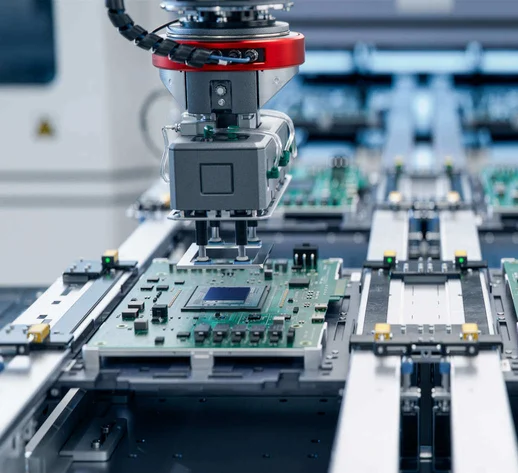
Engineering teams can evaluate product design, tooling development, and molding processes together, which often helps identify manufacturing risks earlier in development.
Many of these improvements also depend on stable mold design and process control, especially in injection molding operations where cooling performance and tooling precision directly affect production consistency.
Instead of troubleshooting issues process by process, integrated manufacturing systems allow engineering teams to evaluate the entire production chain within a coordinated environment.
Several advantages typically emerge..
Earlier Identification of Cross-Process Issues
When engineering teams evaluate product design together with tooling and assembly specialists, potential conflicts between processes can be identified earlier during product development.
This reduces the likelihood of encountering structural issues after tooling has already been completed.
Faster Engineering Adjustments
Integrated manufacturing environments often allow design modifications, tooling adjustments, and process optimization to occur more quickly.
Because decision-making and technical communication occur within the same organizational framework, engineering changes can be implemented faster.
More Efficient Troubleshooting
When production problems appear, integrated manufacturing teams can investigate issues across the entire manufacturing chain.
Rather than isolating investigation within a single process, teams can evaluate how multiple processes interact.
This system-level approach often allows root causes to be identified more efficiently.
Conclusion
Modern products increasingly rely on complex integrated manufacturing systems that involve multiple engineering disciplines and production processes.
While selecting capable individual suppliers is important, manufacturing success rarely depends on a single supplier performing well in isolation.
Many production challenges appear at the boundaries between processes, where engineering decisions and manufacturing conditions interact.
An integrated manufacturing system helps address these challenges by enabling better coordination across engineering design, tooling development, injection molding, and assembly operations.
As manufacturing complexity continues to increase, companies are recognizing that production stability often depends on how effectively the entire manufacturing system works together.