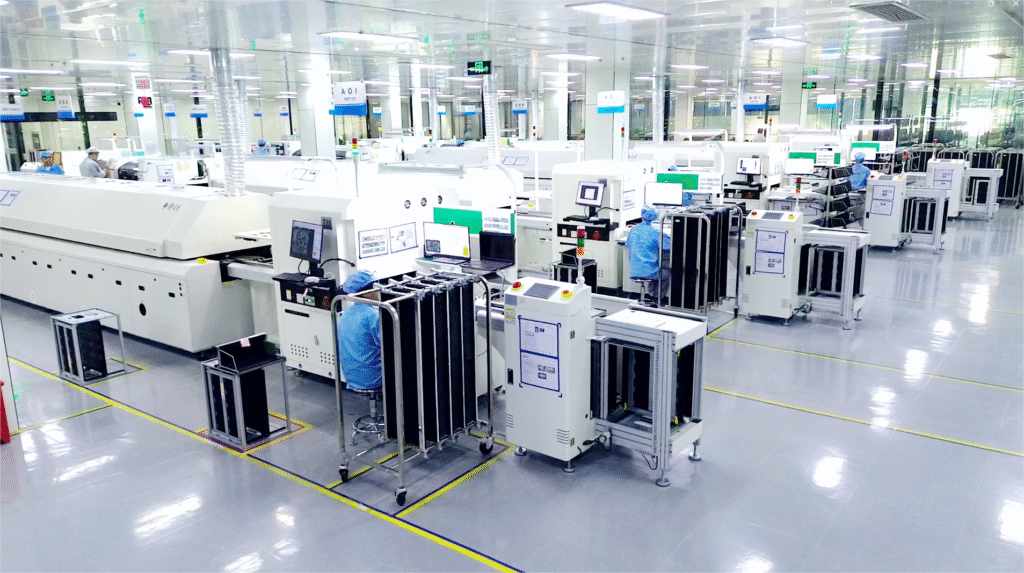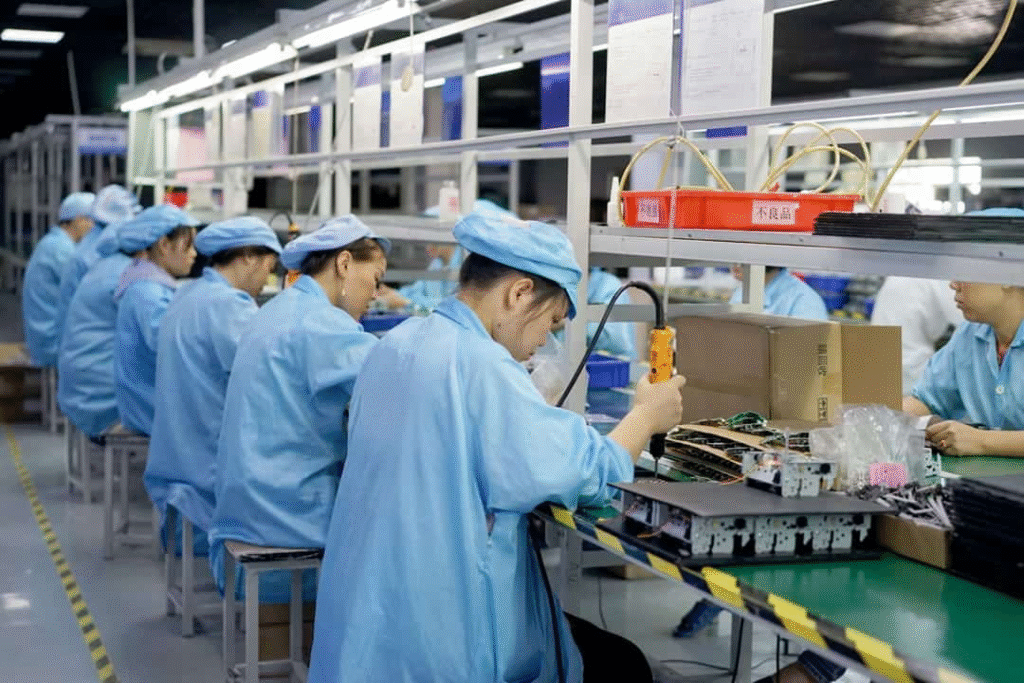
An integrated manufacturing workflow connects engineering, PCB fabrication, component sourcing, PCBA, enclosure production, firmware control, product assembly, testing, packaging, and logistics within one coordinated production system.
For electronic products, these processes cannot be managed as completely independent tasks. A PCB may pass electrical inspection, an enclosure may meet its drawing, and a cable assembly may satisfy its individual specification, yet the finished product can still fail when these parts are assembled.
The problem often appears at the interfaces between processes:
- A connector does not align with the enclosure opening
- A cable interferes with internal components
- A PCB revision does not match the latest housing
- Firmware is programmed using an outdated version
- Product testing does not cover problems introduced during final assembly
- Packaging does not protect connectors, displays, or cosmetic surfaces
When different suppliers control each stage separately, identifying the source of these failures can take longer than correcting the defect itself.
An integrated manufacturing workflow reduces these gaps by coordinating engineering information, production schedules, quality controls, revision management, and final product responsibility across the complete manufacturing process.
What Is an Integrated Manufacturing Workflow?
An integrated manufacturing workflow is a coordinated production system in which connected manufacturing stages share controlled engineering information, quality requirements, schedules, and responsibility.
For an electronic product, the workflow may include:
- Product and manufacturing requirement review
- PCB fabrication
- Component sourcing
- PCB assembly
- Plastic injection molding
- Metal and mechanical-part manufacturing
- Cable and wire-harness assembly
- Firmware programming
- Final product assembly
- Functional testing
- Quality inspection
- Packaging and shipment preparation
Integrated manufacturing does not necessarily mean every process must be performed in one building.
The important difference is coordination.
One program team should understand how changes in one process affect the rest of the product. Engineering documents, component revisions, quality records, and production schedules should move through one controlled system.
Without this coordination, each supplier may optimize its individual process while the complete product remains unstable.
Why Fragmented Manufacturing Creates Hidden Risk
Using multiple specialized suppliers can appear flexible and cost-effective. However, the customer often becomes responsible for coordinating every technical and commercial interface.
A typical fragmented workflow may involve:
- One supplier for PCB fabrication
- One supplier for component sourcing
- One supplier for PCBA
- One supplier for injection molding
- One supplier for cables
- Another supplier for final assembly and packaging
Each supplier may complete its assigned work correctly. Problems arise when the output of one supplier becomes the input of another.
For example, a PCBA supplier may verify electrical performance without checking how the board fits inside the enclosure. The molding supplier may manufacture the enclosure according to its drawing without knowing that a connector position has changed.
Both components can pass inspection individually but fail during final product assembly.
Common risks include:
- Inconsistent revision levels
- Incomplete engineering-change communication
- Unclear ownership of cross-process failures
- Repeated transportation and incoming inspection
- Longer troubleshooting cycles
- Delayed production ramp-up
- Increased inventory between suppliers
- Quality records that cannot be connected to the finished product
An integrated manufacturing workflow is designed to control these interfaces before they become production problems.
How an Integrated Manufacturing Workflow Connects Each Stage
A stable workflow begins before production. It connects product requirements, manufacturing processes, quality controls, and final acceptance criteria from the start.
1. Product Requirement and Manufacturing Scope Review
The first stage is defining what the manufacturing partner is responsible for delivering.
This review should cover:
- Product drawings and specifications
- PCB and PCBA requirements
- Approved bill of materials
- Enclosure and mechanical-part requirements
- Firmware and programming instructions
- Functional-test requirements
- Cosmetic standards
- Traceability requirements
- Packaging specifications
- Expected production volumes
- Target production schedule
A quotation should clearly identify which responsibilities are included and which remain with the customer.
If the manufacturing scope is unclear, suppliers may make different assumptions about testing, inspection, packaging, component sourcing, or engineering support.
These differences frequently become visible only after production begins.
2. PCB Fabrication and Component Sourcing Alignment

PCB fabrication and component sourcing are often managed as separate purchasing activities, but they directly influence PCBA quality and production scheduling.
Before production begins, the manufacturing team should review:
- PCB materials and stack-up
- Board thickness
- Copper weight
- Surface finish
- Controlled impedance requirements
- Component availability
- Component lifecycle status
- Approved alternatives
- Lead times and minimum order quantities
- Moisture-sensitive component requirements
Component substitutions must follow a documented approval process. An alternative component may fit the same PCB footprint but behave differently electrically, thermally, mechanically, or within the firmware.
The integrated manufacturing workflow should ensure that purchasing changes are reviewed by engineering and communicated to production, testing, and quality teams.
3. PCBA Stability and Production Control
PCBA production converts the electrical design into a physical assembly, but electrical functionality alone does not confirm that the board is ready for final product integration.
PCBA planning may include:
- Solder paste printing
- Automated component placement
- Reflow soldering
- Through-hole assembly
- Automated optical inspection
- X-ray inspection
- In-circuit testing
- Firmware programming
- Functional testing
The PCBA team should also review mechanical requirements such as:
- PCB outline and thickness
- Mounting-hole positions
- Connector location and orientation
- Component height
- Cable access
- Keep-out areas
- Assembly clearance
These factors determine whether the board can be installed consistently without stress, interference, or manual adjustment.
A board that passes PCBA inspection may still create production problems if these mechanical interfaces are not controlled.
4. Tooling and Injection Molding Integration
Plastic enclosures and mechanical components must be developed in coordination with the PCB and assembly requirements.
Before tooling release, engineering teams should confirm:
- PCB mounting positions
- Boss dimensions and strength
- Connector openings
- Button and display alignment
- Cable-routing space
- Snap-fit and fastening features
- Draft angles
- Wall thickness
- Material shrinkage
- Cosmetic-surface requirements
- Assembly tolerances
Changes to the PCB can affect the mold, and changes to the enclosure can affect PCB layout, cable length, fixtures, and assembly instructions.
If tooling and electronics are controlled by separate suppliers without synchronized engineering reviews, changes may be implemented on one side but missed on the other.
An integrated manufacturing workflow uses shared revision control to keep electrical and mechanical designs aligned.
5. Firmware and Programming Control
Firmware is part of the manufactured product and should be controlled with the same discipline as drawings and bills of materials.
The production team should know:
- Which firmware version is approved
- Which hardware revision it supports
- How programming is performed
- How programming success is verified
- How firmware versions are recorded
- Who can authorize an update
- How failed programming is handled
Uncontrolled firmware changes can produce products that appear mechanically and electrically correct but behave differently during testing or customer use.
Firmware version information should be connected to the production lot, hardware revision, and final test record.
6. Final Product Assembly

Final assembly is where electrical, mechanical, and software elements become one complete product.
A controlled assembly process may include:
- PCBA installation
- Cable and connector assembly
- Display or module installation
- Enclosure assembly
- Fastener tightening
- Adhesive application
- Label installation
- Firmware verification
- Functional testing
- Cosmetic inspection
- Packaging
Assembly work instructions should define:
- Correct component orientation
- Assembly sequence
- Cable routing
- Fastener type and torque
- Adhesive location and curing requirements
- ESD precautions
- Inspection checkpoints
- Rework procedures
The assembly line should not rely on operator experience to compensate for unclear designs or incomplete instructions.
A stable process should produce consistent results across different operators, shifts, and production batches.
7. Quality Control Across the Complete Workflow
Fragmented manufacturing often creates separate inspection reports for separate components. These reports may confirm that each part passed, but they do not always explain why the finished product failed.
An integrated quality system connects inspection data across the product lifecycle.
Quality control may include:
- Incoming material inspection
- PCB fabrication inspection
- PCBA process inspection
- Enclosure dimensional inspection
- Cosmetic inspection
- Assembly-process verification
- Functional testing
- Final product inspection
- Packaging inspection
- Failure analysis
- Corrective action
When a completed product fails, the manufacturing team should be able to trace:
- Component lot
- PCB revision
- Firmware version
- Enclosure batch
- Assembly date
- Production line
- Test result
- Rework history
This traceability shortens failure analysis and helps prevent repeated defects.
8. Packaging and Logistics Coordination
Packaging is part of the manufacturing workflow, not simply the final step after production.
Packaging requirements should consider:
- Product dimensions and weight
- Connector protection
- Display and cosmetic-surface protection
- ESD requirements
- Moisture protection
- Drop and vibration risk
- Accessory organization
- Labeling requirements
- Carton configuration
- Shipping method
When packaging is handled by a separate supplier, product information may be incomplete or outdated. Changes in product dimensions, accessories, labeling, or shipment quantity can create repacking, delays, and additional handling.
Coordinating packaging with product assembly helps ensure that the completed product can move directly from final inspection to shipment preparation.
9. Production Ramp-Up and Long-Term Scalability
A manufacturing workflow that works for prototypes may not remain stable during mass production.
Prototype builds often depend on:
- Manual adjustments
- Experienced technicians
- Longer cycle times
- Small quantities
- Close engineering supervision
Mass production requires:
- Repeatable work instructions
- Controlled cycle times
- Stable material supply
- Trained operators
- Capacity planning
- Reliable fixtures
- Automated or standardized testing
- Documented change control
Before production ramp-up, the manufacturing team should review process capability, bottlenecks, test capacity, material availability, operator training, and quality records.
The objective is not simply to complete one successful build. It is to repeat the process consistently across thousands of products.
Integrated Manufacturing vs Multiple Suppliers
The main difference between an integrated manufacturing system and multiple independent suppliers is not the number of companies involved. It is how responsibility and information are controlled.
With multiple independent suppliers:
- The customer coordinates engineering changes
- Each supplier controls only its own process
- Failure ownership may be disputed
- Documents may use different revision levels
- Materials move between several locations
- Problems may require several separate investigations
With an integrated manufacturing workflow:
- One program team coordinates connected processes
- Engineering changes are reviewed across departments
- Quality records follow the complete product
- Cross-process failures have clearer ownership
- Production schedules are coordinated
- Final product performance becomes a shared objective
Multiple suppliers can still work successfully when the customer has a strong internal engineering, quality, and supply-chain team.
Integrated manufacturing becomes more valuable when the customer wants one partner to coordinate the complete production system.
Common Failure Points Between Suppliers
Many manufacturing problems occur between defined processes rather than inside one process.
PCB and Enclosure Misalignment
A connector, button, display, or mounting hole may be positioned correctly on its individual drawing but fail to align during assembly.
Cable and Connector Problems
Cable length, bend radius, connector orientation, or routing space may not be reviewed until final assembly.
Revision Mismatch
The PCB, enclosure, firmware, assembly instructions, and test fixture may not all use the same revision.
Incomplete Testing Responsibility
A PCBA supplier may test the board, while the assembly supplier assumes the board is fully verified. Problems caused by wiring, connectors, firmware, or final integration may remain undetected.
Packaging Introduced Too Late
Packaging developed after production may not properly protect the product or accommodate accessories, labels, and shipment requirements.
Unclear Failure Ownership
When a completed product fails, each supplier may confirm that its individual component passed inspection. The customer must then determine which interface caused the failure.
These risks are reduced when the workflow defines responsibility for the complete product, not only separate components.
How Integrated Manufacturing Reduces Production Risk
Integrated manufacturing does not eliminate every production problem. It reduces the gaps that allow problems to remain unnoticed or unresolved.
The main risk-reduction mechanisms include:
- Earlier cross-functional design review
- Shared engineering documentation
- Controlled component substitutions
- Coordinated production scheduling
- Common revision management
- End-to-end quality traceability
- Faster communication between departments
- Clearer failure ownership
- Testing based on completed-product requirements
When engineering, purchasing, production, quality, and assembly teams work within one coordinated system, problems can be identified closer to their source.
This reduces the need for repeated supplier communication, shipment of suspect parts between locations, and separate investigations.
When Integrated Manufacturing Creates the Most Value
An integrated manufacturing workflow is particularly valuable when a product includes:
- Custom PCBAs
- Plastic or metal enclosures
- Cables and wire harnesses
- Firmware programming
- Multiple internal modules
- Functional testing
- Cosmetic requirements
- Retail packaging
- Complex traceability
- Frequent engineering changes
- Production ramp-up across several volume stages
It can also be useful for companies that have limited internal resources for supplier coordination.
For simple products with mature designs and clearly defined components, specialized suppliers may remain practical. The right structure depends on product complexity, production volume, internal management capability, and risk tolerance.
Questions to Ask an Integrated Manufacturing Partner
Before selecting a manufacturing partner, buyers should ask:
- Which processes are performed internally?
- Which processes are subcontracted?
- Who controls the complete project schedule?
- How are engineering changes reviewed?
- How are PCB and enclosure interfaces checked?
- How are component substitutions approved?
- How are firmware versions controlled?
- What inspection and functional testing are included?
- How are production records linked to the finished product?
- Who investigates failures involving multiple processes?
- How is production ramp-up managed?
- Who is responsible for final product quality?
The answers should identify specific processes, documents, and responsible teams.
General claims about providing complete service are not enough. The supplier should be able to explain how the workflow is controlled.
Frequently Asked Questions
Does integrated manufacturing require every process to be in one factory?
No. Some specialized processes may still be handled by qualified external suppliers.
The key requirement is that one coordinated system controls engineering information, supplier qualification, production schedules, quality standards, and final responsibility.
Is integrated manufacturing always cheaper?
Not necessarily when only individual unit prices are compared.
Its value often comes from reducing coordination work, logistics complexity, engineering delays, rework, quality disputes, and production interruptions.
Can an integrated manufacturing partner support prototypes?
Yes. A capable partner should support design review, prototyping, pilot production, and mass-production ramp-up.
The processes used during prototypes should also create information that supports later production stages.
How does integrated manufacturing improve quality?
It connects quality controls across PCB fabrication, PCBA, enclosure production, assembly, testing, and packaging.
This makes it easier to trace failures, identify cross-process problems, and prevent defects from moving unnoticed between suppliers.
What products benefit most from an integrated workflow?
Products that combine electronics, custom mechanical parts, firmware, cables, testing, and final assembly usually benefit most because their major risks often occur at the interfaces between these elements.
Conclusion
A reliable integrated manufacturing workflow connects PCB fabrication, component sourcing, PCBA, enclosure production, firmware programming, final assembly, quality control, packaging, and logistics within one coordinated system.
Its main advantage is not simply convenience. It is the ability to control the interfaces where manufacturing problems frequently occur.
When engineering information, revisions, schedules, quality records, and final responsibility are coordinated, product teams can identify risks earlier, resolve failures faster, and move from prototype development to stable production with fewer disruptions.
For complex electronic products, manufacturing success depends not only on how well each individual process performs, but also on how effectively every process works together.