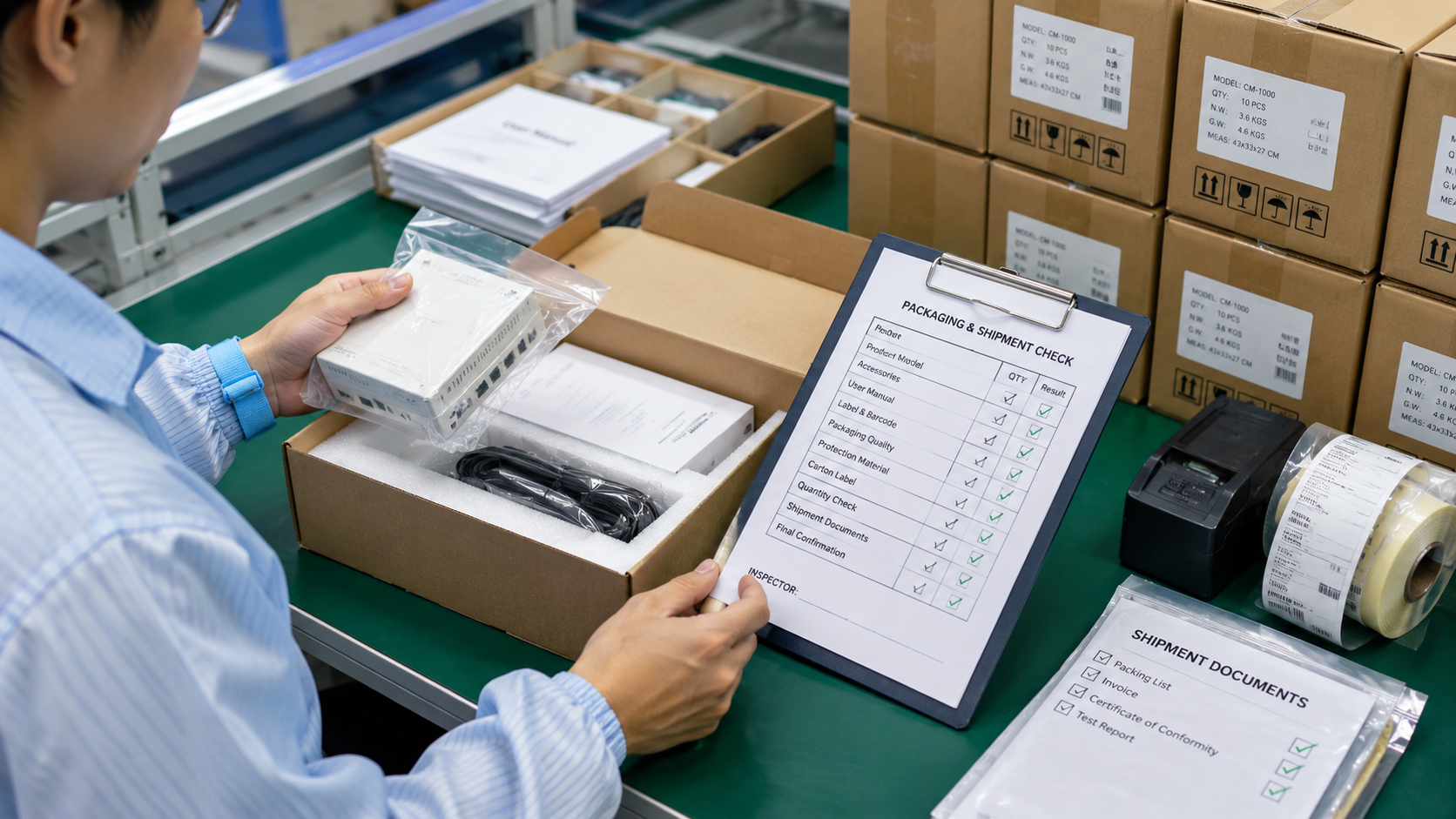
Electronics Manufacturing Quality Control
Project-specific quality control across materials, PCBA, product assembly, functional testing, and final shipment.
Quality Planning Before Production
Product requirements are converted into clear inspection, testing, recording, and release criteria before purchasing and production begin.
Why Quality Planning Comes First
Quality expectations must be defined before they can be applied consistently across materials, assembly, testing, and final release.
Prevent Unclear Acceptance Criteria
Define what must be checked and what qualifies as an acceptable result.
Align Every Production Team
Ensure every team follows the same approved product requirements.
What We Align Before Production
Product & File Control
- Approved drawings and BOM versions
- Critical dimensions and specifications
- Assembly and workmanship requirements
Inspection Strategy
- Incoming and in-process checkpoints
- Inspection methods and frequency
- Visual, dimensional, and assembly criteria
Testing Requirements
- Product functions and interfaces
- Fixture, programming, and test conditions
- Approved pass/fail criteria
Records & Final Release
- Inspection and testing records
- Batch identification and traceability
- Final approval and shipment conditions
Approved Quality Plan
One controlled reference for production execution and final release.
How Our Quality Control Framework Works
Approved product requirements are managed through four connected controls covering documents, processes, verification, and final release.
Approved Product Requirements
Drawings, specifications, acceptance criteria, and testing requirements provide the controlled reference for every quality decision.
Requirement Control
- Confirm approved document versions
- Define acceptance and test criteria
- Review changes before implementation
Process Control
- Use project-specific work instructions
- Confirm production setup and key parameters
- Place checkpoints at critical operations
Verification Control
- Check materials, workmanship, and assembly
- Verify product functions and interfaces
- Compare results with approved criteria
Release Control
- Review inspection and testing records
- Confirm nonconformities have been addressed
- Approve products before packaging and shipment
Quality Gates Across the Manufacturing Process
Each manufacturing stage includes a defined review point before materials or products are released to the next operation.
A quality gate is a readiness decision — not only an inspection activity.
01
Material & Supplier Review
- Approved supplier and component information
- Material specifications and compliance documents
- Availability, substitutions, and project requirements
Materials align with approved project requirements.
02
Incoming Inspection
- Quantity, identity, and packaging condition
- Appearance and critical dimensions
- Batch information and storage requirements
Incoming materials are accepted for production.
03
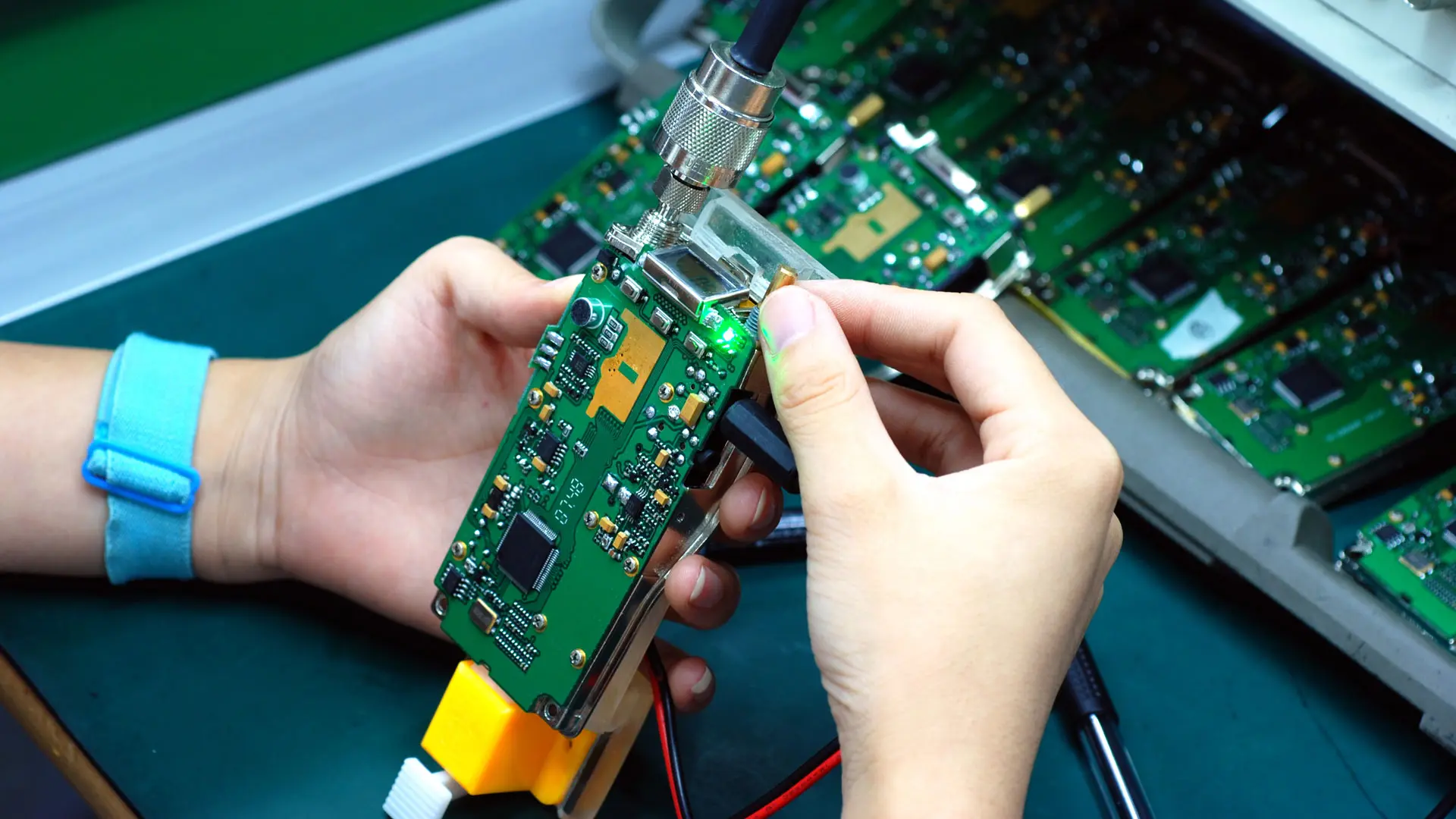
PCBA Process Verification
- Soldering and component placement
- Visible defects, missing parts, and polarity
- Readiness for product integration
The PCBA is ready for the next assembly stage.
04
Enclosure & Assembly Check
- Product fit, wiring, and connector position
- Fastening, labels, and appearance
- Consistency with approved requirements
The assembled product meets build requirements.
05
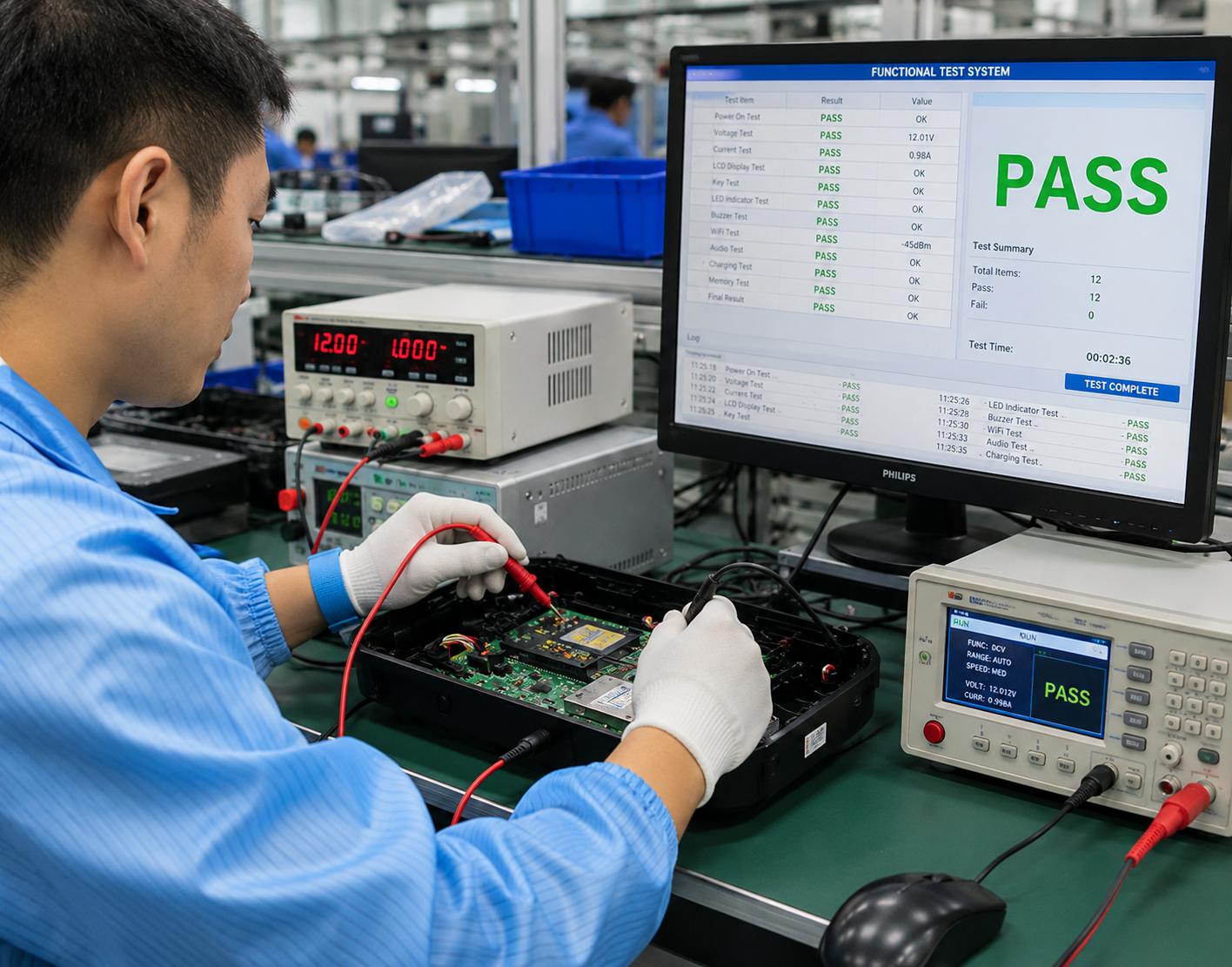
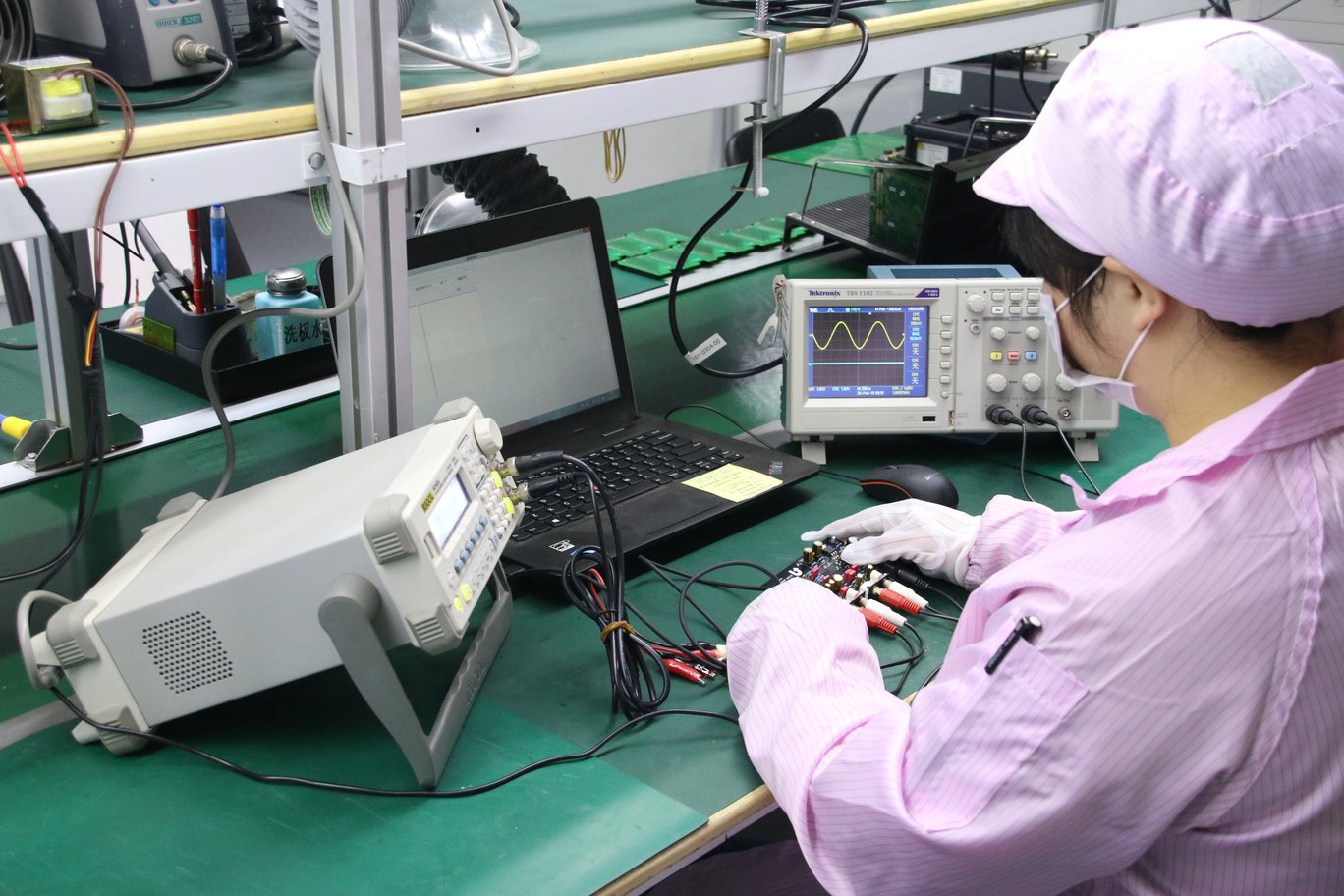
Functional Testing
- Required product functions and interfaces
- Programming, signals, sensors, or displays
- Approved pass/fail responses
Required product performance is confirmed.
06
Final Release & Shipment
- Inspection and testing records
- Accessories, labeling, and packaging
- Shipment documents and final approval
The product is approved for shipment.
Inspection Focus Based on Product Requirements
Inspection methods and checkpoints are adjusted according to product function, assembly structure, operating conditions, and customer-defined acceptance criteria.
Product Function
- Power-on, interface, and response checks
- Display, sensor, sound, or signal verification
- Critical functions based on intended use
Assembly Structure
- Enclosure fit and internal clearances
- Wiring, connectors, and fastening points
- Labels, appearance, and build consistency
Operating Conditions
- Expected operating and handling conditions
- Temperature, power, load, or interface requirements
- Product-specific risks during actual use
Acceptance & Reporting
- Customer-defined checkpoints and tolerances
- Approved pass/fail criteria
- Required inspection and testing records
Customized Inspection Checklist
How We Handle Nonconforming Materials & Products
Nonconforming materials, assemblies, and test results are identified, isolated, reviewed, and resolved through a controlled process before production or shipment continues.
Identify & Contain
Control the affected items and production stage.
Record & Review
Document the issue, evidence, quantity, and requirements.
Determine Disposition
Approve rework, return, replacement, use-as-is, or scrap.
Corrective Action
Address repeated or critical causes and update controls.
Verify & Close
Reinspect or retest before controlled release.
Controlled Disposition Options
Production or shipment resumes only after the affected items, disposition decision, and verification results are documented.
Quality Records & Traceability From Material to Shipment
Project, material, production, inspection, and test records are linked through controlled identification, providing a clear quality history for each manufacturing batch.
Traceability Identification
One controlled identity connects the product to its quality records.
RECORDS
Records Linked to Each Project
Approved Product Files
Drawings, BOM versions, specifications, and work instructions
Material & Incoming Records
Supplier information, batch identity, and incoming inspection results
Production Records
Assembly stage, production batch, process checks, and operator records
Nonconformity Records
Defect evidence, affected quantity, disposition, and corrective action
Inspection & Test Results
Inspection findings, functional test results, and pass/fail status
Final Release Records
Final inspection, packaging verification, approval, and shipment reference
Traceable by Batch
Link products to material and production information
Records Available for Review
Retrieve relevant inspection and test evidence
Controlled Release History
Confirm approval status before shipment
Standards & Controlled Documentation Supporting Quality
Quality activities are performed against approved drawings, specifications, workmanship criteria, compliance requirements, and controlled project documentation.
Standards & Requirements We Work With
SYSTEM
Quality Management Framework
- Controlled quality procedures
- Defined responsibilities and approval authority
- Review and continual improvement activities
Electronics Workmanship Criteria
- IPC-A-610 acceptance criteria when specified
- J-STD-001 soldering requirements when applicable
- Customer-defined workmanship standards
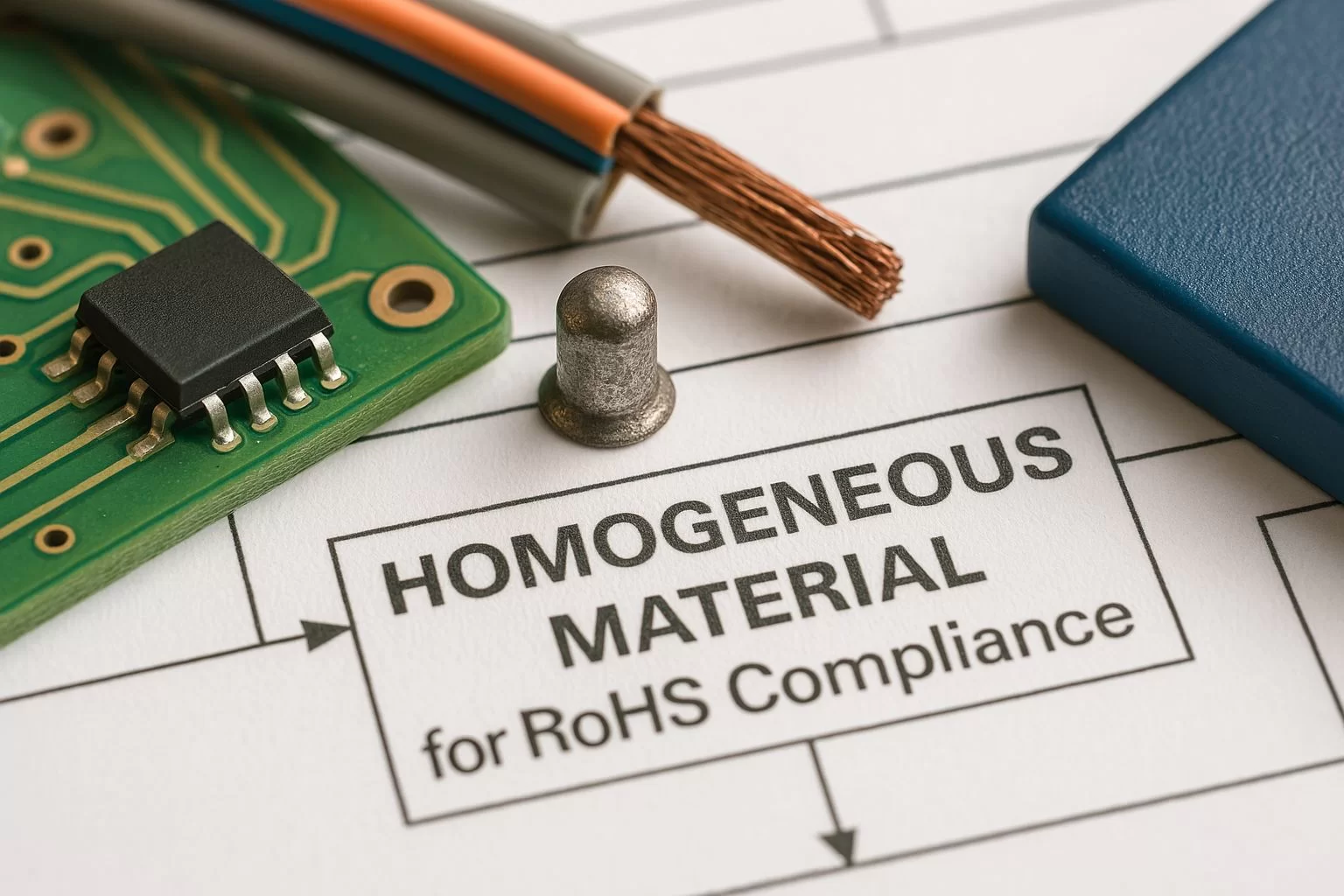
Material & Compliance Requirements
- RoHS and REACH requirements where applicable
- Approved material and supplier documentation
- Customer-specific declarations and restrictions
Standards are applied according to product type, project scope, and customer requirements.
Controlled Documents Before Production
Approved Revision
Confirm current drawings, BOM, specifications, and test versions
Controlled Distribution
Provide approved files to purchasing, production, and quality teams
Change Review
Evaluate document changes before implementation
Obsolete Version Removal
Prevent outdated files from being used in production
DOCUMENT SET
Typical Project Documentation
Drawings & BOM
Plan
Instructions
Specifications
Test Reports
Documents
Shipment Requirements
Quality Control FAQs
Find answers to common questions about quality planning, inspection criteria, testing, nonconformity handling, and manufacturing records.
Quality requirements are confirmed according to the product, project scope, and customer-defined acceptance criteria.
Ready to Discuss Your Quality Requirements?
Share your product files, inspection criteria, and testing requirements. Our team will review the project and confirm the appropriate quality controls before production.
Drawings, BOM, test requirements, and quality documentation are welcome.